Svalbard in Winter: A Guide to Polar Night in the High Arctic
Affiliate Disclosure: This post on visiting Svalbard in winter contains affiliate links. If you click a link and make a purchase, I may receive a small commission at no cost to you.
HI, I’M TARA!
I love sharing hidden gems far from the crowds, unique boutique hotels, and unforgettable wildlife adventures – helping you have extraordinary travel experiences.
INTRODUCTION
A winter trip to Svalbard—an archipelago located halfway between mainland Norway and the North Pole—was yet another one of our vacations that had my sister asking, “So… you’re going there why?” She was even more baffled that we’d chosen to go in the middle of the Polar Night. In Svalbard, the sun doesn’t peek above the horizon for roughly 2.5 months, from late November to mid-February.
We were drawn back to Longyearbyen, the capital of Svalbard (and the world’s northernmost permanent year-round settlement), after a summer visit 18 months earlier. That first trip had coincided with the Midnight Sun—24 hours of daylight—and we found ourselves completely fascinated by life in this unique part of the world.
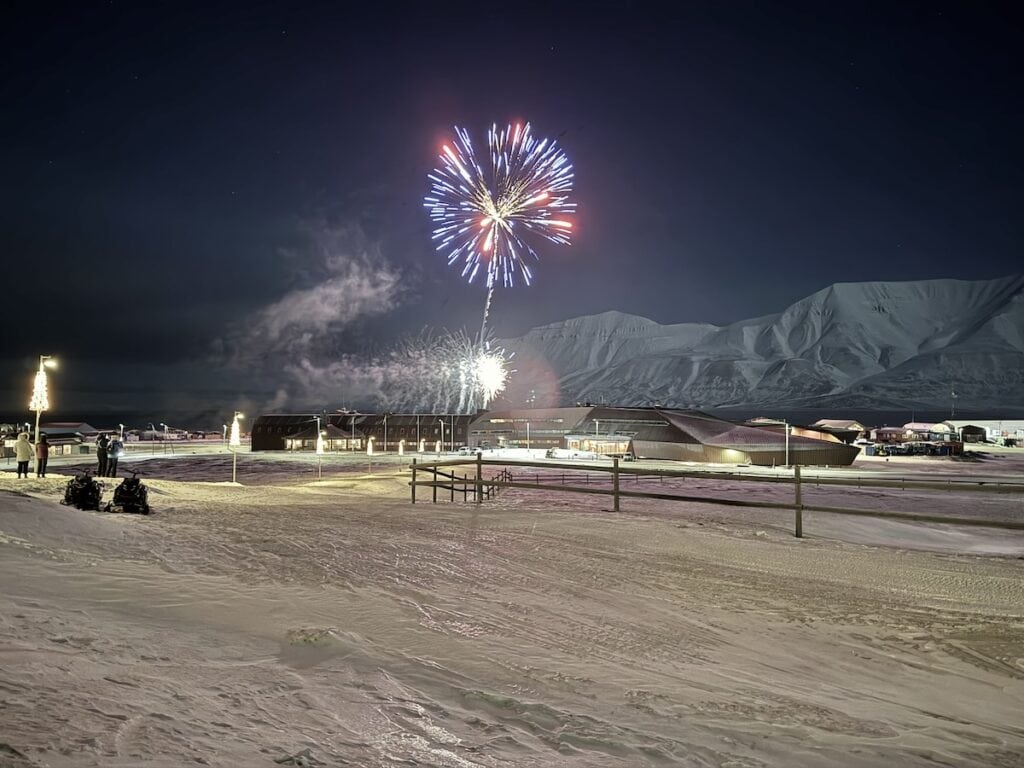
It wasn’t just the dramatic geography that captivated us, but the people we met—adventurers from all over the world who had chosen to make this rather inhospitable place their home. In fact, it was those people who convinced us that winter was even better than summer. So when we found ourselves with an opportunity to travel to Europe between Christmas and New Year’s, we knew exactly where we wanted to go.
WHY VISIT SVALBARD IN WINTER?
If you, too, are considering a trip to Svalbard, winter offers such a unique travel experience. Polar Night (24 hours of darkness) runs from late November through February, with the shoulder weeks offering a few hours of deep blue, polar twilight around midday. Either way, winter is when Svalbard feels most remote and distinctly Arctic, with snow-covered landscapes, fewer visitors, and conditions that are ideal for winter activities.
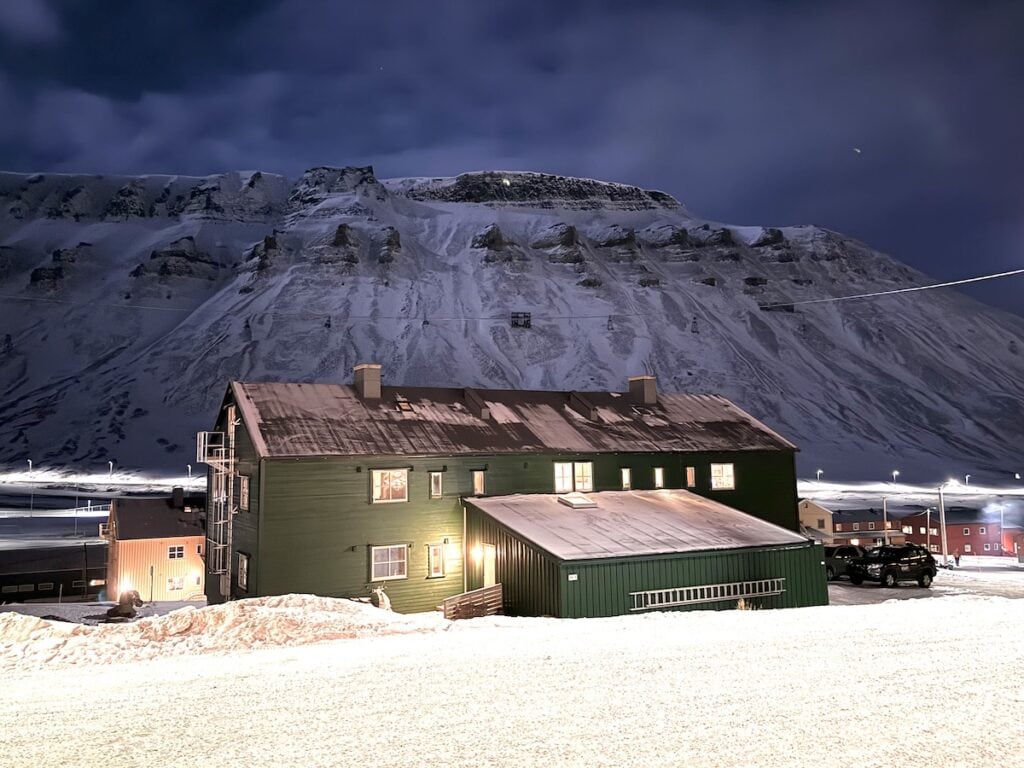
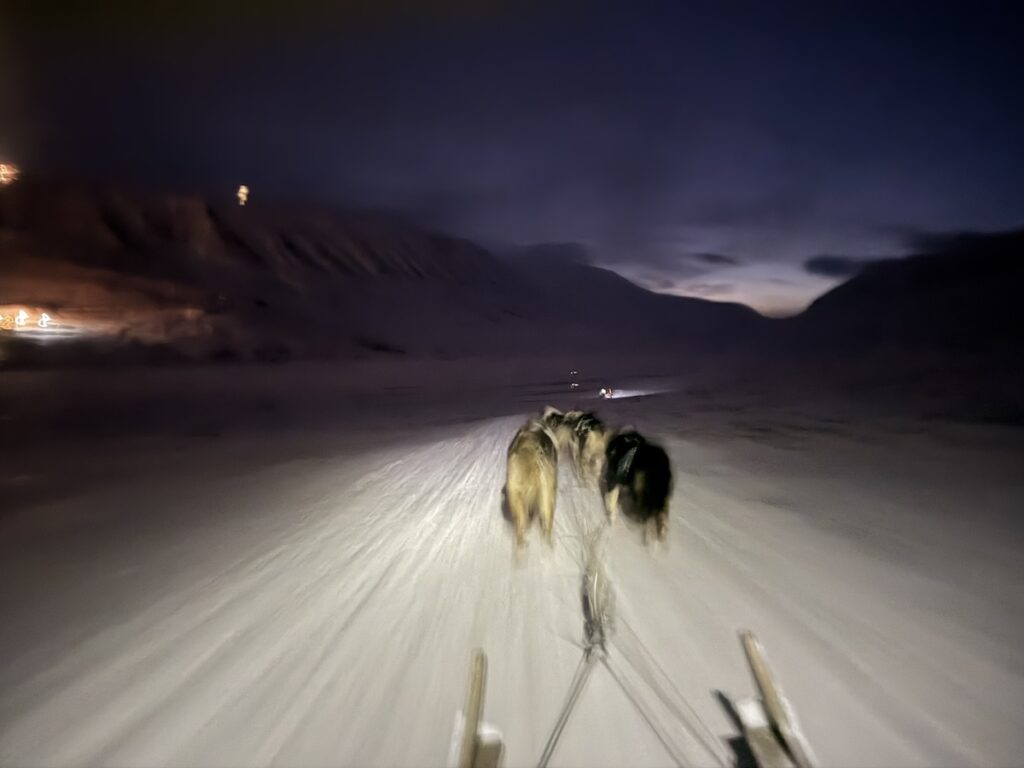
With those long hours of darkness, winter offers some of the best opportunities to see the Northern Lights. And there’s no better way to experience the aurora than while out enjoying winter-only adventures like ice-cave explorations, snowmobiling, and dog sledding. (Dog sledding is offered in summer as well, but only on wheeled carts — fun, but not quite the same.)
While I will do my best to answer all of your questions in detail within this post, I will start by saying this: this trip was easily one of my favourites ever. I may have thought that two visits to Svalbard would be enough, but here I am, just two weeks post-trip, already dreaming about a return.
So…here we go! I will start first with a quick little video to get you in a Svalbard frame of mind! Alternatively, use the menu below to find what you need quickly.
WINTER IN SVALBARD VIDEO (2 MIN.)
WHERE IS SVALBARD?
In a world of increasingly over-touristed destinations, I’ve become rather obsessed with seeking out less-known, less over-touristed places. (I’ll admit to even feeling a little annoyed when I saw that Afar Media listed Svalbard as one of their 11 Remote Places Worth Visiting in 2026.)
Svalbard (formerly known as Spitsbergen) is an archipelago located at roughly 78°N, about halfway between mainland Norway and the North Pole. It’s made up of several islands, the three primary ones being Spitsbergen (by far the largest), Nordaustlandet, and Edgeøya. Of these, only Spitsbergen has a permanent, year-round population.
Note: All maps in this post are clickable if you would like and interactive version.
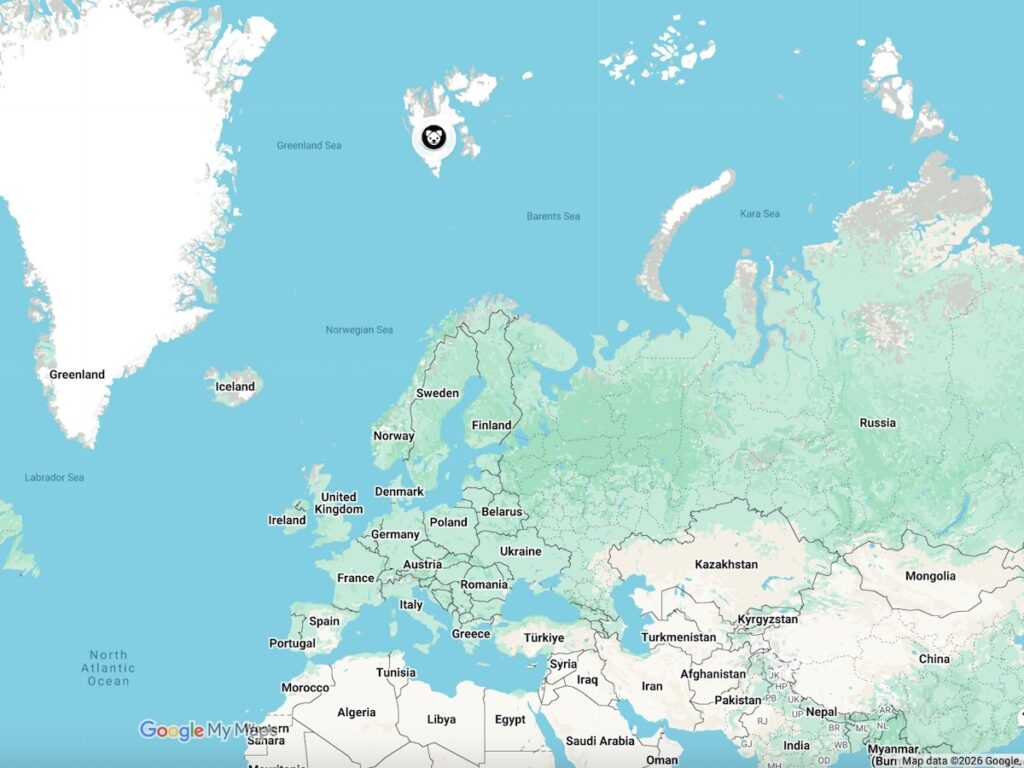
That population—2528 people when I last checked—mostly live in Longyearbyen, the capital and main settlement of Svalbard. This is where you’ll find the airport (LYR), the majority of hotels and restaurants, tour operators, and pretty much all of the services visitors rely on. While there are a handful of other small settlements scattered around the archipelago, Longyearbyen is where almost everyone arrives, departs, and bases themselves when visiting Svalbard.
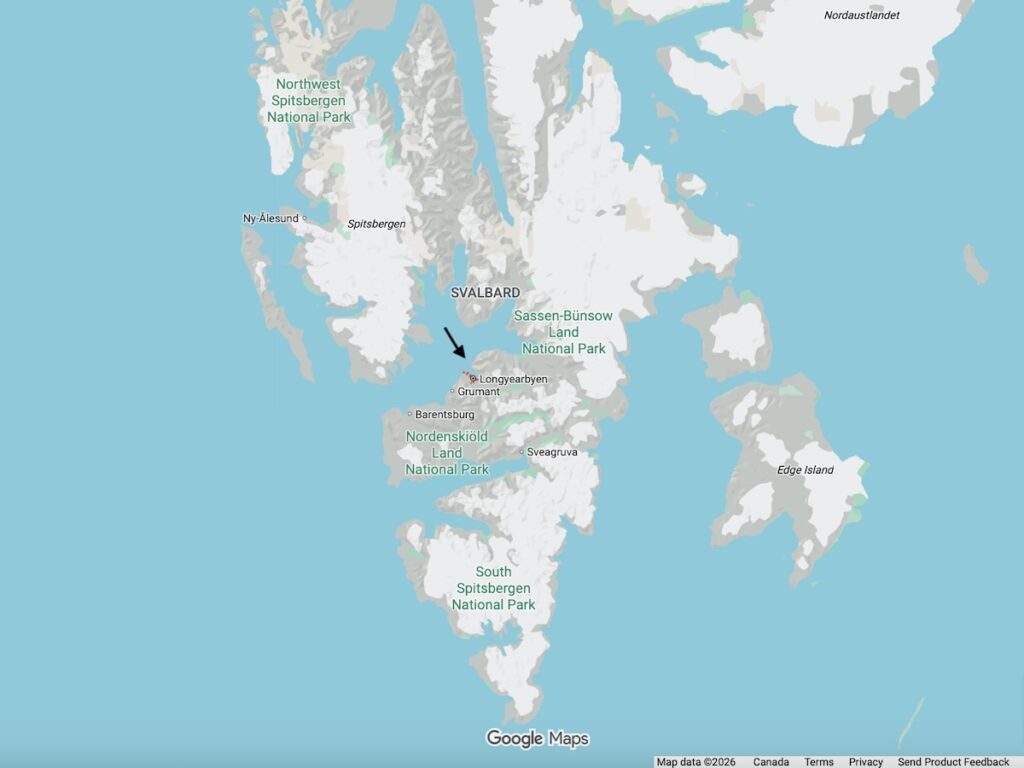
BEYOND LONGYEARBYEN
Beyond Longyearbyen, the other settlements include Barentsburg, Ny-Ålesund, and Pyramiden. Barentsburg is a Russian mining town, Ny-Ålesund is an international research hub and Pyramiden is an abandoned Soviet-era settlement that visitor were once able to visit, but owing to Russia’s invasion of Ukraine and the related violations of international law and human rights, tours have largely been suspended.
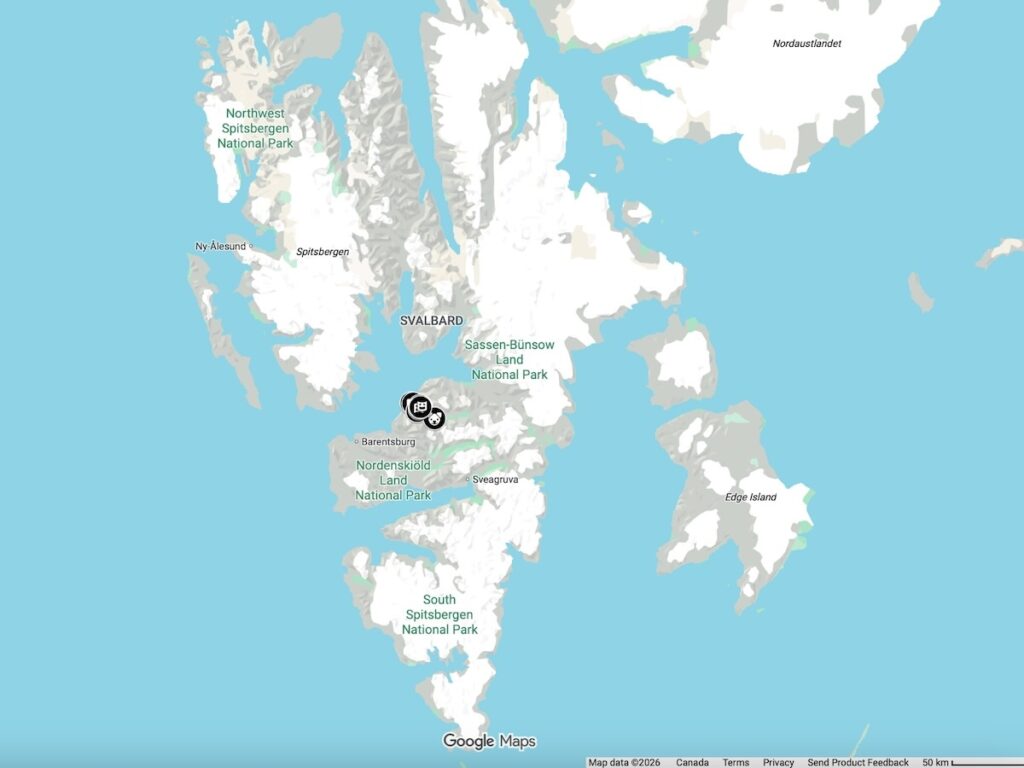
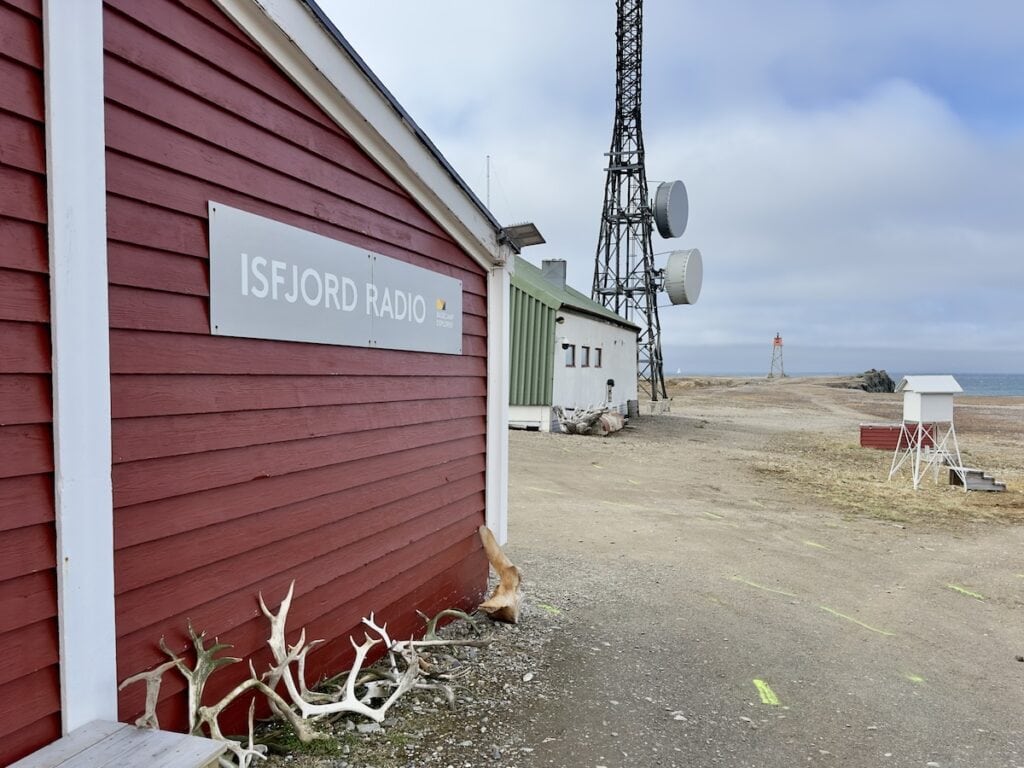
There is one other place worth mentioning—especially for those obsessed with remote, boutique hotel experiences (Like me!)—and that’s Isfjord Radio Adventure Hotel. This former radio and navigation station is about 90km from Longyearbyen and is reached by boat in summer and by dogsled or snowmobile in winter. Our summer stay there (for a very significant birthday) was truly one of the most extraordinary travel experiences we’ve ever had.
Read about our Isfjord Radio Adventure Hotel stay here.
WHY VISIT SVALBARD DURING THE POLAR NIGHT?
As mentioned earlier in this post, Polar Night in Svalbard lasts for roughly 2.5 months, from late November to mid-February. This was actually a big draw for us. We were genuinely curious to know how it would feel to live in complete darkness, 24 hours a day.
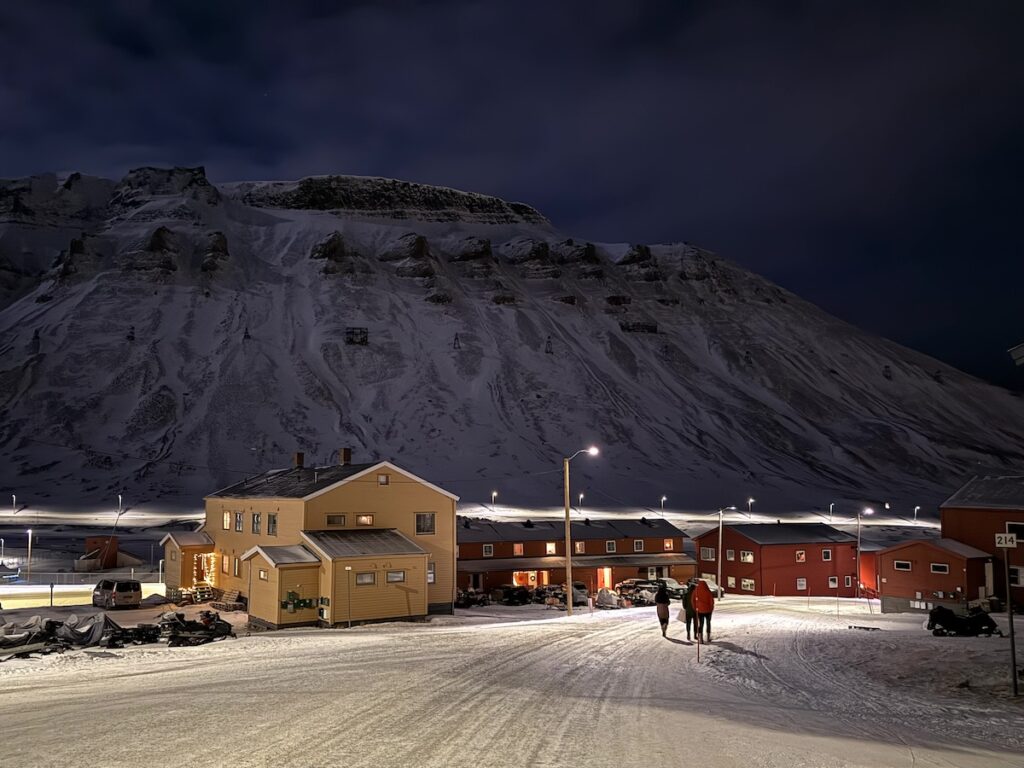
We were also interested in visiting Longyearbyen at a quieter time of year. As a town so closely tied to tourism, we wanted to experience it when things were slower, allowing us to get a better sense of what life in this northern settlement might feel like for the people who actually live there.
And of course, Polar Night is theoretically the best time to see the Northern Lights, since dark skies are essential. Our visit happened to coincide with a full moon, which made aurora viewing a little more challenging, but it also lit up the landscape so beautifully.
TRUE STORY: It was so dark when we arriving in Longyearbyen that we had a hard time finding our Airbnb apartment building, which was described as “the yellow one.” It was –24°C and pitch dark, and we couldn’t tell the red building from the orange one, the mustard-coloured one, or the other yellow one. And let me tell you—nothing erodes travel enthusiasm faster than dragging your luggage through the snow for 25 minutes in near-complete darkness, freezing your tail off. I’m still not entirely convinced our building was actually yellow.
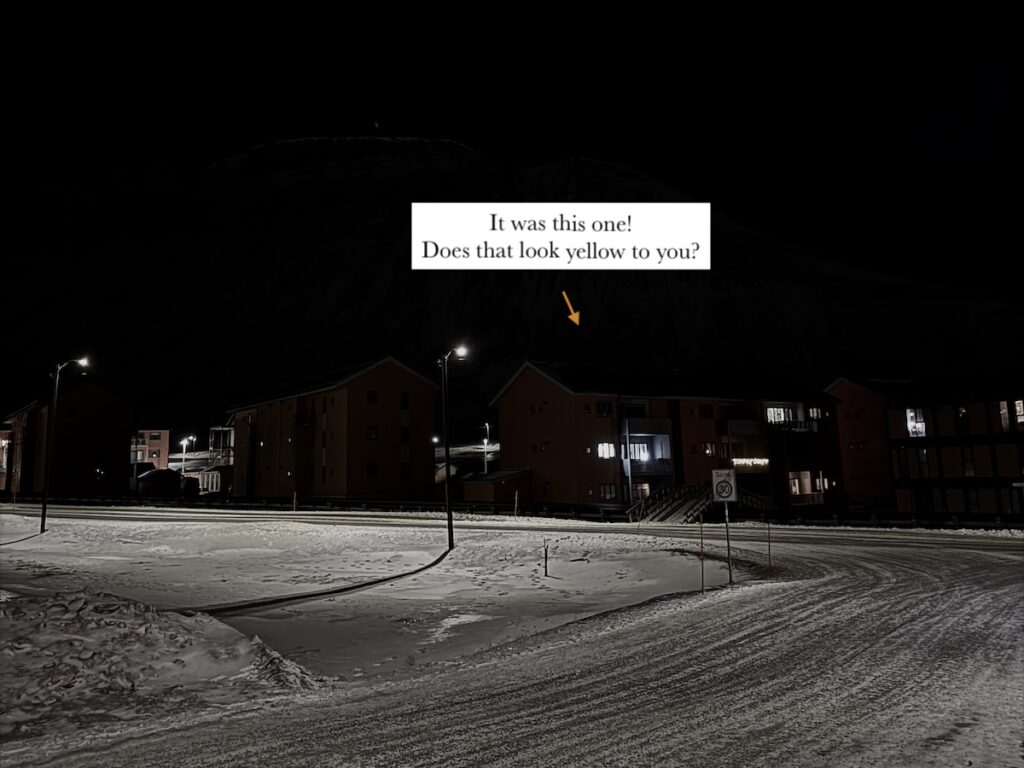
While it was hard to find in the dark, I did really love our 3-bedroom, Longyearbyen vacation rental apartment. It was so cozy and was really reasonably priced in an otherwise very expensive town. Here is the link to our Svalbard 3bdrm Spacious Modern City Centre Apartment (not an affiliate link).
GETTING TO SVALBARD
Despite this very remote location, it’s not that difficult to get to Svalbard, but you have to get to Norway first. Flights to Longyearbyen run daily from Oslo – OSL (southern Norway) and Tromsø – TOS (northern Norway). Both SAS (Scandinavian Airlines) and the discount carrier Norwegian Airlines service these routes. Some flights start/end in Oslo with a stopover in Tromsø.

We paid about 5,000 NOK (≈$500 USD) per return ticket from Oslo on our summer trip and around 6,000 NOK (≈$600 USD) in winter. I’ve seen roundtrip prices on this route range anywhere from 2,500 NOK to 10,000 NOK (about $250–$1,000 USD).
TIP: BOOK EARLY. With a limited number of flights and seats, prices can rise quickly as availability drops. This is especially true in summer, when Longyearbyen serves as a major embarkation point for Arctic cruise ships. Cruise operators sometimes pre-book large blocks of seats, which can leave very limited availability for locals and independent travelers.
One other thing I want to note is that while you might think you don’t need to arrive at such a small airport two hours ahead of your return flight to Oslo or Tromsø, you really should. The security screening process is extremely slow, so that extra time is genuinely needed. To save a bit of time, there are kiosks in town at the grocery store where you can print off your boarding passes and baggage tags 24 hours before flight time.
GETTING AROUND SVALBARD
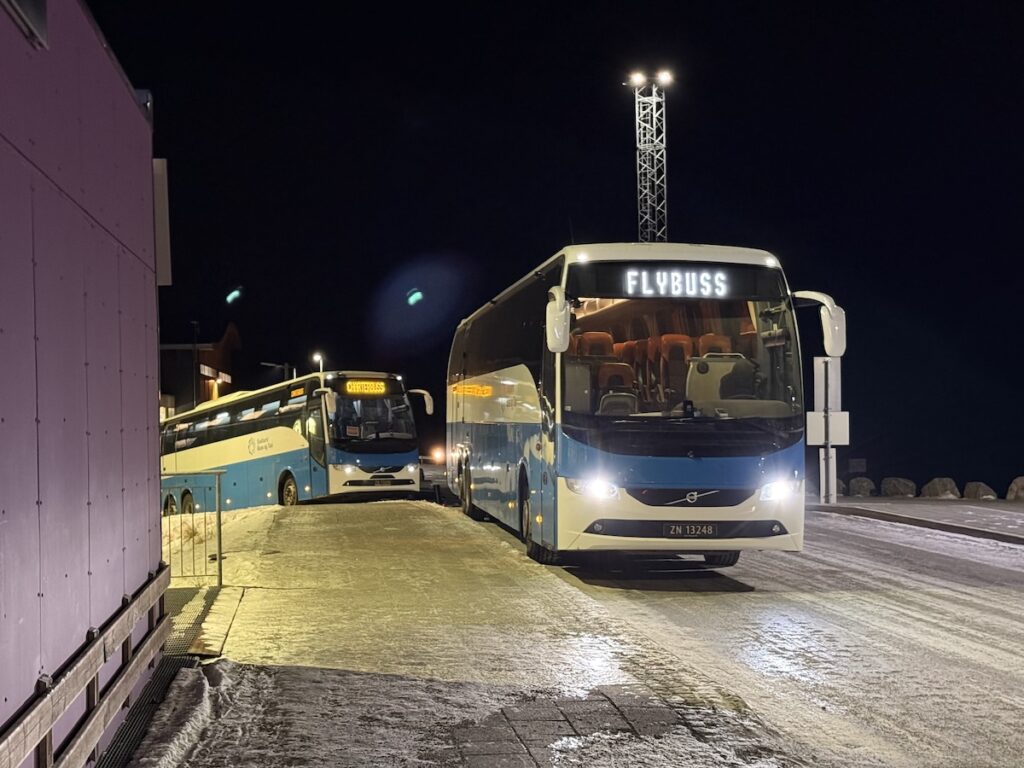
Upon arrival in Longyearbyen, there are two main ways to get into town. The easiest is the shuttle bus (Flybussen), which stops at the major hotels as well as the centrally located tourism office (the Visit Svalbard building). Be sure to tell the driver your stop when you board, as not all the buses make the same stops. The driver will come around to collect payment by credit card before departing the airport.
The bus costs 110 NOK per adult, with reduced fares for students and children, and typically departs about 30–40 minutes after flight arrivals. You can learn more on the official website.
Alternatively, there are two companies offering taxi service in Longyearbyen. We used Longyearbyen Taxi for several rides on our recent stay, including our return trip to the airport, and found them to provide excellent service. As there only a few taxis in the city, I would definitely pre-book them via the Longyearbyen Taxi website, especially for airport transfers. Our taxi trips around town cost between $12-18 USD (for 1-4 people).
Car rentals are available in Longyearbyen, but honestly, as a visitor, you should not need one. The town is very walkable and every tour we have gone on in summer and winter has offered a pick-up service.
But wait…what about the polar bears? Is it safe?
WHAT ABOUT POLAR BEARS?
The opportunity to see polar bears in the wild is one of the main reasons people choose to visit Svalbard. In winter, however, most polar bears are far out on the sea ice, hunting. Pregnant females den during this time and typically emerge with their cubs in early spring, usually around March.
So while not impossible, the probability of seeing a polar bear in or near Longyearbyen during the winter is very, very low. (And to be honest, the more I have learned about polar bears, the less I want to see one.)
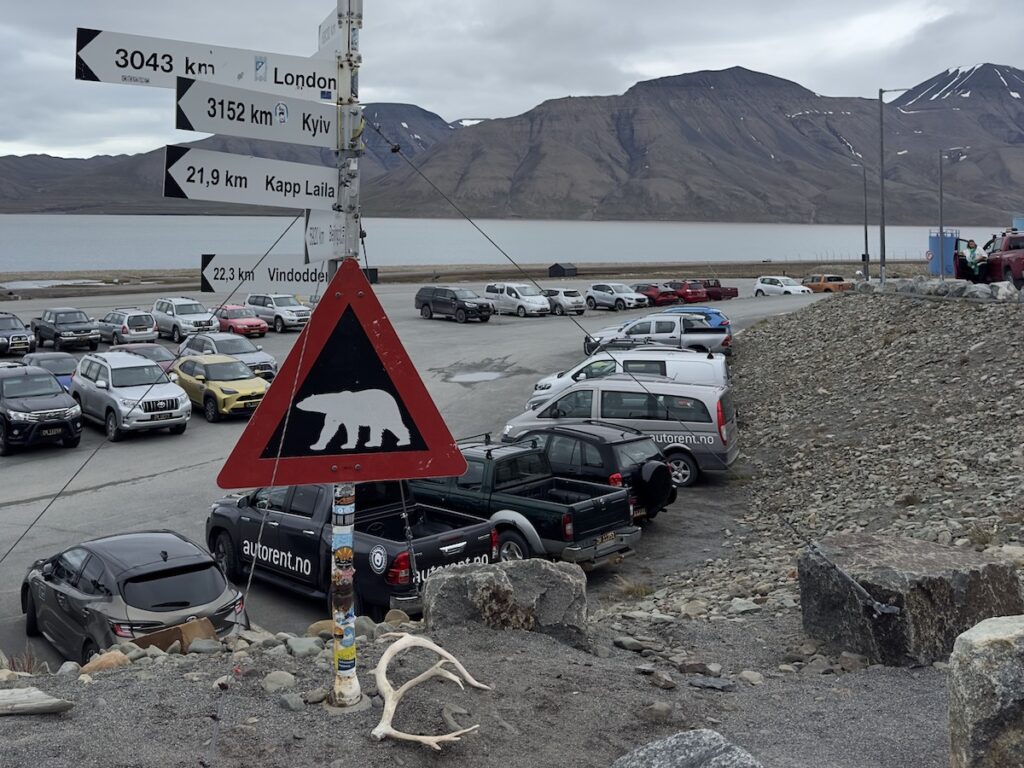
The town of Longyearbyen also has what’s known as a polar bear safe zone. When a bear is spotted nearby, a detailed safety protocol is activated to deter them and keep both people and bears safe. Encounters within the town remain extremely uncommon, but preparedness is taken very seriously.
LONGYEARBYEN SAFE ZONE MAP
Below is a map of the polar bear safe zone from the Visit Svalbard website. It’s a bit lacking in detail, but it’s helpful to know that all major hotels and businesses fall within the safe zone (shown in light pink). The central town area is marked by a darker pink inset rectangle. You can safely walk around all the pink areas.
See also Safety in Svalbard (Visit Svalbard).
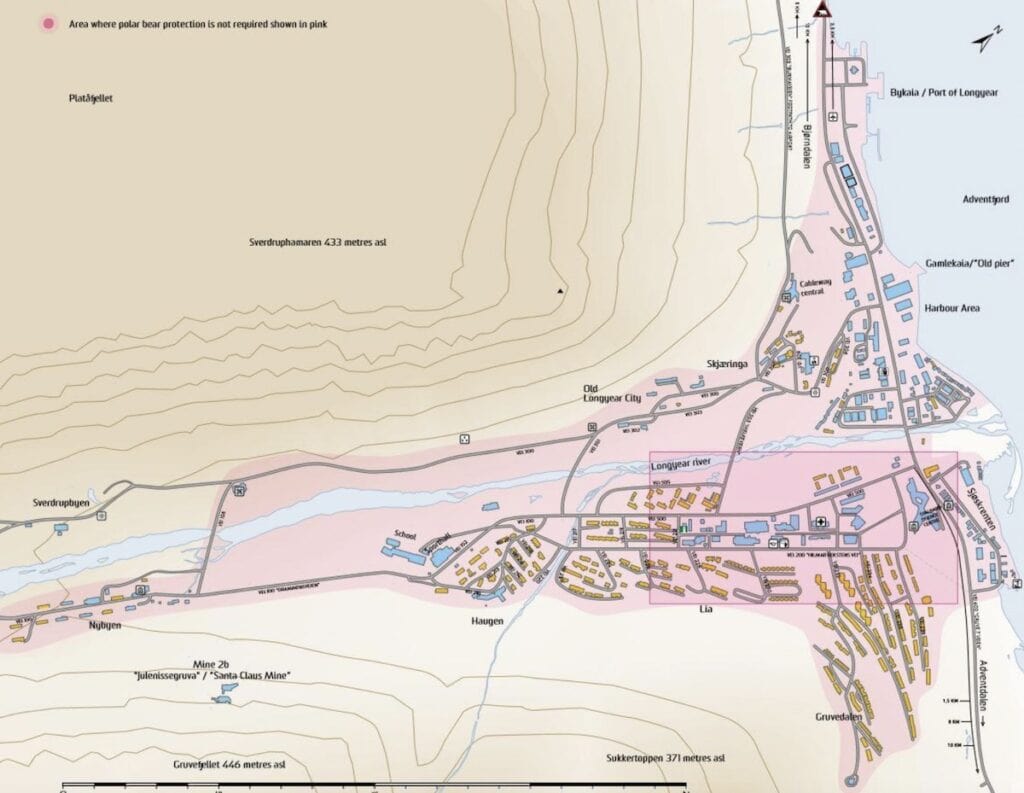
Outside of Longyearbyen’s polar bear safe zone, the rules change. It is not permitted to leave the safe zone without polar bear protection, which means that someone in your group must be carrying a firearm. On guided activities such as dog sledding or snowmobiling tours outside of town, this responsibility falls to the guide, who carries a rifle and ammunition as part of standard safety protocol.
It’s also worth noting that while unloaded firearms may be carried through town, it is forbidden to have a loaded weapon inside Longyearbyen, and weapons are not permitted inside businesses.
You’ll see signs posted on shop doors reminding visitors of this. For me, it was my first real “Whoa… this place really is wild!” moment.

WHERE TO STAY IN LONGYEARBYEN
In winter, when temperatures drop and wind can be a real factor, I’d recommend staying as close to the town centre as possible. (The darker pink rectangle area on the map above.)
BEST LONGYEARBYEN HOTELS IN WINTER
Two hotel properties I particularly like in Longyearbyen are Basecamp Hotel and the Radisson Blu, which sit at opposite ends of town’s main pedestrian shopping area. Both offer comfortable rooms, good on-site dining, and helpful staff who can assist with activities and logistics during your stay.
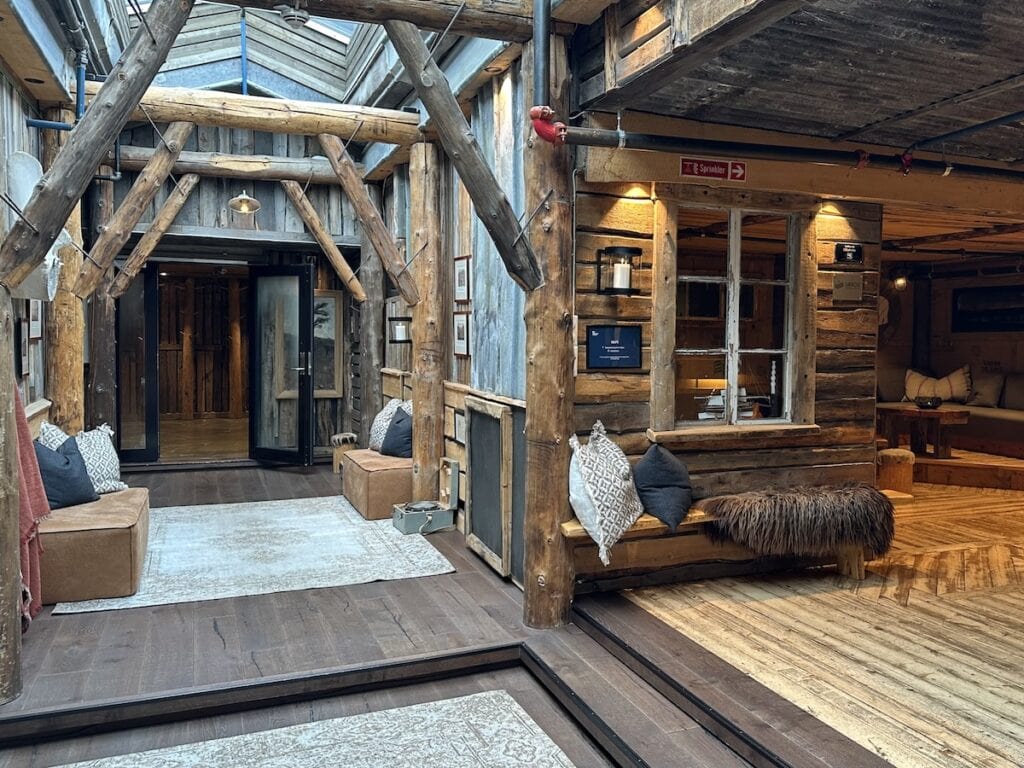
Basecamp Hotel is also a great option for families or larger groups wanting to stay together. In addition to standard rooms, they offer suites that can accommodate up to six guests.
Svalbard Hotell is a solid choice for those who want to self-cater (or partially self-cater). Their apartment-style accommodations can sleep two to four guests and are well suited to longer stays.
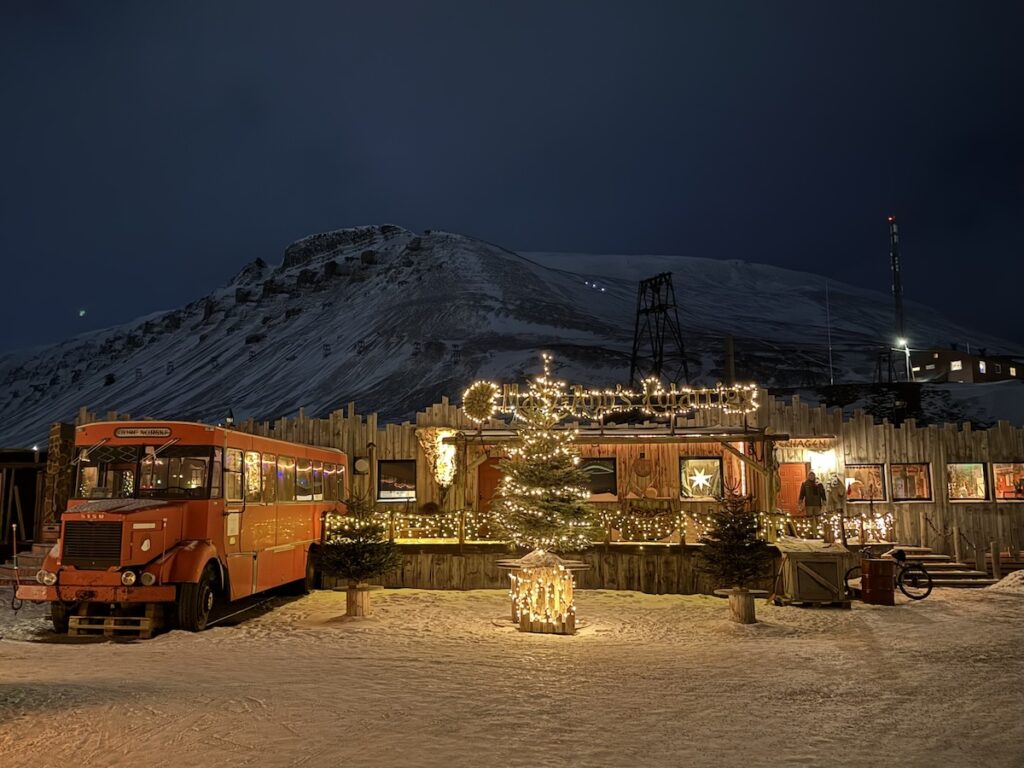
There’s one last place I want to mention, despite the fact that it’s about 600 metres from the centre of town—because it’s just so unique. The quirky and eclectic Mary-Ann’s Polarrigg is one of the few budget-friendly options in Longyearbyen, offering rooms that sleep two to four people (note that some rooms have shared bathrooms).
Even if you don’t stay there, make a point of stopping in for a drink or a meal at their excellent on-site restaurant, Vinterhagen. And be sure to check out the photos of Mary-Ann lining the main hallway—you won’t be disappointed.
If you’d like to explore the hotel options mentioned above, along with other accommodation choices in Svalbard, take a look at the map below.
VACATION RENTALS IN LONGYEARBYEN
While we stayed at the Svalbard Hotell Polfareran on our first trip (also a very decent hotel), we opted for a three-bedroom vacation rental apartment on this visit. We were traveling as a family, and this was a much more affordable option, with a lot more space. ($375 USD/night for the apartment vs. almost $590 USD/night for 2 small hotel rooms.)
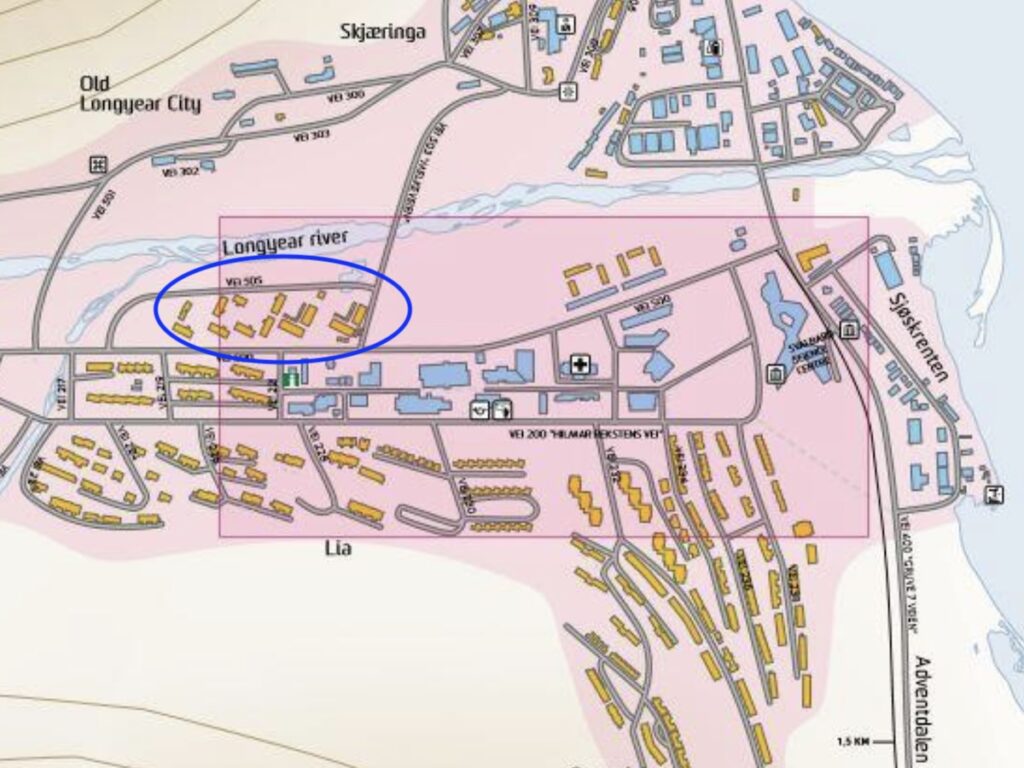
As with hotels, in winter it’s ideal to be as close to the centre of town as possible. I have circled a group of apartment buildings where many of the vacation rentals are located. I really like this location, as you are only about 50m from the main pedestrian street. You are also very close to the Visit Svalbard tourism office (shown in green), which you are very likely visit once or twice during your stay. The office is also main pick-up spot for excursions and the bus to the airport.
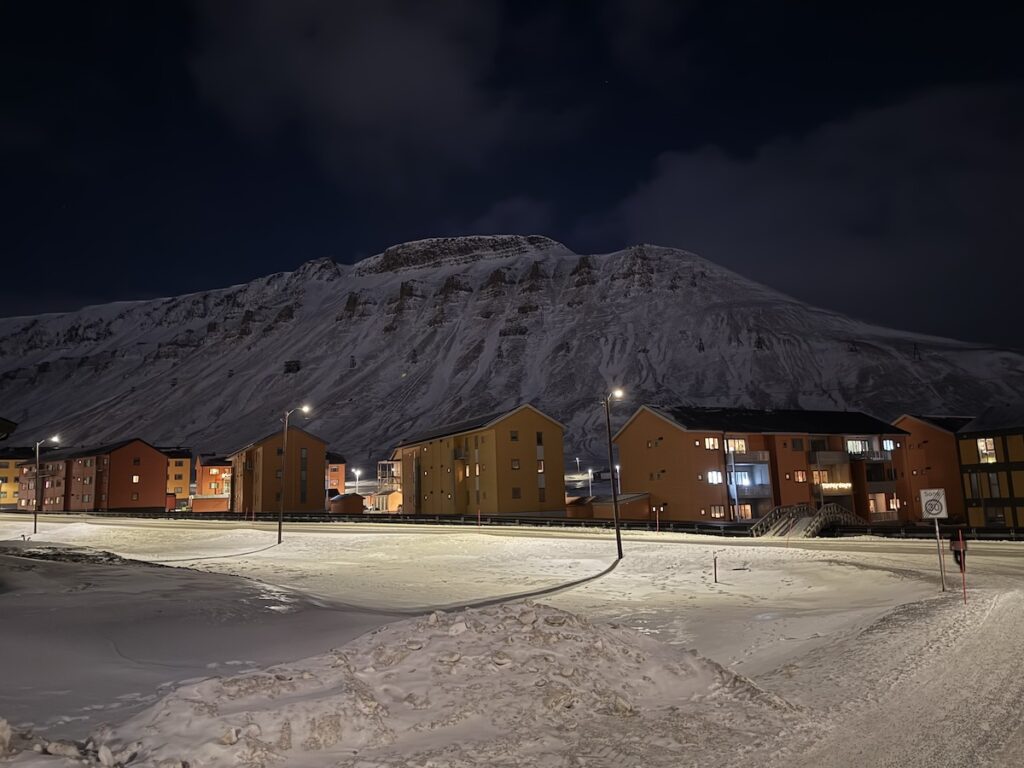
Something important to note is that, compared to most places, Longyearbyen has precious few vacation rentals. On a quick check, I saw about 36 listed on Airbnb and none on VRBO. If you see something you like, I wouldn’t hesitate too long, or it might be gone.
Another thing to be mindful of if opting for a vacation rental over a hotel, is grocery store hours. Svalbardbutikken (the COOP) is the main—and really only—place to buy groceries in town. Our flight was delayed, and we weren’t able to get there before closing on our first night.
TIP: During the December holiday season, when store hours may be shorter, Visit Svalbard publishes a handy printout with all the store hours. We found it near the car rental kiosk at the airport and at their office in town.
10 BEST THINGS TO DO IN SVALBARD IN WINTER
At long last—the most exciting part: what to do in Svalbard in winter. And trust me, you will not run out of things to do.
A couple of things to note first. Most activities include pick-up from your hotel or a central meeting point, such as the Visit Svalbard tourism office. Tours also typically provide any specialized clothing or equipment you’ll need beyond what’s required for walking around Longyearbyen—think full ski suits, balaclavas, gloves, goggles, winter boots, headlamps, and anything else essential for being outdoors in Arctic conditions.
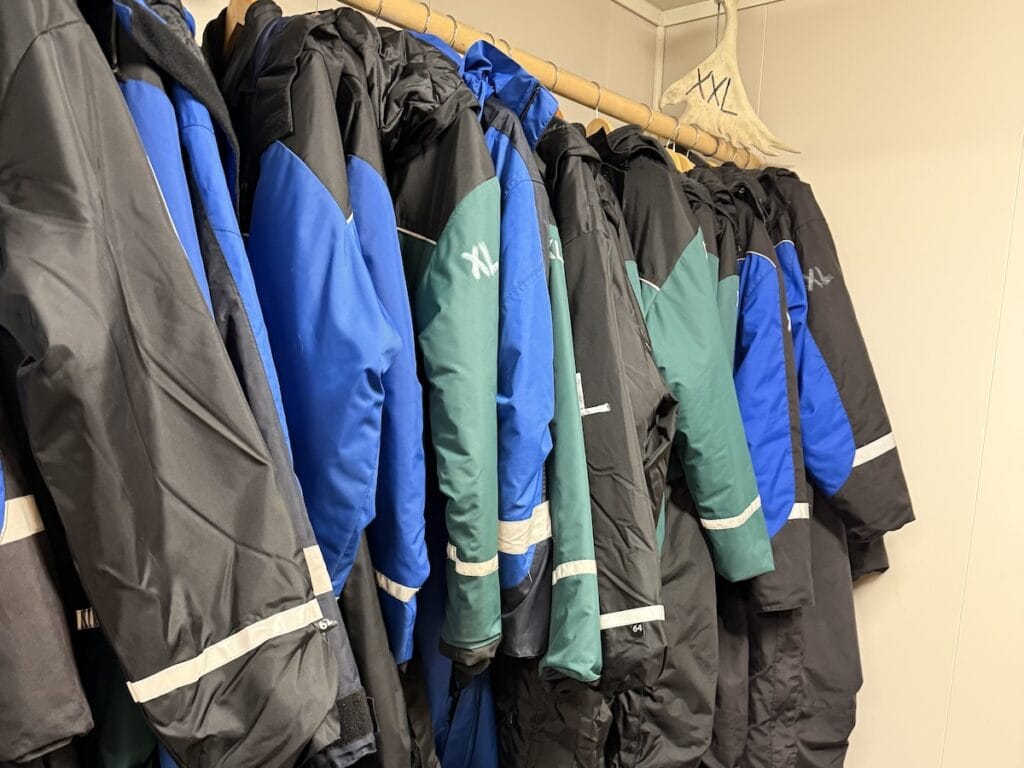
Important Tip: Winter can still be quite busy, and tour spots are limited, so I strongly recommend booking your must-do activities in advance to avoid disappointment—especially snowmobiling, dog sledding, and Northern Lights tours.
With that out of the way, here are the top things to do during your winter stay in Longyearbyen.
1. DOG SLEDDING
Nothing quite compares to experiencing the Arctic night while racing across the snow behind a team of huskies. Several companies offer dog sledding in Longyearbyen, but we’ve been out twice with Green Dog Svalbard—once in summer and once in winter—and had a truly excellent experience both times.

Their tours are typically half-day (morning or afternoon) and include time to meet the dogs, a memorable dog sledding adventure, and a warm-up with snacks in a cozy cabin afterward. Full winter suits, balaclavas, gloves, headlamps and boots are provided.
2. SNOWMOBILING
Snowmobiling is one of the most popular ways to experience the Polar Night in Svalbard. Trips range from half-day rides into nearby valleys to full-day adventures across the vast east or west coast of Spitsbergen. Some longer tours also include a stop at an ice cave, where you can step inside a glacier and see the Arctic from a completely different perspective.
We had an absolutely fantastic time with Svalbard Adventures on a half-day trip into the valley. We learned a ton about Svalbard, caught a brief glimpse of the Northern Lights, and even got to watch a few reindeer grazing along the way.
See: Snowmobiling Adventures in Svalbard
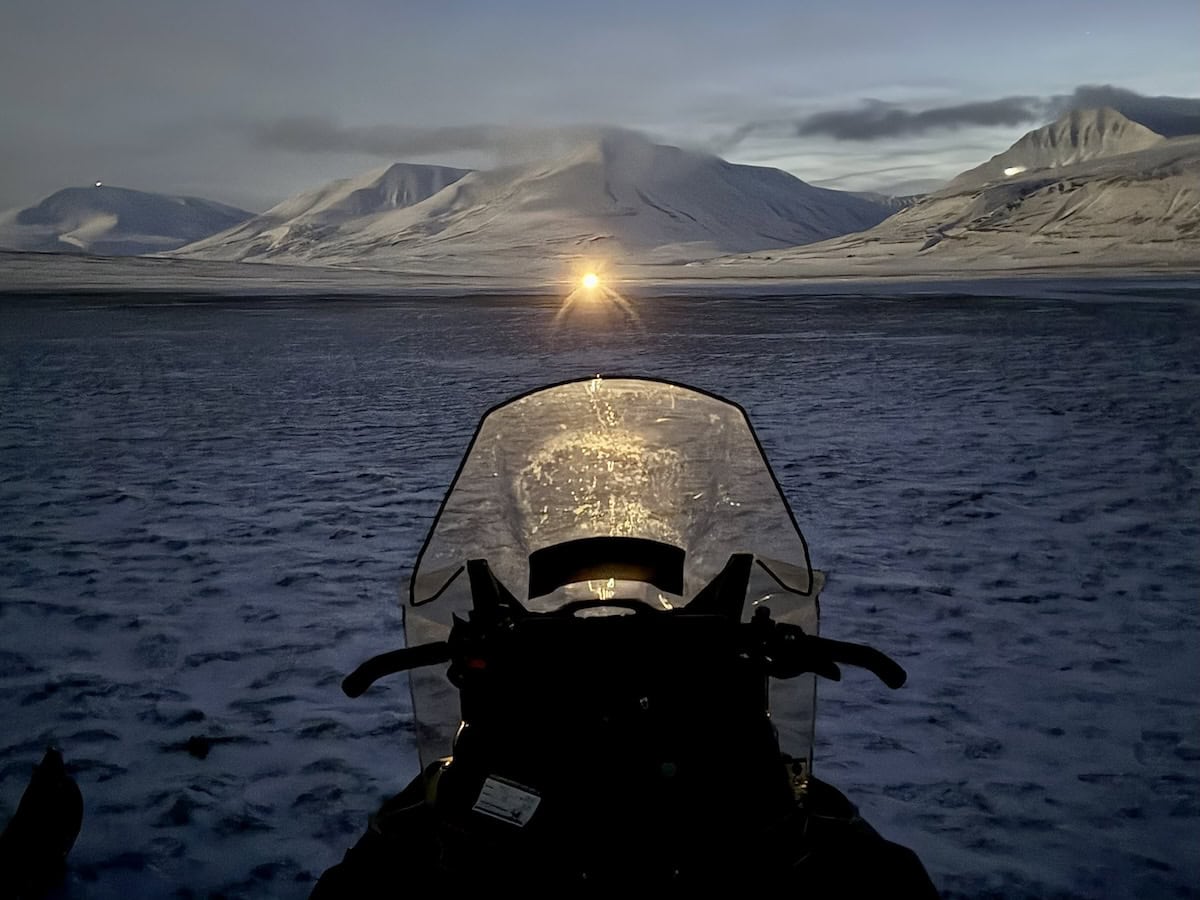
You don’t need to worry much about what to wear—snowmobiling companies provide warm boots, a full suit, helmet, goggles, and a balaclava. Even the snowmobile handles are heated, which was absolutely necessary when we went, as it was –24°C.
If you’re interested in this activity but want a gentler environmental footprint, there’s also the option of a half-day electric snowmobile adventure into the valley.
3. THE NORTHERN LIGHTS
Seeing the Northern Lights is, for many people, right at the top of the Svalbard wish list—and while there are never any guarantees, winter in Longyearbyen gives you a really good shot. On strong nights, it’s even possible to spot the auroras from town, but because the centre is fairly well lit, your chances improve dramatically once you get outside the settlement.
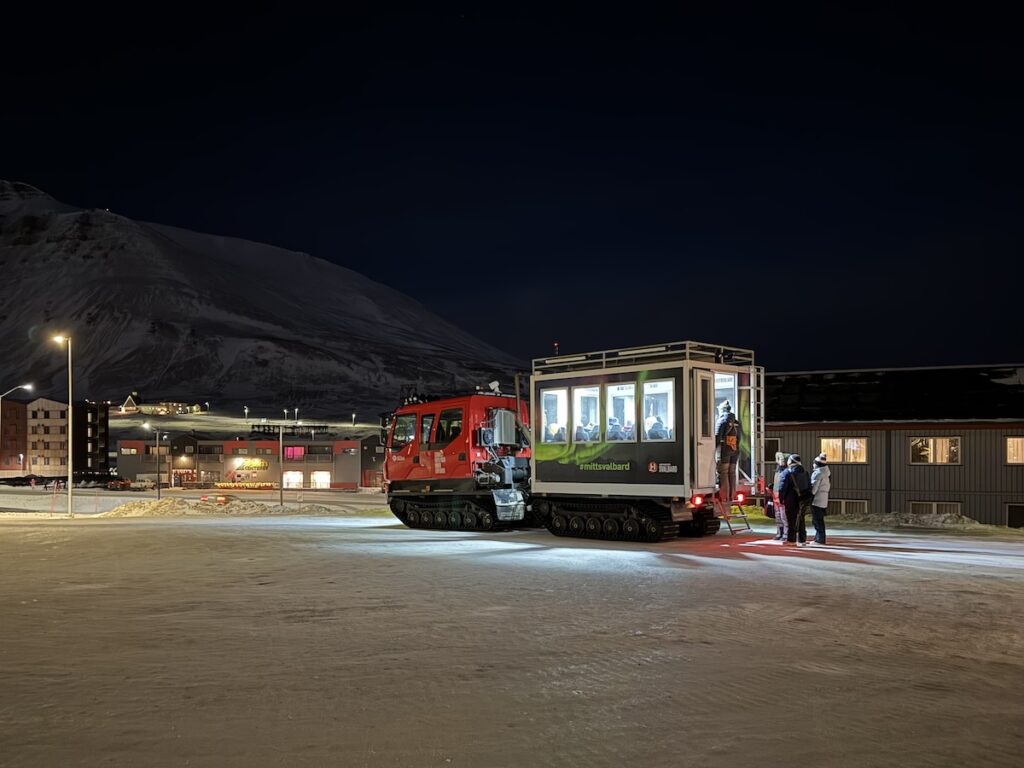
Most popular tours take you outside of town, which means you have a great opportunity to see the aurora on a snowmobiling tour (how we saw them), a dogsled tour, or a dedicated Northern Lights tour. With the latter, not only will you learn more about the science behind this celestial phenomenon, but you can also stay a little cozier — warming up in a specially outfitted trailer while you wait.
For booking see:
- Northern Lights by Snowcat (2hrs)
- Northern Lights by Snowmobile with Dinner (4hrs)
- Svalbard Northern Lights Tour by Car (3hrs)
- Svalbard Northern Light Photography Tour (4hrs)
NOTE: As someone who has travelled specifically to see the Northern Lights before, a few realities are worth keeping in mind. Dark skies alone aren’t enough—clear weather, little to no moonlight, and strong geomagnetic activity all play a role.
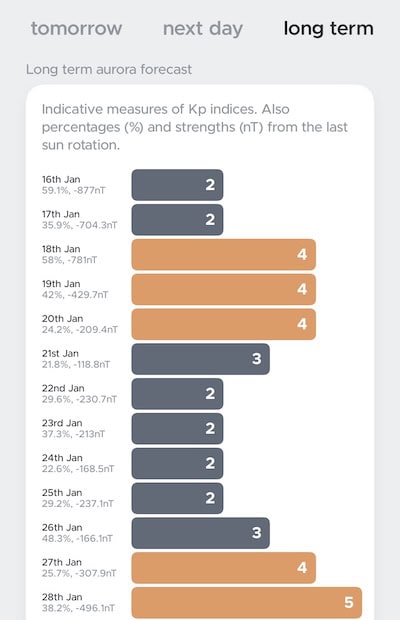
To monitor conditions, a Northern Lights tracking app can be incredibly useful for checking forecasts and deciding when it’s worth heading out—or which days you want to book activities. I really like the app Hello Aurora. I’ve found that I can start seeing some colour in the sky when the app shows a KP value of 4 or greater on a scale of 9. Here is a screenshot from the app.
4. LONGYEARBYEN WALKING TOURS AND HIKES
Longyearbyen has a fascinating history and there is no better way to learn about it than on a walkabout with a local historian.
The Longyearbyen City Walk with Rana Itinerans is a guided, 2½-hour stroll through the history and heart of Svalbard’s capital. You’ll discover the remains of the original settlement, enjoy scenic fjord views, and learn about the coal mining past, Arctic life, and how people adapt to remoteness and climate change. This informative tour runs year-round and can be booked via the Visit Svalbard website.
See also: Private Guided Walking Tour of Longyearbyen (3hrs)
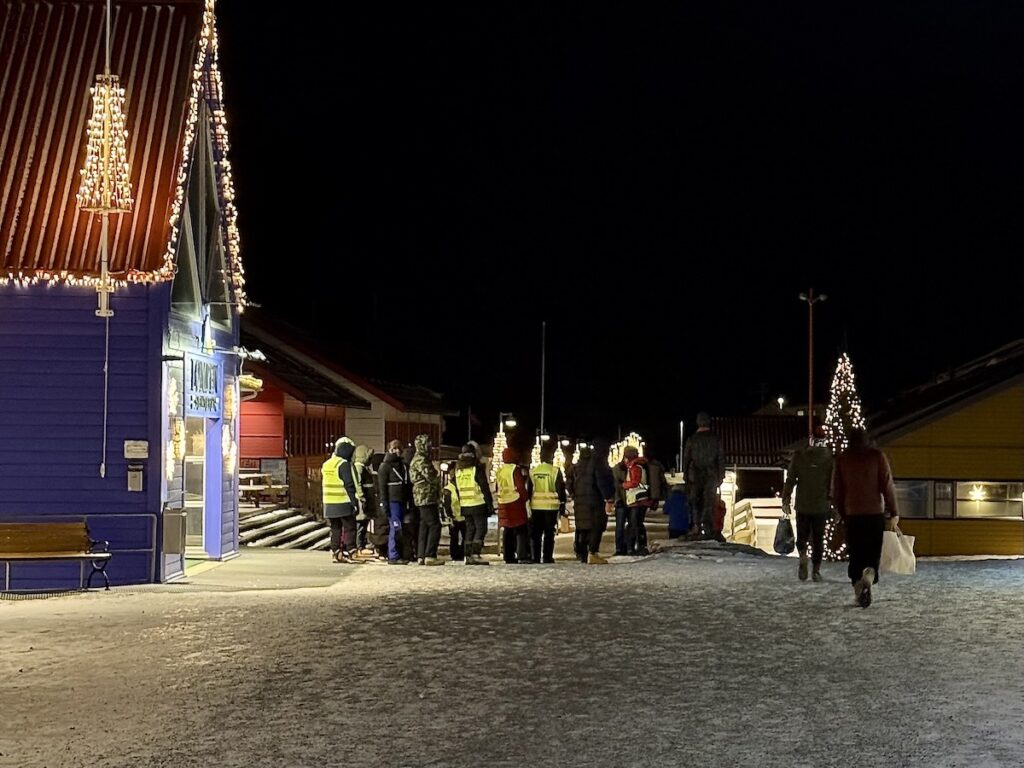
You can also do some guided hikes that take you outside the town centre. Please note the word guided, as you will need polar bear protection (the guide will carry a rifle).
For booking see:
If you’re interested in photography, there are some tours that specialize in this pursuit. They can offer great tips — especially given the nuances of night-sky photography. You also want to be able to set up your shot quickly in such cold weather! (I shot this trip entirely on my iPhone 16 Pro — the worst iPhone camera yet — and a very sad little portable tripod, and the results are… quite disappointing.)
For booking see:
5. THE GRUVE 3 MINE TOUR
The Gruve 3 mine tour takes you into the depths of one of the Arctic’s best-preserved coal mines. The mine guides do a superb job of bringing the mine’s history to life, sharing intriguing tales of the miners’ daily lives, their ingenious techniques, and the pivotal role Gruve 3 played in Svalbard’s economic development.

We actually did this tour while visiting in the summer, but it does run throughout the winter as well. The mine is quite close to the airport, and it’s possible to get dropped off there afterwards. To do this, you’ll need to email Gruve 3 directly with your request and your reservation number so they can arrange a vehicle with room for your luggage.
You can book Gruve 3 Mine Tour tickets here. Please try to book well in advance of your visit. (We were only able to get two tickets for our dates when we wanted four, as we booked too late.)
TIP: The bus for the Gruve 3 mine drives past the Global Seed Vault. As it’s outside of the town polar-bear safe zone, this is a great way to catch a glimpse of it. (More in the next section.)
6. THE GLOBAL SEED VAULT
If I mention Svalbard to someone and they happen to know where it is, it’s usually because of the polar bears or the Global Seed Vault. If you’ve never heard of it, the Global Seed Vault—located just outside Longyearbyen—is a secure underground facility designed to safeguard the world’s crop diversity by storing millions of seeds deep inside the Arctic permafrost.
Here’s the bad news, though. While you can see the outside of the vault, access to the interior is strictly limited to those who work there. There are, however, some tours that take you to the exterior and explain its purpose and importance. As mentioned above, the shuttle bus to the Gruve 3 mine also passes by the site, but blink, and you will miss it.
For booking, see:
If you’re curious about what it is like inside, check out this short video that shows you around.
7. CAFE HUSKIES
With all the time you’ll be spending outdoors in Svalbard, this cozy café—home to several resident huskies wandering around—is a lovely place to warm up and take a break.
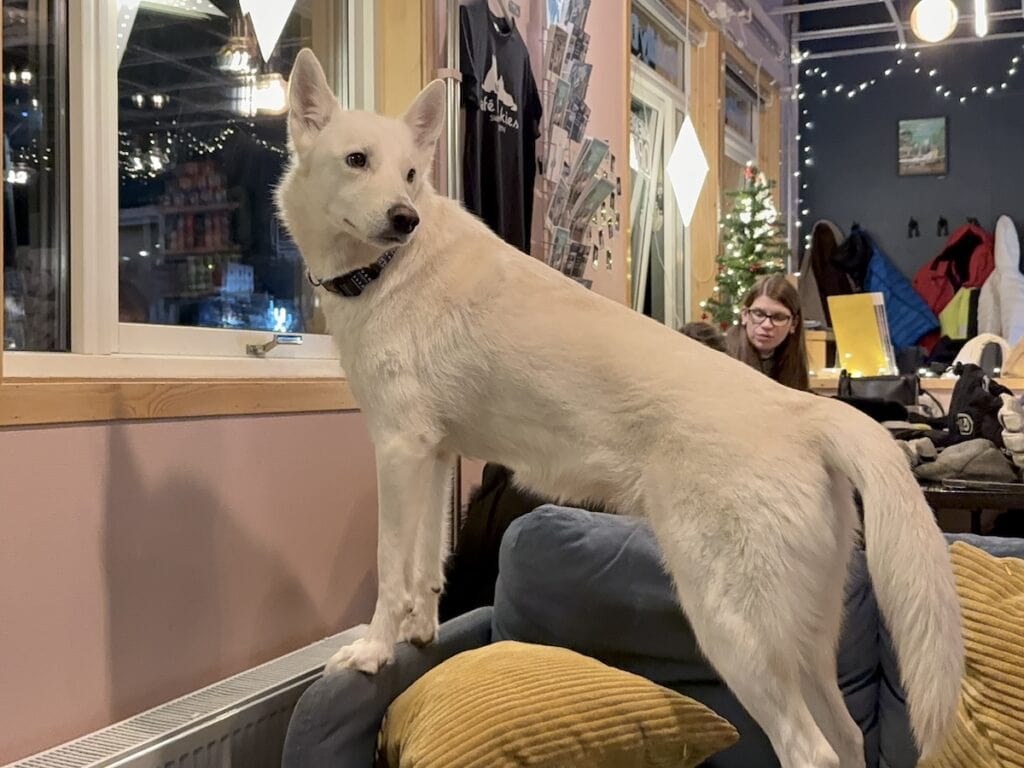
They serve good coffee, tea, matcha and hot chocolate, along with very tasty soups and sandwiches, plus a well-curated selection of souvenirs.
Learn more on the Cafe Huskies website.
8. MUSEUMS AND GALLERIES
Longyearbyen may be small, but it has a surprisingly good selection of museums and galleries that offer insight into Svalbard’s history, exploration, and creative life. Here are the ones we have enjoyed most:
NORDOVER GALLERY – A mix of contemporary and traditional Arctic art by both local and international artists, capturing life and landscapes in the High Arctic. The gallery also has a lovely gift shop and houses the town’s small cinema, which screens documentaries as well as first-run films. (Closed Tuesdays. Also closed Dec. 25th – Jan. 1st.)
SVALBARD MUSEUM – One of the most worthwhile stops in town, this museum provides a thoughtful overview of both the natural and human history of the archipelago. Exhibits cover everything from early exploration and mining to wildlife and climate change. The gift shop is also excellent, with a particularly good selection of books. (Open year-round.)
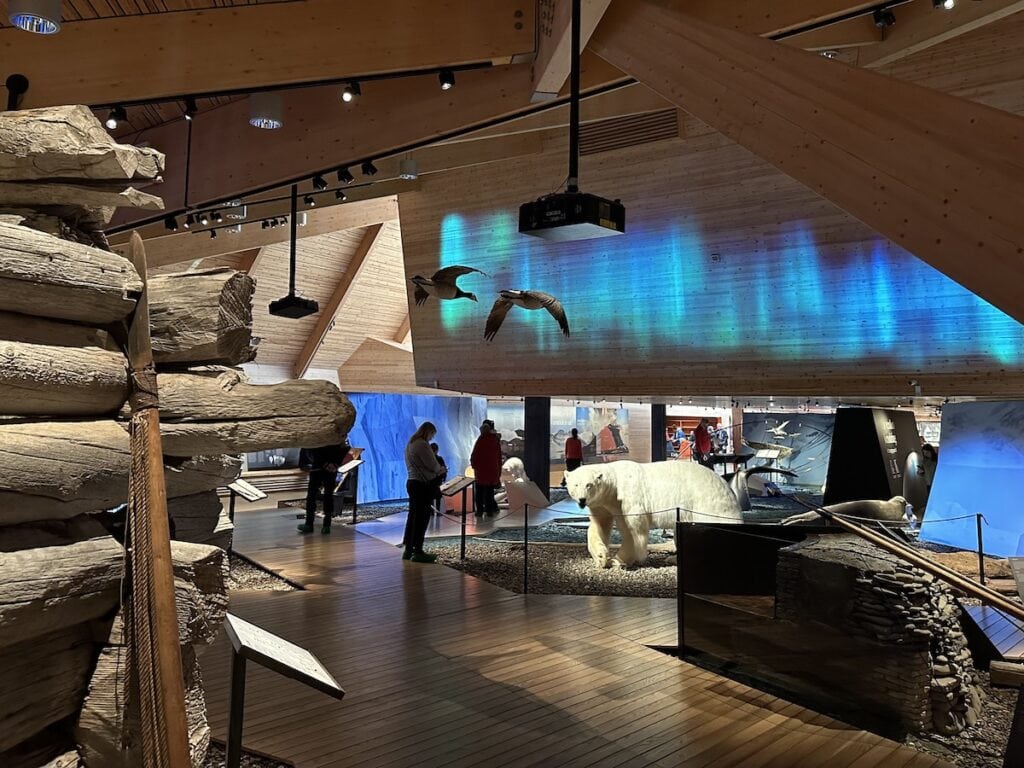
NORTH POLE MUSEUM – Focuses on the dramatic and often dangerous expeditions to the North Pole, with photographs, artifacts, and firsthand accounts from some of the world’s most famous explorers. (Please note: this museum is closed in December and January, but reopens Feb. 1st.)
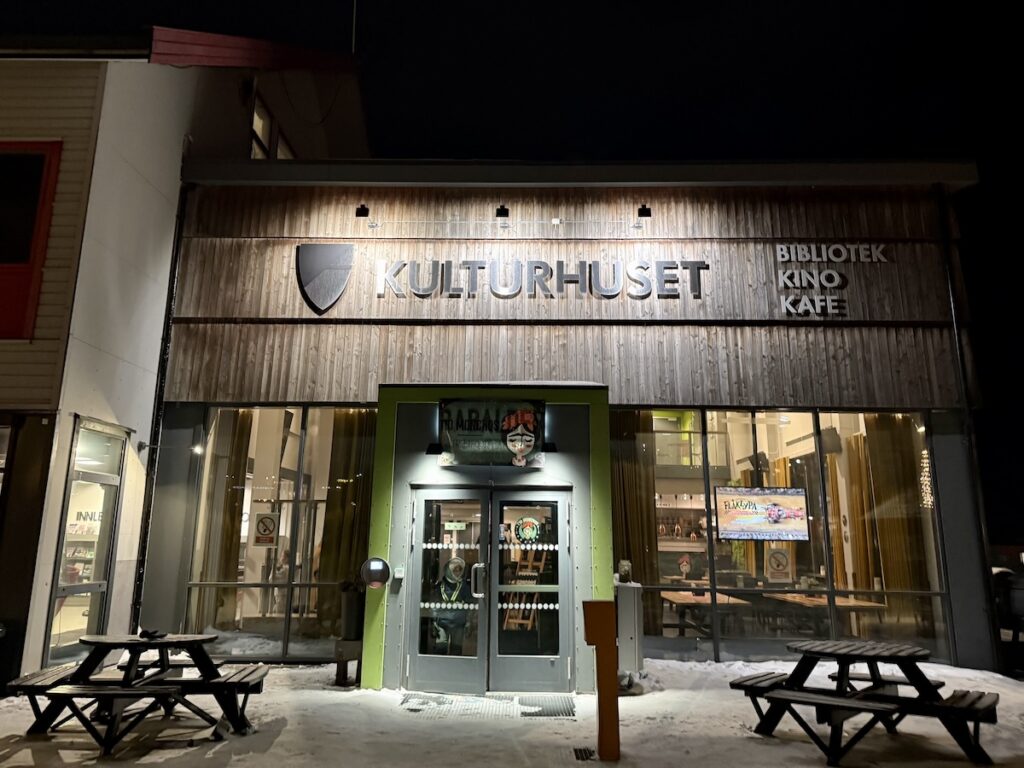
KULTURHUSET – This is the town’s modern cultural hub, hosting everything from concerts and film screenings to exhibitions and community events, and it’s well worth checking to see what’s on during your visit. It is also a great place to interact with locals not just other tourists. (We watched a football (soccer) match here and had such a great time!)
9. GO SHOPPING – IT’S TAX FREE!
For such a small town, Longyearbyen has a surprisingly good selection of shops. This is especially true when it comes to outdoor gear, with most major Norwegian and international brands represented. On this recent trip to Svalbard, I didn’t worry at all about forgetting anything—and actually looked forward to shopping because the selection is that good.
Even better, Svalbard is a tax-free, duty-free zone, so prices are often better than elsewhere. (I bought a Patagonia layering puffer for less than I would pay at home in Canada.)

It’s not just about outdoor gear, though. You’ll also find shops selling local art, jewelry, woolen goods, rare books on the Arctic, and interesting food items. Café Fruene has an especially good selection of wool slippers, socks, and sweaters. Hotel and museum gift shops are also worth a look, with well-curated items, as is the Visit Svalbard office.
Svalbardbutikken (the COOP grocery store) is one of my favourite places to wander. Not only do they have some inexpensive souvenirs and fun food items, but it’s also kind of interesting to see how much a pint of imported strawberries costs at 78 degrees north.
10. ARCTIC DINING
I can honestly say that I haven’t had a single disappointing meal in Svalbard. For such a small and remote town, Longyearbyen punches well above its weight when it comes to culinary offerings—especially when you consider the logistics of transporting perishable goods so far!
While most staples are imported, much of the game you’ll find on menus is locally sourced, including reindeer, ptarmigan (an Arctic bird), seal, and—yes—occasionally minke whale.
(If that last sentence scares you a bit, not to worry! You can also find more casual fare like pizza, burgers and sushi in Longyearbyen!)
Some top dining spots include Gruvelageret, Restaurant Polfareren, Funktionærmessen Restaurant, and Stationen. For great food paired with truly unique décor, Vinterhagen at the Mary-Ann’s Polarigg hotel is a must.
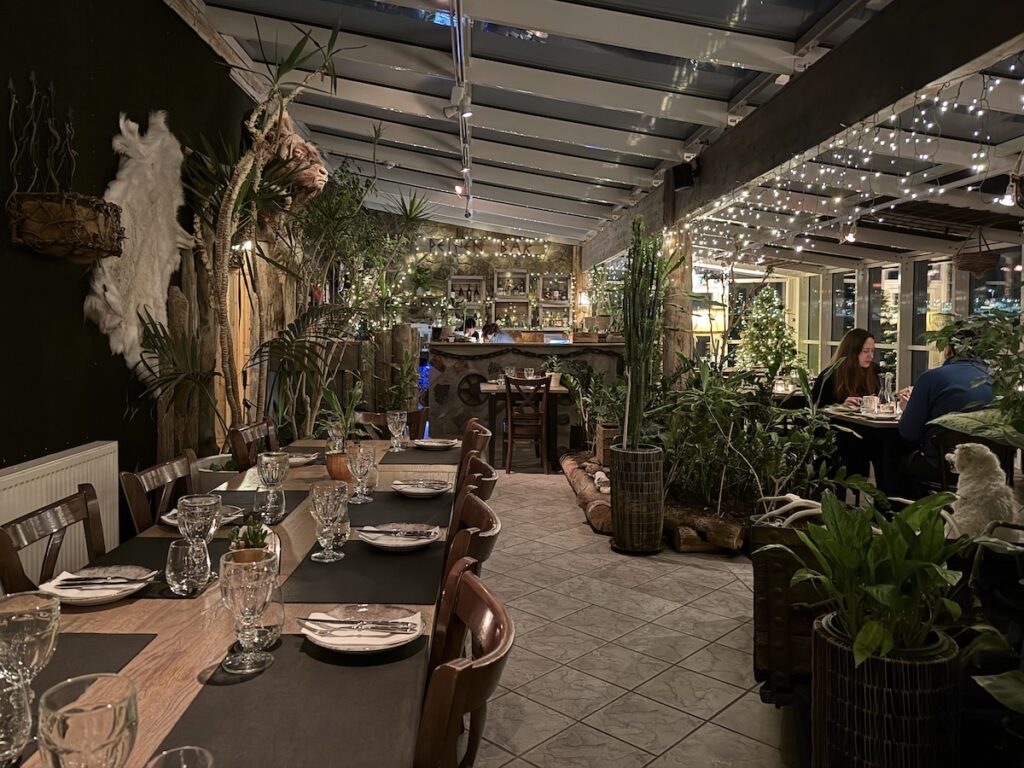
If you’re looking for something more casual, Café Fruene, Café Huskies, Svalbar, and the Barentz Pub are all solid, reliable options. You’ll also find Svalbard Bryggeri, the world’s northernmost brewery, whose beers appear on many local menus and are well worth trying.
Most restaurants offer at least one vegetarian or vegan option. Good choices for plant-forward meals include Nuga Sushi and Saenphet Thai. And if you’re self-catering, you’ll find a surprisingly good selection of groceries at Svalbardbutikken (the COOP).

For a truly special dining experience, try the multi-course menu at Huset. As I write this, the hotel is closed while its interiors are being reimagined by Norway’s most famous architecture firm (I’ll share more here when I can).
TIP: Restaurants in Longyearbyen are small and fill up quickly in winter, so booking ahead is strongly recommended.
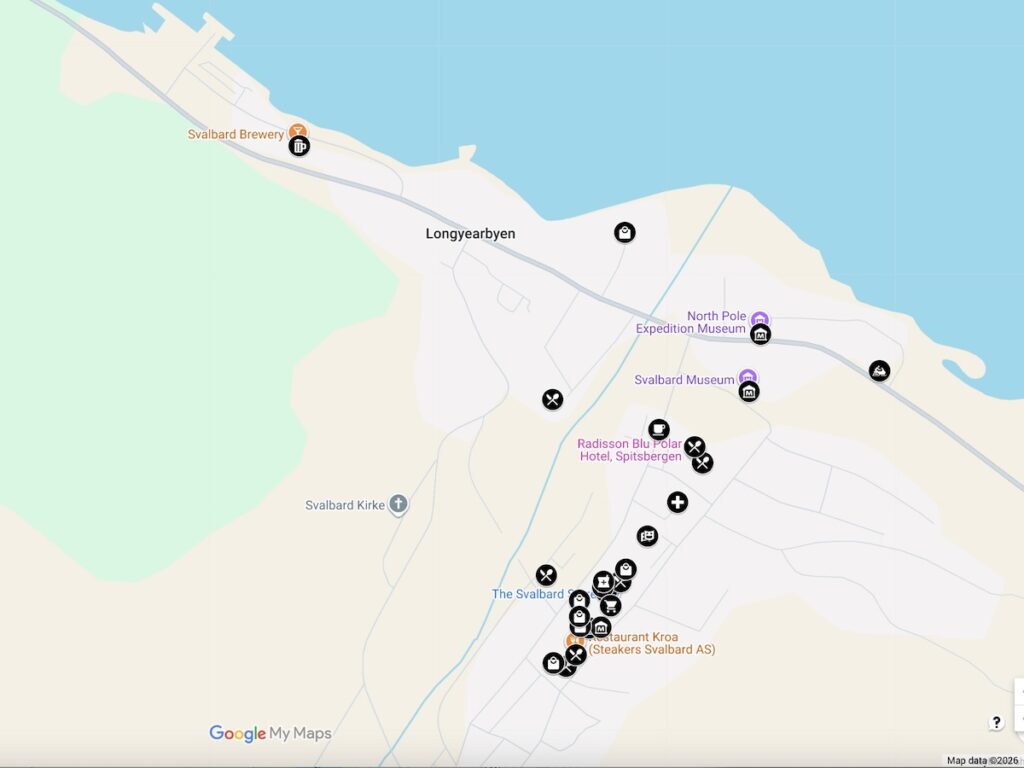
MAP OF LONGYEARBYEN ACTIVITES
I have plotted everything that I think may be important to you during a visit to Longyearbyen in winter on the following map. Click here or on the image for the interactive version.
HOW COLD IS IT IN SVALBARD IN THE WINTER?
Winter temperatures in Longyearbyen are cold but relatively stable, typically ranging from about –10°C to –20°C (14°F to –4°F) between December and February. It can often feel colder with the wind though.
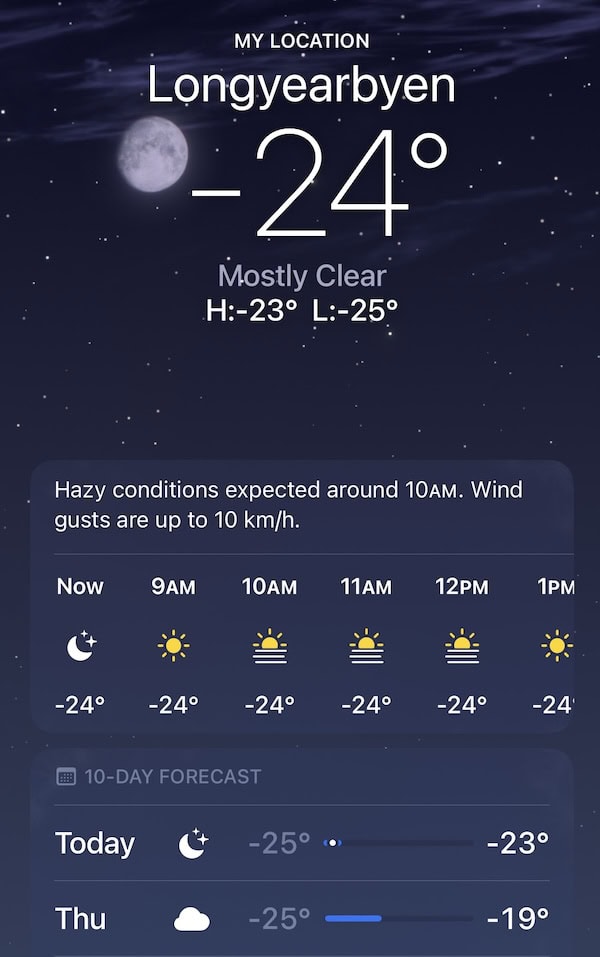
And of course, you occasionally get some atypical weather. During our stay the mercury hovered between –19°C and –25°C and the week before, in mid-December, it had actually been raining for a few days.
WHAT TO WEAR IN SVALBARD IN WINTER
With the variations in temperature, the key in Svalbard is to dress in layers. Before heading out, this is what we would put on during our late December visit:
- 2 pairs of wool socks
- 2 pairs of long underwear
- 1 base layer shirt
- 1 wool sweater
- Insulated waterproof/windproof pants
- Insulated, waterproof/windproof winter jacket
- Neck buff or full balaclava
- Warm winter hat
- Glove liners
- Mitts
- Warm winter boots
- Reflective vest or armband (Polar Night only)
Please note: this is what my daughter and I would wear. My husband and son wore only one pair of wool socks and one pair of long underwear, as they didn’t feel the cold as much.
When it comes to base layers in Norway and Svalbard, wool is always the go-to fabric. It keeps you warm and it breathes. With five trips to Norway under my belt, I’ve switched most of my inner layers to wool, moving away from synthetics (like Polar fleece) that are often preferred in North America.
During particularly cold spells, hand and toe warmers are well worth packing. We used them on our snowmobiling trip, as at –25°C it was tough to stay warm—even with heated handlebars.
My daughter was kind enough to let me film her in a get ready video! (Thank you Ella!)
WHAT TO WEAR IN WINTER VIDEO (1 MIN.)
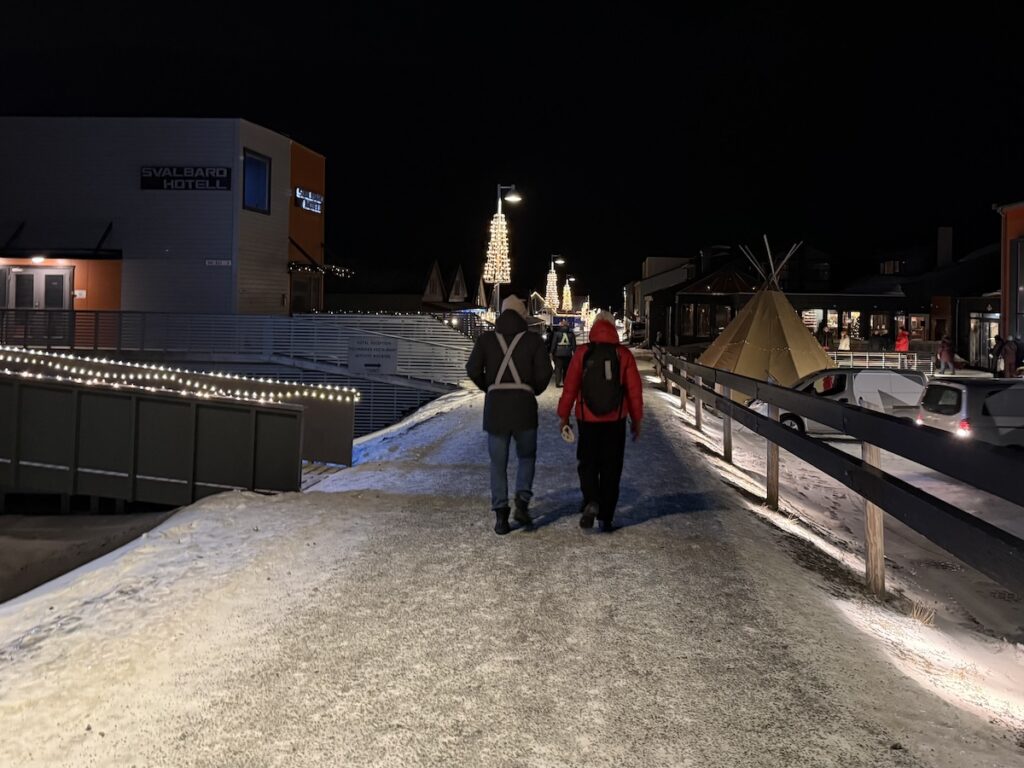
During Polar Night, locals wear reflective vests or armbands to make themselves more visible to drivers. These can be easily purchased at the COOP grocery store in the center of town for about $15 USD.

WHAT TO WEAR INDOORS IN SVALBARD
You don’t need any dressy clothes in Svalbard—even at fine dining restaurants. If you want to dress up, that’s totally fine too. In fact, here’s what I was told by Huset (the fanciest restaurant in Longyearbyen) about what to wear on New Year’s Eve:
“As we don’t have any dress code, people come in casual clothes (jeans, sweater, outdoor pants), but also in fancier clothes (dress, suit).”
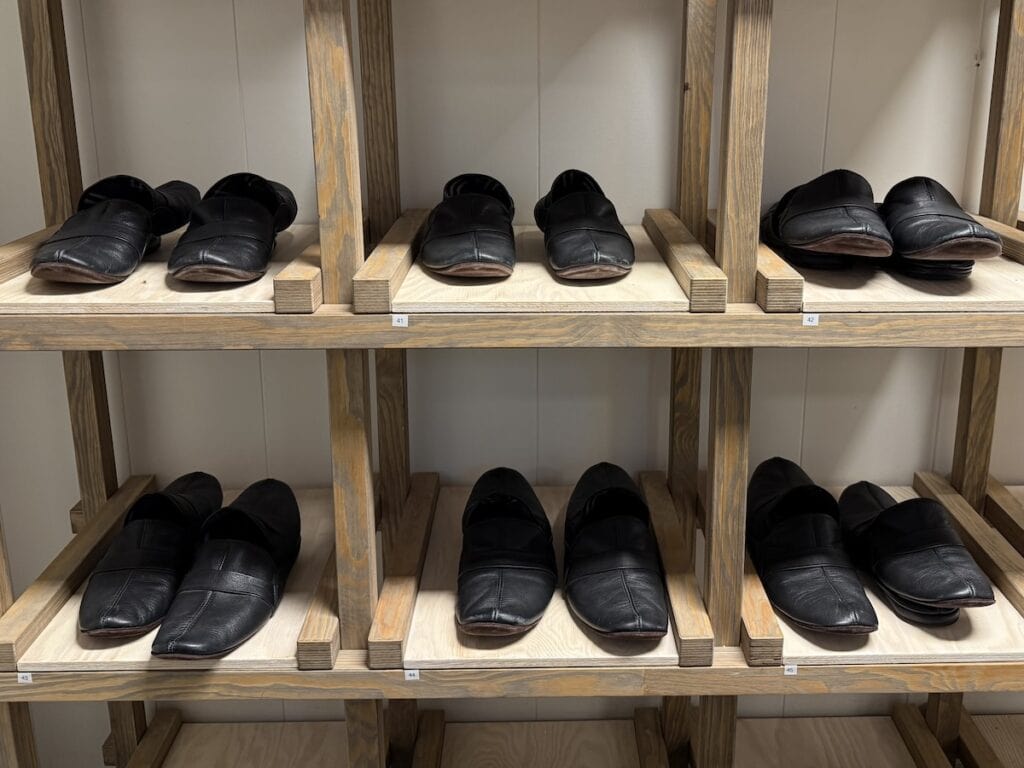
The one thing to remember is that it’s customary to change out of your outdoor shoes and into slippers (or indoor shoes) when entering hotels, and many restaurants are attached to hotels. This doesn’t seem to apply to some of the more casual bars and pubs.
The slipper tradition dates back to mining days, when changing footwear helped keep coal dust from work boots from getting everywhere. In places where slippers are expected, there are always some available to borrow—but you can also bring your own, or do what we did and buy a pair while you’re there as a souvenir.
I also want to mention what we brought that we didn’t need. We packed headlamps but never used them—the town is well lit, and when needed on tours, they were provided.
We also brought microspikes for our boots, but found that the roads around town were well sanded. As long as you have good tread on your winter boots, you may not need them. That said, if you’re planning on doing a lot of walking, you may still prefer to have them.
TAKE CARE OF YOUR SKIN
I learned the hard way on our first trip just how brutal the Arctic wind can be on your skin. This time, I came prepared. All I can say is: moisturize, moisturize, moisturize—and do it proactively.
I suggest hand cream, face cream, lip balm and lubricating eye drops. I never did get a handle on the static in my hair, but those with long locks may want to pack a good conditioner or a leave-in conditioning spray.

TRAVEL INSURANCE FOR SVALBARD
Longyearbyen has a small hospital, but anything serious requires evacuation to mainland Norway. Before traveling, make sure your travel medical insurance specifically covers Svalbard and includes medical evacuation. This is a good time to double-check the fine print on any policy you may have.
You’ll also want to confirm that the activities you plan to do are covered. Some policies exclude adventure activities, or require an additional rider, for things like snowmobiling, dog sledding, ice-cave visits, or other guided excursions.
There are two key things to look for:
- Adventure coverage, which determines whether your activities are insured
- Medical evacuation coverage, which determines how you get out if something goes wrong
This becomes especially important if you’re joining multi-day trips or traveling into more remote areas.
As our family has taken on bigger adventures and traveled to increasingly remote destinations, I’ve found that adventure insurance requirements come up more and more often. In addition to our regular travel medical insurance, we now carry an annual family medical evacuation policy via a membership with Global Rescue. This company guarantees evacuation to a hospital of our choice, which can make a meaningful difference in a remote place like Svalbard.
Note: Global Rescue also offers travel medical insurance. We happen to be covered under a different medical policy, but you can learn more about Global Rescue here.
SVALBARD FAQS
DO YOU NEED A PASSPORT OR VISA TO VISIT SVALBARD?
All non-Norwegian visitors to Svalbard must carry a valid passport. While Svalbard itself is technically a visa-free zone, most travelers reach it by transiting through mainland Norway—so Norway’s entry rules still apply.
The good news is that citizens of EU and EEA countries, along with travelers from the U.K., Canada, the U.S., and Australia, do not need a visitor visa to enter Norway. This means they can travel onward to Svalbard without needing a separate visa. Travelers from countries that do require a visa for Norway must have the appropriate visa in place before traveling, even though Svalbard itself does not require one.
NEW FOR 2026: Starting in late 2026, most visa-exempt travellers (including Canadians and Americans) will need to apply for an ETIAS travel authorization online before entering Norway (and other Schengen countries) for short stays of up to 90 days. As the system was just being phased in during our visit, we did not require this, but our biometric data (photographs and fingerprints) was collected as we passed through passport control on our way into Norway. Please be sure to check whether pre-trip authorization is required for your visit on the ETIAS website.
WHAT CURRENCY DOES SVALBARD USE?
Svalbard uses the Norwegian Krone (NOK). That said, Longyearbyen is largely cashless. One reason for this is that there is no longer a bank in town, which makes handling cash impractical for many local businesses.
Note: On our last two trips to Norway, we have not needed cash at all. We have only used our credit cards.
CAN YOU DRINK THE WATER?
In Longyearbyen, it’s recommended that you drink bottled water due to naturally high levels of manganese in the tap water. You can refill five-litre jugs for free at the main town grocery store, Svalbardbutikken (the COOP).
WILL YOU SEE WILDLIFE IN THE WINTER?
Wildlife sightings are more challenging in winter—especially during the Polar Night—but they do happen. Reindeer are the species you’re most likely to see in and around Longyearbyen, even in the depths of winter.
They can be surprisingly hard to spot. Their coats become much lighter in winter, blending in with the snow and surrounding landscape—especially in low light.
Please remember to keep a respectful distance. Svalbard reindeer need to conserve energy and graze whenever conditions allow, and even small disturbances can stress them during the winter months.
WHEN IS THE BEST TIME TO GO?
We chose to visit during Polar Night, which lasts from late November to mid-February. If this is your first winter trip to Svalbard, however, I’d recommend visiting in late February or March. The Arctic landscape is so unique that it’s worth having enough daylight to truly take it in. Because we had already visited Svalbard in summer, we didn’t mind experiencing the destination mostly in darkness, with only the shapes of the surrounding mountains visible.
In late February and March, you still get true Arctic winter conditions—cold temperatures and long, dark nights that are ideal for Northern Lights viewing. At the same time, you’ll have enough daylight for good wildlife spotting and to fully appreciate the landscape while dog sledding, snowmobiling, or hiking.
HOW LONG SHOULD YOU STAY?
Svalbard is a long way from anywhere, and for most people it is a once-in-a-lifetime adventure. If possible, I would recommend staying 5 nights, to fully experience the town of Longyearbyen and the surrounding landscape.
If you have more time and the budget, and if you are looking for more adventure, I would recommend adding on an expedition outside of Longyearbyen, such as a multi-day skiing, snowmobiling or dog sledding trip. See multi-day winter options with Basecamp Explorer and Hurtigruten Svalbard.
(On our summer trip to Svalbard we did a trip with Basecamp Exporer to Isfjord Radio Tower Hotel and it was absolutely amazing!)
CAN YOU SWIM IN LONGYEARBYEN?
There are no hotels with swimming pools in Longyearbyen. There is, however, an Arctic sauna (SvalBad) on the ocean that can be booked on a drop-in basis, or as a private booking for up to 14 people.
For something a little more traditional, Longyearbyen has the Svalbardhallen recreational facility, which includes both a gym and a swimming pool. Visitors can pay a drop-in fee (just be sure to bring your own towel).
SVALBARD FUN FACTS
NO CATS
Huskies are adored, but cats are banned. This is to protect Svalbard’s vulnerable bird populations.
SHOES OFF
Shoes are almost never worn indoors, including in hotels, restaurants, and museums. A few exceptions tend to be pubs and the grocery store.

NO PERMANENT RESIDENTS
It’s often said that no one is born or dies on Svalbard—at least not intentionally. Expectant mothers are sent to mainland Norway before their due dates, and residents who require advanced medical or long-term care are relocated as well. The local hospital is equipped only for basic and emergency care.
ALCOHOL RATIONING
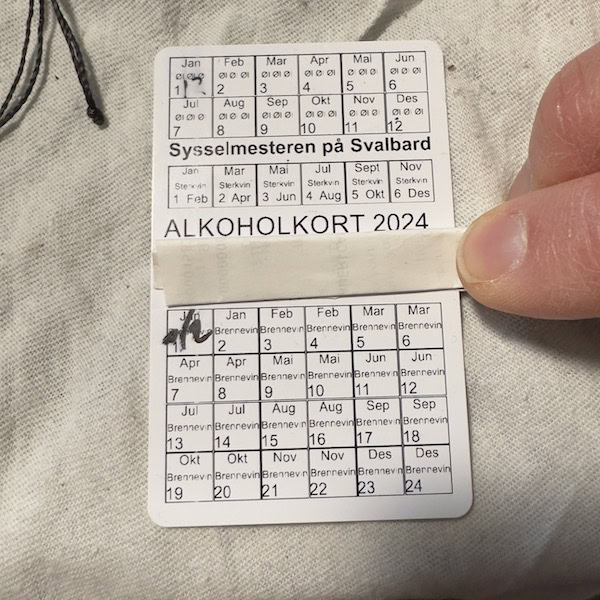
Alcohol purchases for residents (beer and spirits) are monitored through a card system. Interestingly, wine and cider are not. I was told this dates back to the coal-mining days, when management wanted to limit how much miners drank—without restricting their own wine consumption.
Note: To purchase liquor at the liquor store as a visitor, you must show proof of travel in the form of a plane ticket, boarding pass, or flight itinerary.
POLAR BEAR LAW
Outside the town limits of Longyearbyen, it is mandatory to carry protection against polar bears. This is most commonly a rifle, though other approved deterrents may be permitted depending on the situation.
POLAR JAZZ FESTIVAL
Held each February, PolarJazz is the world’s northernmost jazz festival, founded in Longyearbyen in 1997 and hosted during the Polar Night. While jazz is at its core, the program is eclectic and features both international and local musicians.
NO STREET NAMES
Longyearbyen does not really function with traditional street names and street signs. Addresses are primarily based on building names or building numbers. That said, a few roads do have names (you’ll see them on maps or mentioned locally), but they’re rarely used for navigation and aren’t consistently signed like you’d expect elsewhere.
IT’S TAX FREE
There is no sales tax in Svalbard, which makes it a great place to shop for gifts. Residents are also taxed at a very low rate—though that comes with fairly basic public services.
UNIVERSITY OF THE ARCTIC
Longyearbyen is home to the University Centre in Svalbard (UNIS), offering students the rare opportunity to study and conduct research in the High Arctic.
FINAL THOUGHTS
I fully realize that a trip to Svalbard isn’t for everyone—and that visiting during Polar Night, with its 24 hours of darkness, is on even fewer travel bucket lists. But I also know that for a few of you out there, this is exactly the kind of remote adventure you seek. I wrote this guide for you.
I love hearing from you! Should you have further questions about a Svalbard winter trip, please feel free to reach out to me via direct message on Instagram, Facebook or by email.
Want to see more unique adventures? I would love for you to follow along with The Better Beyond on Instagram!
If you are not watching her videos already, check out the YouTube channel of Cecilia Blomdahl, who shares videos of her daily life in Svalbard.
The Visit Svalbard website can also help answer a lot of questions about the logistics of planning a trip to this remote destination. (They are also very responsive if you email them directly.)
RELATED CONTENT
- A Guide to Svalbard in Summer
- Isfjord Radio Adventure Hotel (Svalbard, Norway)
- The 5 Best Longyearbyen Hotels (Svalbard, Norway)
- A Guide to Driving Oslo to Bergen
- Overnight Trolltunga Hike, Norway
- The Bolder Sky Lodges, Norway
- The Woodnest Treehouses, Norway
- Self Driving the Iceland Ring Road
- The 10 Best South Coast Iceland Hotels
- A Guide to Iceland’s Westman Islands
PIN FOR LATER!