Do You Need a 4×4 in Iceland? When It’s Worth It—and When It’s Not

HI, I’M TARA!
I love sharing hidden gems far from the crowds, unique road trip itineraries and unforgettable wildlife adventures – helping you have extraordinary travel experiences.
Do You Need a 4×4 in Iceland?
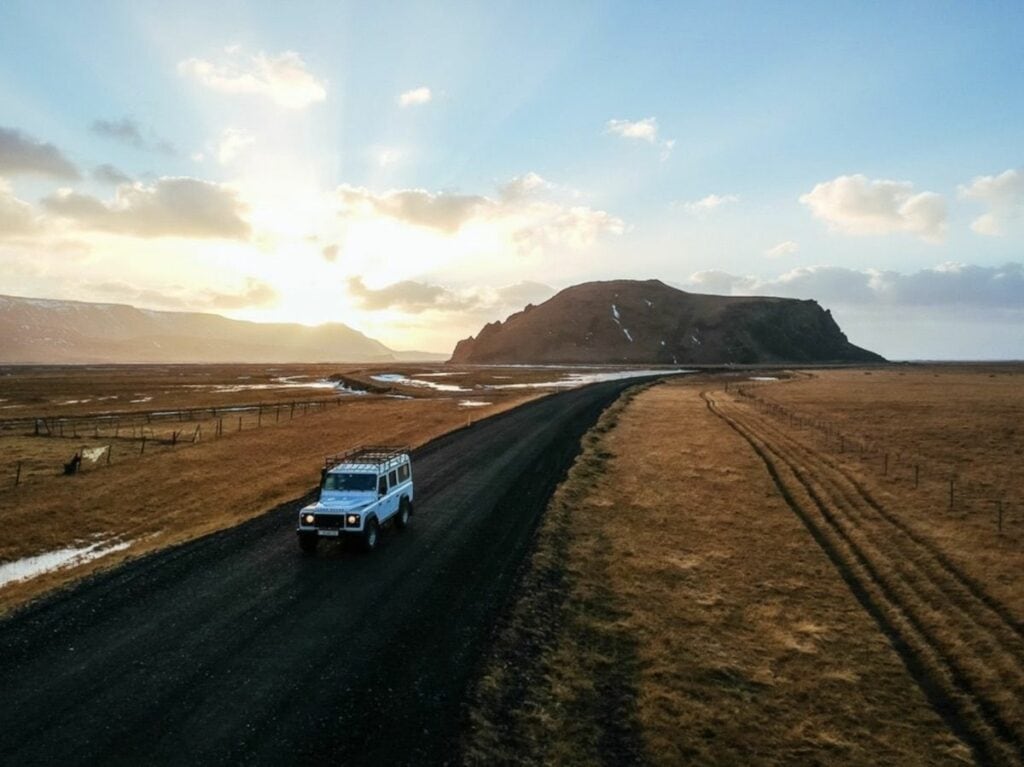
The short answer is: most travellers don’t actually need a 4×4 in Iceland. That said, many people still choose to rent one—often because it feels like part of the adventure.
After more than a decade of travelling to Iceland across different seasons—including driving the Golden Circle, South Coast, Snæfellsnes Peninsula, and Ring Road—I’ve found that the answer is actually much simpler than it seems.
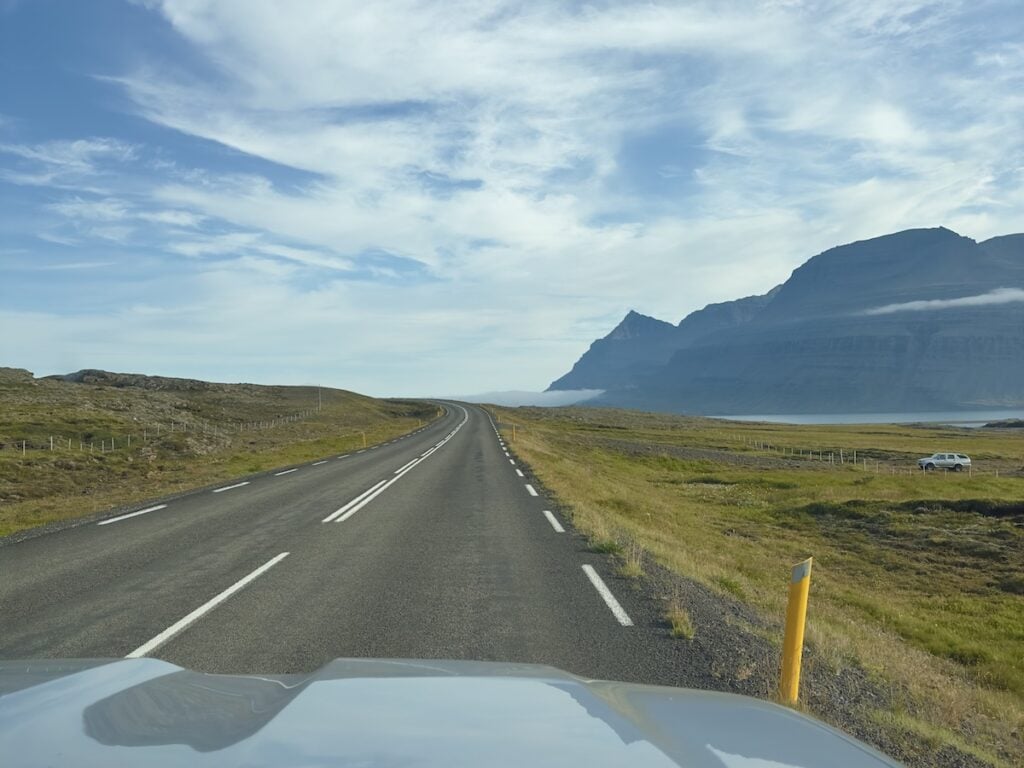
If you’re visiting in late spring, summer, or early fall (mid-April to October) and sticking to Iceland’s main paved routes—like the Golden Circle, South Coast, Snæfellsnes Peninsula, or even the full Ring Road—a 2WD vehicle is usually all you need. (See my detailed Iceland Ring Road guide.)
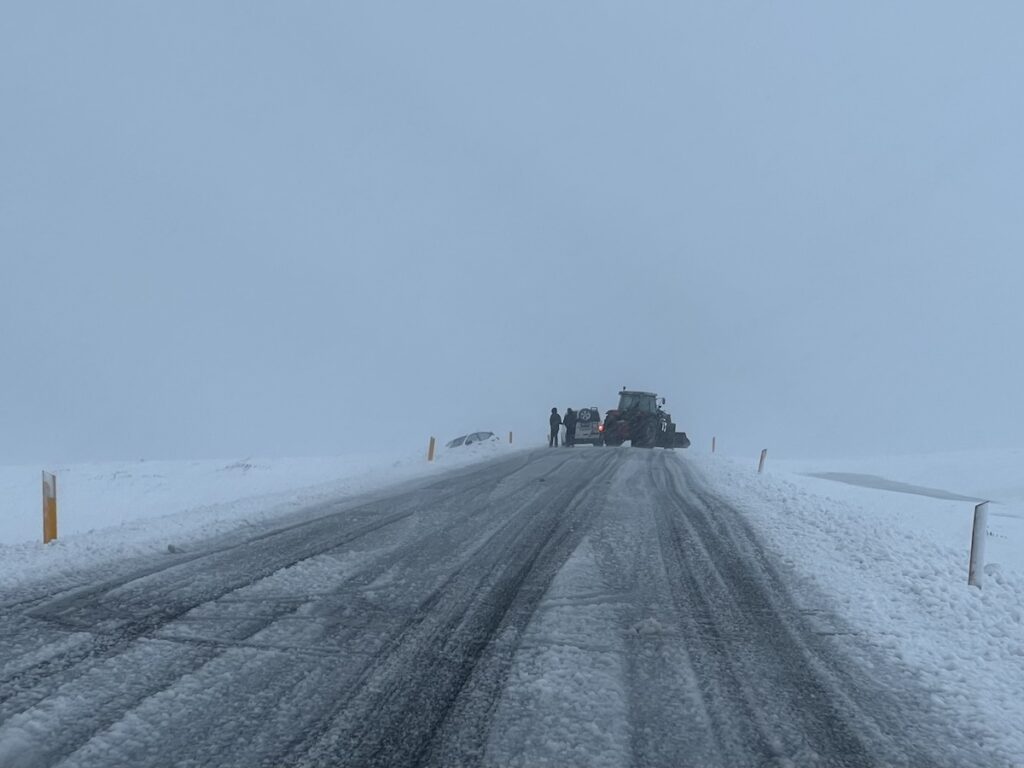
Where a 4×4 becomes important is during the colder months. In late fall, winter, and early spring (November to mid-April), road conditions can be snowy, icy, and unpredictable—even on well-travelled, paved routes.
While you can often get away with a 2WD with winter tires if you’re only visiting Reykjavík and driving the nearby Golden Circle, many travellers feel safer with a 4×4 for added traction and peace of mind. (See my detailed Golden Circle Self-Drive Guide.)
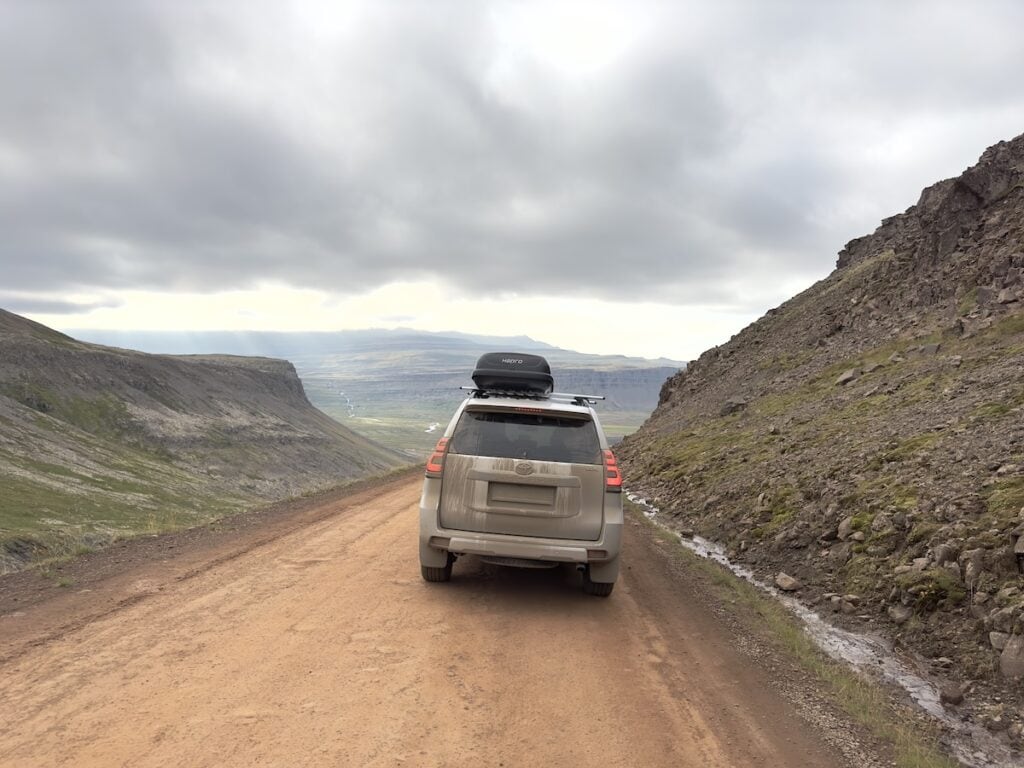
The Ring Road is a bit of a different situation. In summer (June to mid-September), if you’re staying on the main paved route, a 2WD is generally fine. However, if your itinerary includes more remote areas—like the Westfjords—you may appreciate the extra clearance of a 4×4, as many roads there are dirt or gravel.
Outside of summer, however, things change quickly. Northern Iceland has a long winter season. Snow can arrive as early as late September and linger into May. If you’re planning to drive the Ring Road in the shoulder season (April–May or late September–October), a 4×4 is the better choice. (I don’t recommend driving the full Ring Road in winter due to the potential for unsafe conditions and road closures.)
And then there are the F-roads—Iceland’s rugged mountain roads into the Highlands. This is one place where a 4×4 is required by law, but most travellers never end up driving them. I’ll explain more about these below.
The table below gives a quick overview of when a 4×4 makes sense in Iceland—and when it likely isn’t necessary. I’ve covered each scenario in more detail in the sections that follow.
Quick Reference Iceland 4×4 Table
| Trip Type | 4×4 Essential? |
|---|---|
| Reykjavik (City) | ❌ No |
| Golden Circle | ❌ No |
| South Coast (summer) | ❌ No |
| Ring Road (summer) | ⚠️ Not necessary (but more fun) |
| Winter travel | ✅ Yes |
| F-roads | ✅ Required |
| Westfjords | ⚠️ Helpful |
👉 Save this for your Iceland trip planning!
Disclosure
This post on 4×4 rentals in Iceland contains affiliate links, which means I may earn a small commission if you book through them—at no extra cost to you. I only recommend companies I’ve personally used and trust.
By visiting and using this website, you’re indicating your agreement to comply with our terms of service. Thank you!
When You DO Need a 4×4 in Iceland
Renting a 4×4 in Iceland makes a lot of sense if you are travelling outside of the summer months or planning to visit more remote regions. Here are the main situations where a 4×4 is either helpful—or absolutely required.
1. Driving on Iceland’s F-Roads
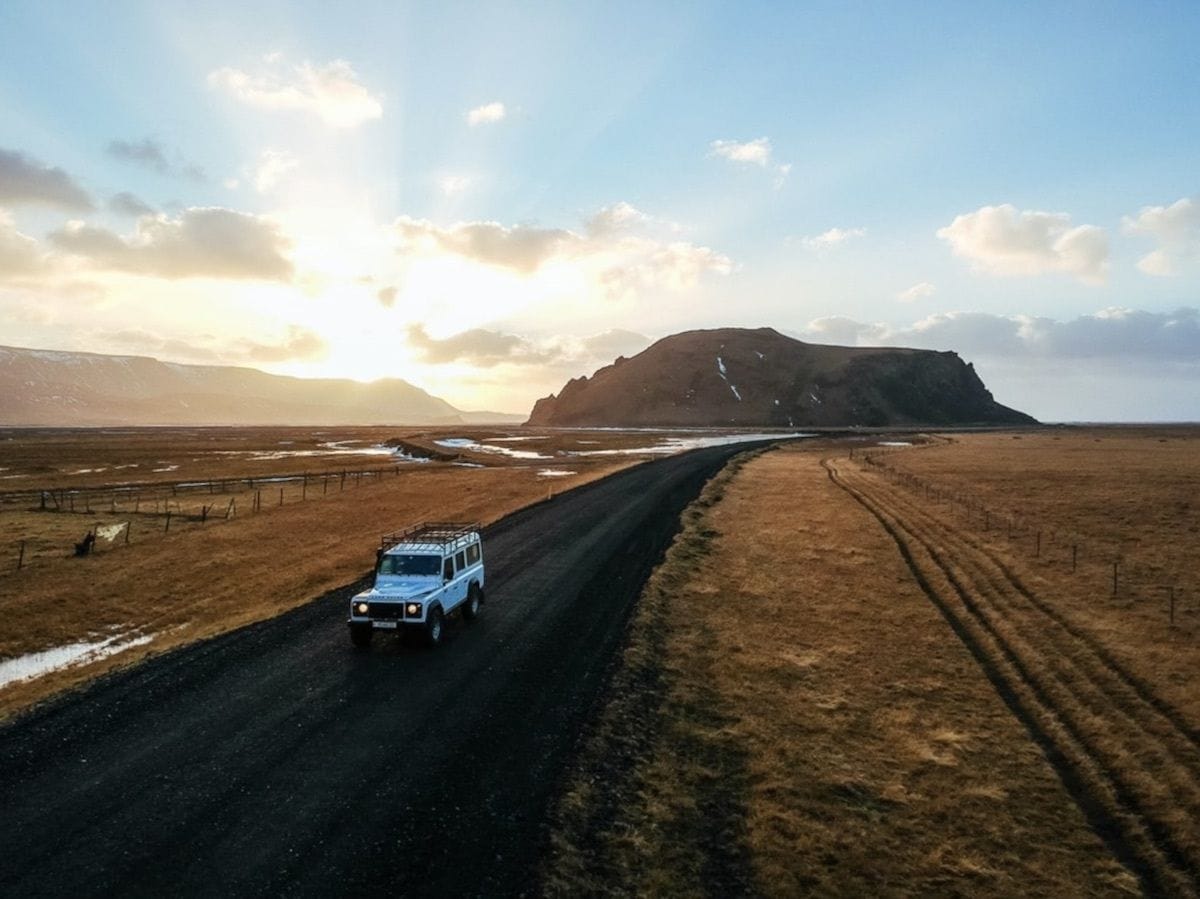
To drive on Iceland’s remote Highland F-roads, a 4×4 vehicle is required by law. These gravel and dirt roads traverse the country’s rugged interior and are typically open from June through September, depending on conditions.
Due to the terrain—think large potholes, uneven surfaces, and river crossings—you’ll want a vehicle with higher ground clearance.
Off-roading is illegal in Iceland due to the fragile landscape, but F-roads offer a similar sense of adventure for those who are properly prepared.
Important: While you’ll see plenty of photos and videos on social media of 4×4 vehicles crossing rivers in Iceland, no rental company or credit card insurance policy will cover damage caused by river crossings. If you choose to cross one, you need to know exactly what you’re doing—or risk a very expensive mistake.
2. Driving in the Winter
Iceland’s weather and road conditions can be unpredictable, especially in winter. A 4×4 offers better traction and stability when dealing with snow, ice, and strong winds.
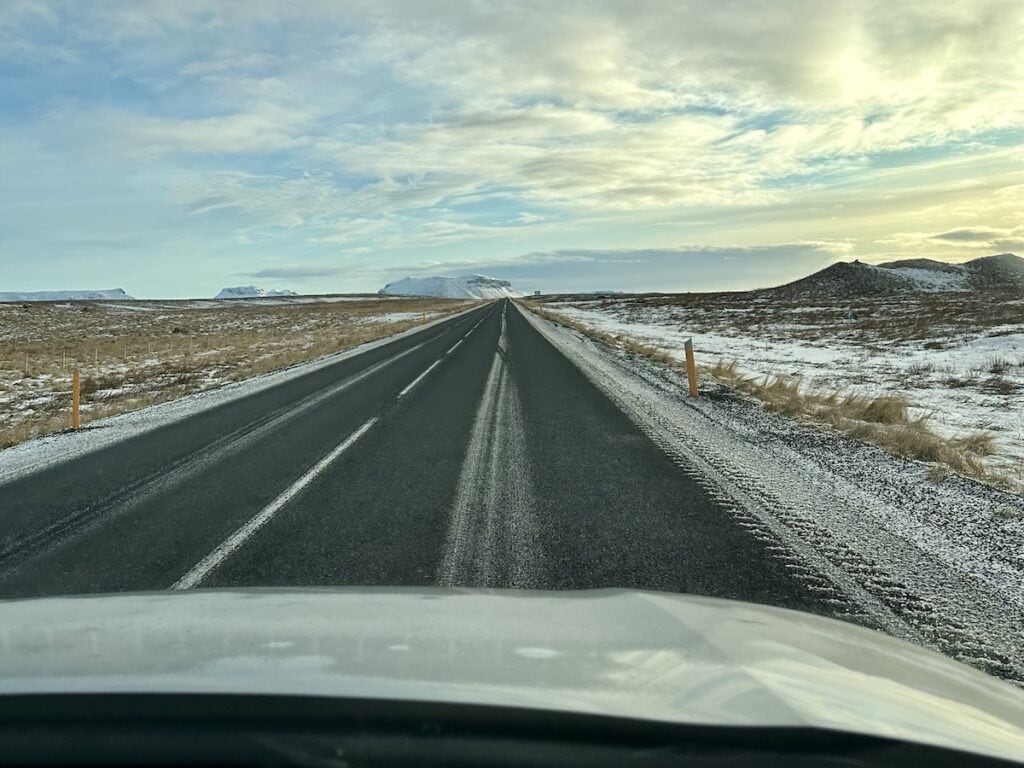
All rental cars are equipped with studded winter tires from November 1 to April 15. Even so, while a 2WD can work if you’re sticking to Reykjavík and the Golden Circle, many travellers prefer the added confidence of a 4×4.
Having recently visited in January and February for a road trip that included Reykjavík, the Golden Circle, and the South Coast, I simply cannot imagine doing it without one. The icy roads were one thing—but the wind was something else entirely. We saw several small cars blown right off the road along the South Coast.
If you’re planning a winter trip, I’ve shared a full breakdown in my Iceland winter driving guide.
Here’s a quick look at what I mean though:
3. Added Flexibility
Are you the type of person who likes to take that spontaneous left when everyone else goes right?
A 4×4 gives you more flexibility to explore Iceland beyond the most popular stops. While you still need to stick to legal roads, having a vehicle with higher clearance can make certain detours feel a lot more accessible—and a lot less stressful.
Many of Iceland’s side roads are gravel, and having a bit of extra clearance can help reduce the risk of damage from loose stones—one of the more common types of insurance claims in Iceland.
I remember sitting next to a young traveller at a rental desk on my first trip who was in tears after being told she owed over $2,000 USD for gravel damage. She hadn’t taken the extra insurance coverage—and repairs in Iceland are expensive. It was a bit of a wake-up call (especially since I hadn’t taken the extra insurance on that first trip either!).
4. Chasing the Northern Lights
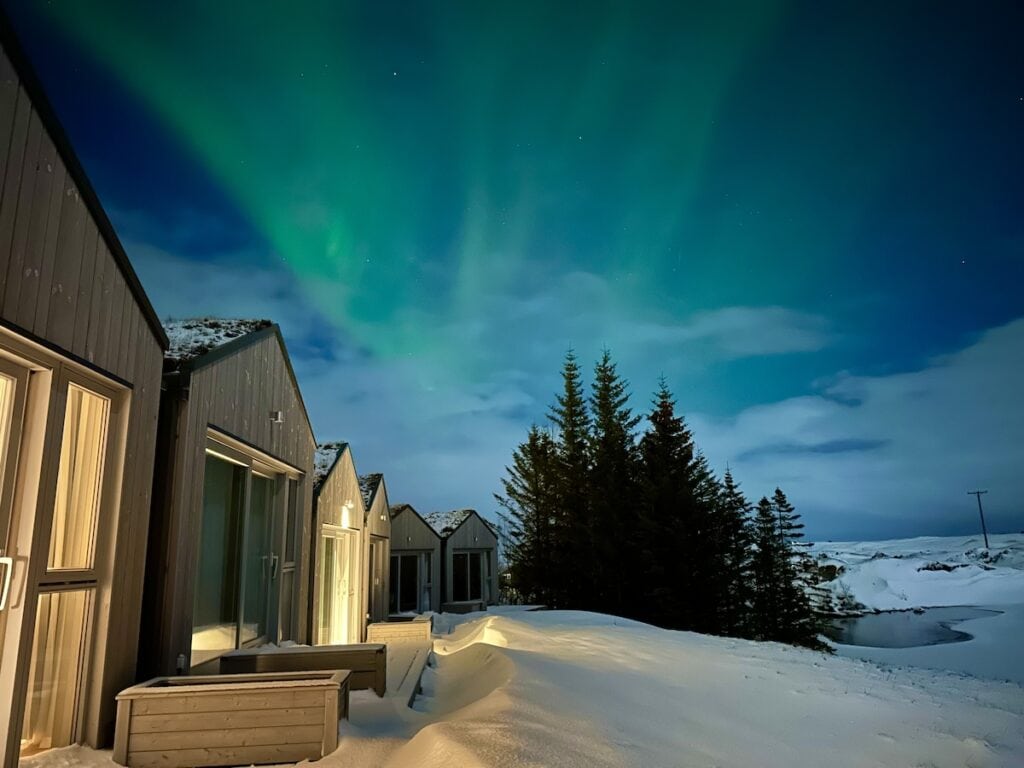
If seeing the Northern Lights is on your list, you’ll likely be travelling in winter—the best time of year for viewing.
Having a 4×4 makes it much easier (and safer) to leave the main roads in search of darker skies with less light pollution. It also gives you more confidence when driving at night in potentially icy or unpredictable conditions.
When You DON’T Need a 4×4 in Iceland
While renting a 4×4 in Iceland can be appealing, it’s simply not necessary in many common travel scenarios.
1. Late Spring to Early Fall
If you’re visiting in late spring, summer, or early fall (mid-April to end-October) and plan on exploring areas around Reykjavík and Keflavík (including the Blue Lagoon), as well as the Golden Circle, South Coast, and Snæfellsnes Peninsula—a 4×4 is overkill.
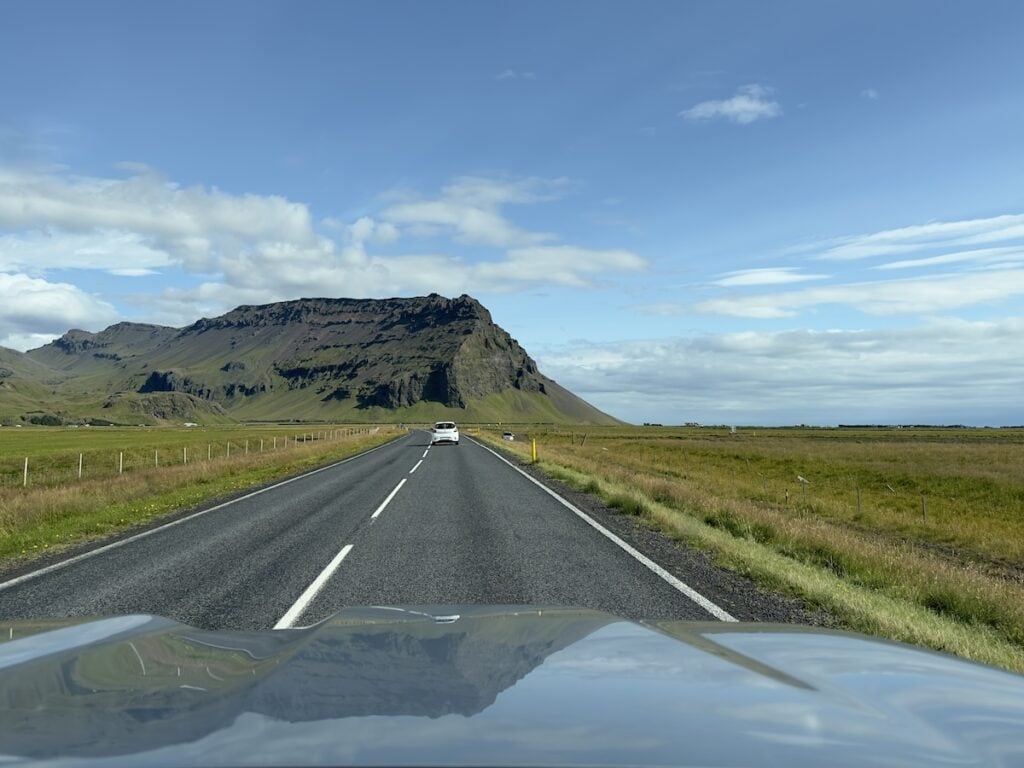
The main roads in these regions are paved, well travelled, and easy to drive. While a 4×4 might feel like part of the adventure, the added cost simply isn’t necessary for this type of trip. You’re much better off spending that money elsewhere.
2. Driving the Ring Road in Summer
Iceland’s Ring Road (Highway 1) circles the entire country and is the route most travellers follow on a longer trip. If you’re driving it between late May and early September and sticking to the main paved road, a 4×4 is not necessary.
The road is almost entirely paved, well travelled, and well maintained.
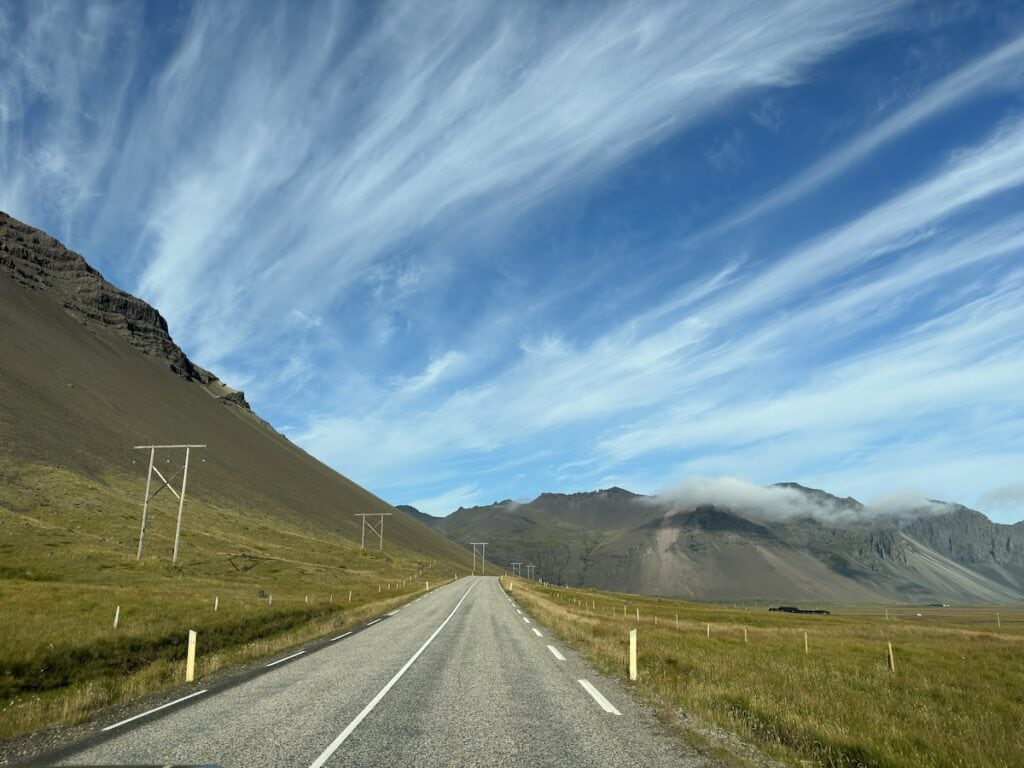
The main exception is if your itinerary includes the Westfjords, where many roads are gravel and conditions can be rougher. In that case, a 4×4 can make for a more comfortable and less stressful experience—but it’s still not strictly required in good conditions.
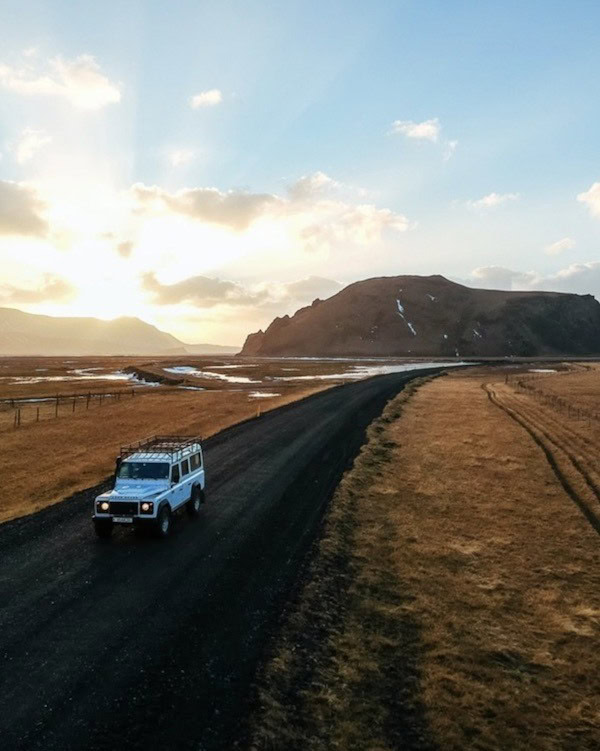
To give you a sense of what to expect, here’s what some of the roads in the Westfjords look like. While you can technically avoid the more rugged F-roads, even the standard roads in this region can be quite rough:
Please note: Winter-like conditions can still occur in northern Iceland outside of summer, sometimes as early as late September and lingering into May.
When I Have Rented a 4X4 in Iceland
On our very first trip to Iceland—in sunny July as a stopover on the way to Europe—we rented a 2WD vehicle.
We were travelling as a family and sticking close to Reykjavík, with plans to explore locally and to do the easy Golden Circle day trip route just outside the capital. A 4×4 simply didn’t feel necessary — and it wasn’t.
I’ll also admit… I was a little shocked by how expensive car rentals were in Iceland. For what was supposed to be a relatively budget-friendly stopover, both sedan-style vehicles and 4WD prices were way higher than I expected.
On every trip since, however, we’ve chosen to rent a 4×4. Over the past 10 years, we’ve covered many of Iceland’s most popular routes—the Golden Circle, South Coast, Snæfellsnes Peninsula, and the full Ring Road—as well as several trips out to the Westman Islands (puffins!).
Sometimes this has been because we were travelling in winter, but other times it was simply because we liked the idea of having a bit more flexibility—or because it just felt more like an adventure.
We’ve also definitely had moments where we thought we might drive some of Iceland’s rugged F-roads. But in reality, like many travellers, that never ended up happening.
Interestingly, this lines up with what I’ve heard from my favourite local car rental company, Lava Car Rental. They’ve told me that about 65% of their summer rentals and 85% of their winter rentals are 4WD vehicles. In many cases, they’re not required—they’re simply desired. This is where travellers tend to overspend on a 4×4 they don’t actually need.
Note: I have consistently had a great experience renting vehicles from Lava Car Rental. Their cars and 4x4s are very fairly priced, and the company is especially transparent when it comes to Iceland’s unique insurance coverage. They have also won numerous travel industry awards for their service
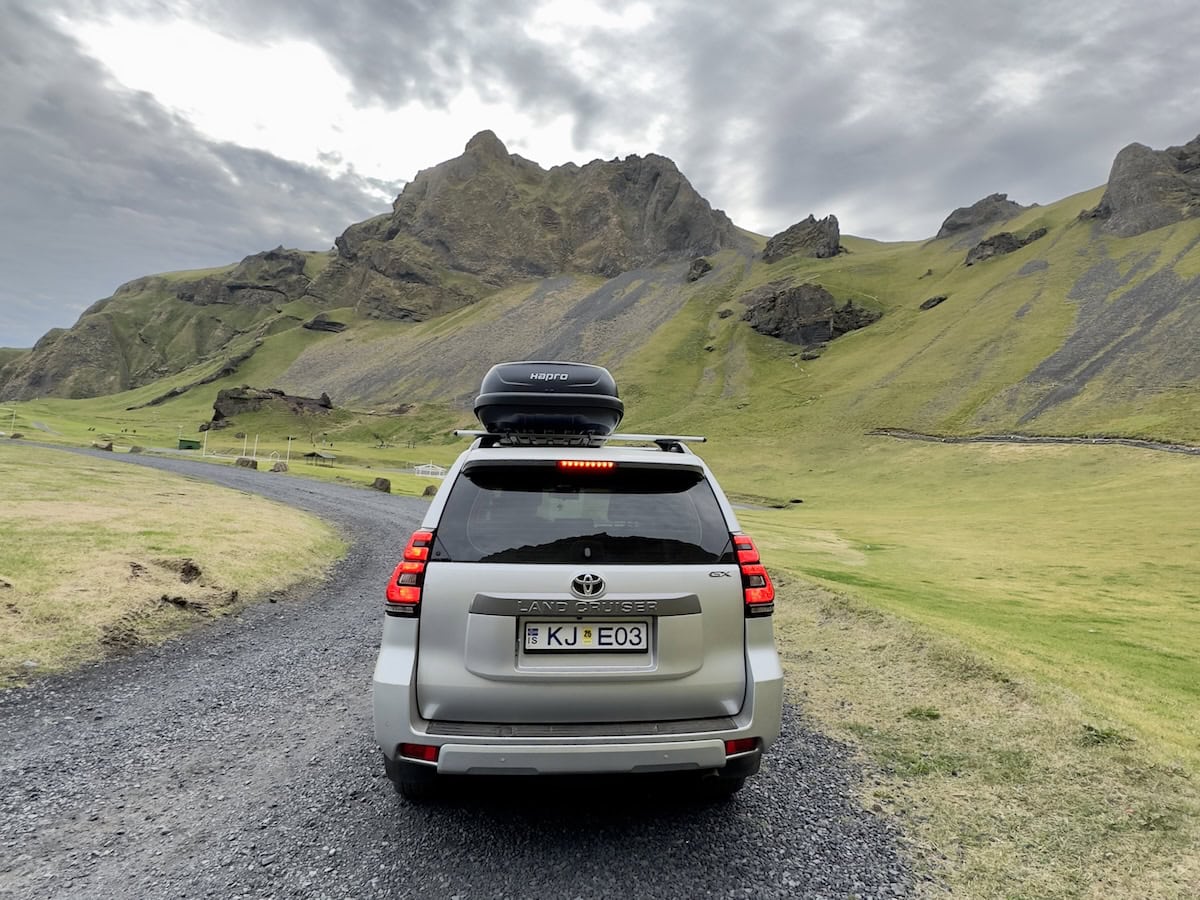
EXCLUSIVE LAVA OFFER
Use the code BEYOND at checkout to save 5% on your rental—just for my readers
How Much Does a 4×4 Cost in Iceland?
If you’ve already started researching 4×4 rental options in Iceland, you’ve probably discovered how pricey they can be.
While all car rentals in Iceland are expensive compared to most other countries, a 4WD rental is just that much higher.
At the lower end, you can expect to pay around $100 USD per day for a basic 4×4. This includes models such as the Dacia Duster, Suzuki Vitara, and Mitsubishi Eclipse Cross.
For comparison, a basic 2WD rental in Iceland typically starts at around $60–$80 USD per day in the summer months.
If you are looking for a larger, more robust 4×4—such as a Toyota Land Cruiser or a Land Rover—your daily rental cost will be more like $250–$300 USD per day.
That price difference can add up quickly, especially on a longer trip.
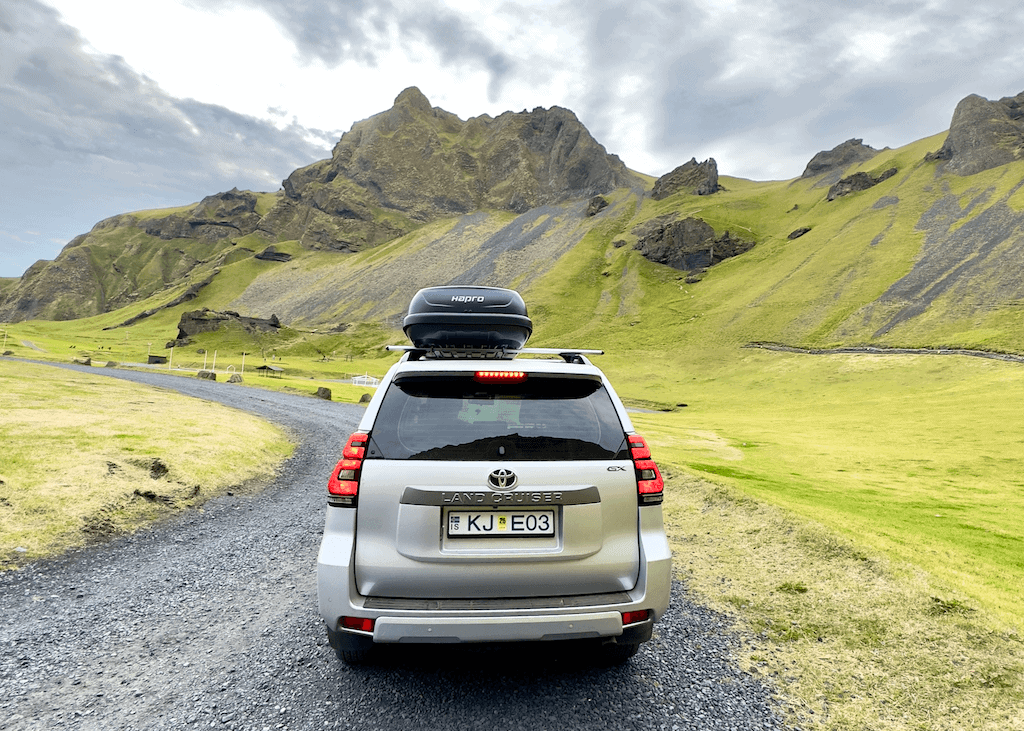
In addition, there are fuel costs to consider (fuel is very expensive in Iceland). The bigger the vehicle, the more you are going to spend on fuel.
As an example, on our Iceland Ring Road trip in a diesel Toyota Land Cruiser, it cost about $160 USD to fill up—and we filled up 7 times (just over $1,000 USD in fuel alone).
Tips for Renting a 4×4 in Iceland (and Saving Money)
Looking for a more affordable 4×4 rental in Iceland? It’s not always easy—but these tips can help.
1. Book Early
Iceland has a limited supply of rental vehicles, especially 4x4s. As availability drops, prices can rise quickly—so booking well in advance is one of the easiest ways to save.
I’ve also noticed that, like many destinations that cater to American travellers, Icelandic rental companies have embraced Black Friday and Cyber Monday deals. I was able to save about 10% this way on a recent trip.
2. Go Local
Whenever possible, book directly with a local Icelandic rental company. I’ve found they tend to be more transparent—especially when it comes to pricing and insurance.
Two of the most popular and consistently well-reviewed local companies are Lava Car Rental and Blue Car Rental. Both are located just a short shuttle ride from Keflavík International Airport, making pickup quick and easy.
That said, if you prefer the convenience of an in-airport pickup, you’ll typically need to book with one of the larger international chains.
3. Consider the Extra Insurance
Iceland’s insurance options can feel like overkill—but they exist for a reason.
I’ll be honest—I’m usually a bit skeptical of all the extra add-ons when renting a car. But Iceland is one place where I do opt for the full coverage.
Between gravel roads, strong winds, and even sandstorms, damage to rental vehicles is more common than you might expect.
On one trip, we received a weather warning for a potential sandstorm on our way back to Keflavík Airport—and just made it out on the last flight of the day before they shut the airport down. And it was only Sept. 1st!
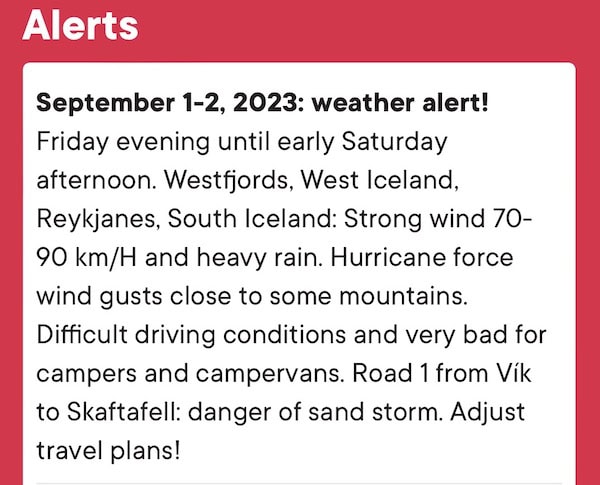
Repairs in Iceland are expensive, so while the upfront cost is higher, extra coverage (like gravel and sand & ash protection) can save you a lot in the long run.
I know many travellers rely on credit card insurance, but it’s worth double-checking exactly what’s covered—and ideally getting that confirmation in writing—before you decline any additional coverage. Some policies exclude the country of Iceland.
4. Rent What You Need—But Not More
It’s tempting to go all-in on something like a Land Cruiser or Defender—but unless you’re heading deep into the Highlands, it may be more than you need.
A smaller 4×4 (like a Toyota RAV4) is often a great middle ground.
5. Check for Unlimited Mileage
If you’re planning a longer trip—like driving the Ring Road—make sure your rental includes unlimited mileage. It’s a small detail that can save you from unexpected fees later.
6. Take Photos (and Video) at Pickup
Always take photos and a quick video of your rental vehicle at pickup to document any existing damage. Pay special attention to the lower areas of the car, where gravel damage is most likely to occur (as mentioned earlier, there are lots of gravel roads in Iceland).
Also be sure to capture any damage to the windshield and interior.
Final Thoughts
The truth is, most travellers don’t actually need a 4×4 in Iceland—especially if you’re visiting in summer and sticking to the main routes.
That said, there are situations where it absolutely makes sense. Winter travel, exploring more remote regions like the Westfjords, or heading into the Highlands are all times when a 4×4 can make your trip safer and more enjoyable.
For many people, it ultimately comes down to comfort or the desire for adventure. A 4×4 gives you a bit more confidence on unpredictable roads—and for some, that peace of mind is well worth the extra cost.
If you’re still unsure, my advice is simple: plan your route first, then choose the vehicle that fits your itinerary—not the other way around.
I love hearing from you! Should you have further questions about renting a 4×4 in Iceland, please feel free to reach out to me via direct message on Instagram, Facebook or by email.
Want to see more unique adventures? I would love for you to follow along with The Better Beyond on Instagram!