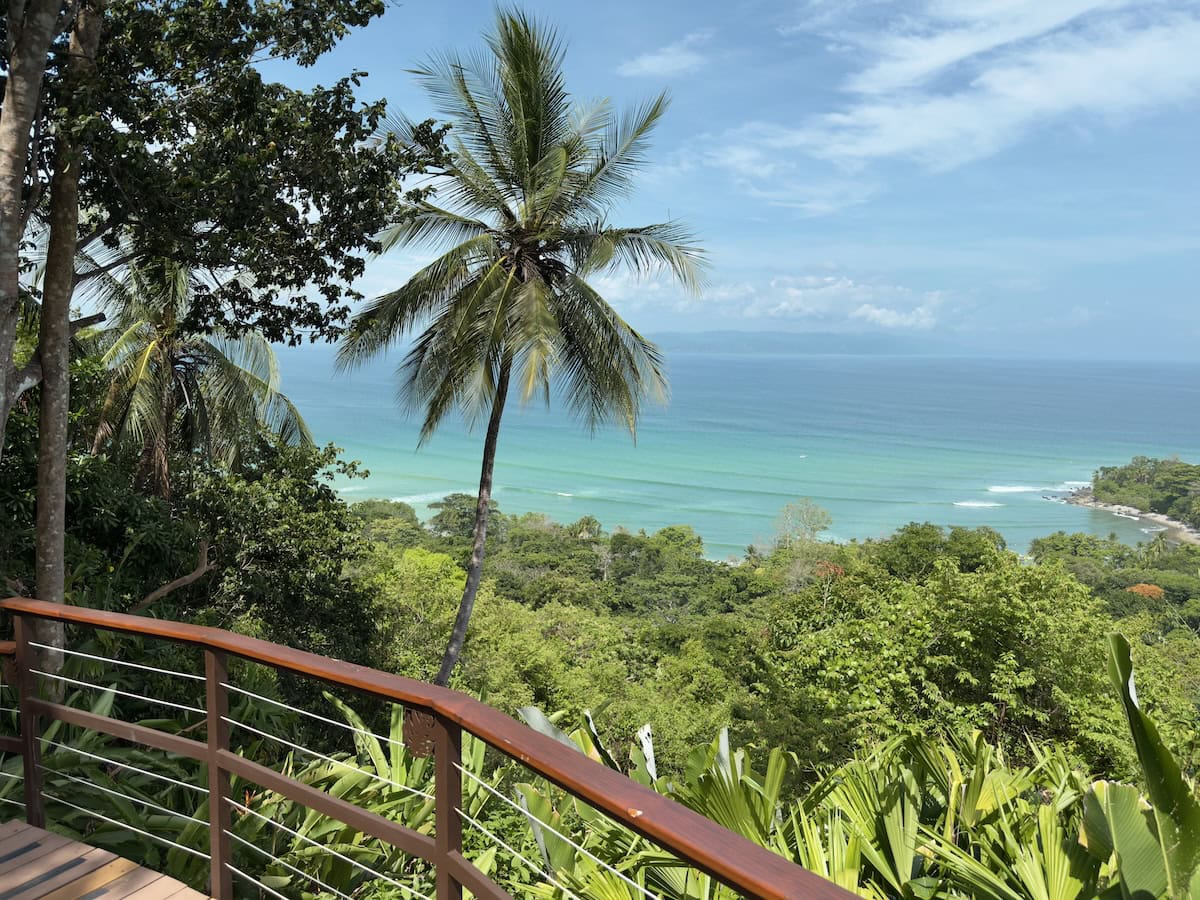
Why Costa Rica’s Lapa Rios is My Favourite Eco Lodge in the Americas
Affiliate Disclosure: This Lapa Rios Ecolodge guide contains affiliate links. If you click a link and make a purchase, I may receive a small commission at no cost to you. By visiting and using this website, you’re indicating your agreement to comply with our terms of service.

HI, I’M TARA!
I love sharing hidden gems far from the crowds, beautiful boutique hotels, unique road trip itineraries and unforgettable wildlife adventures – helping you have extraordinary travel experiences.
Introduction
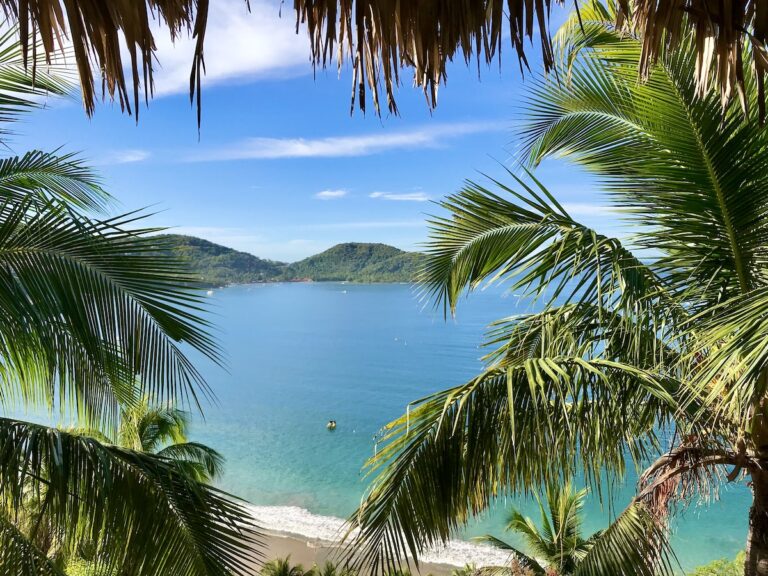
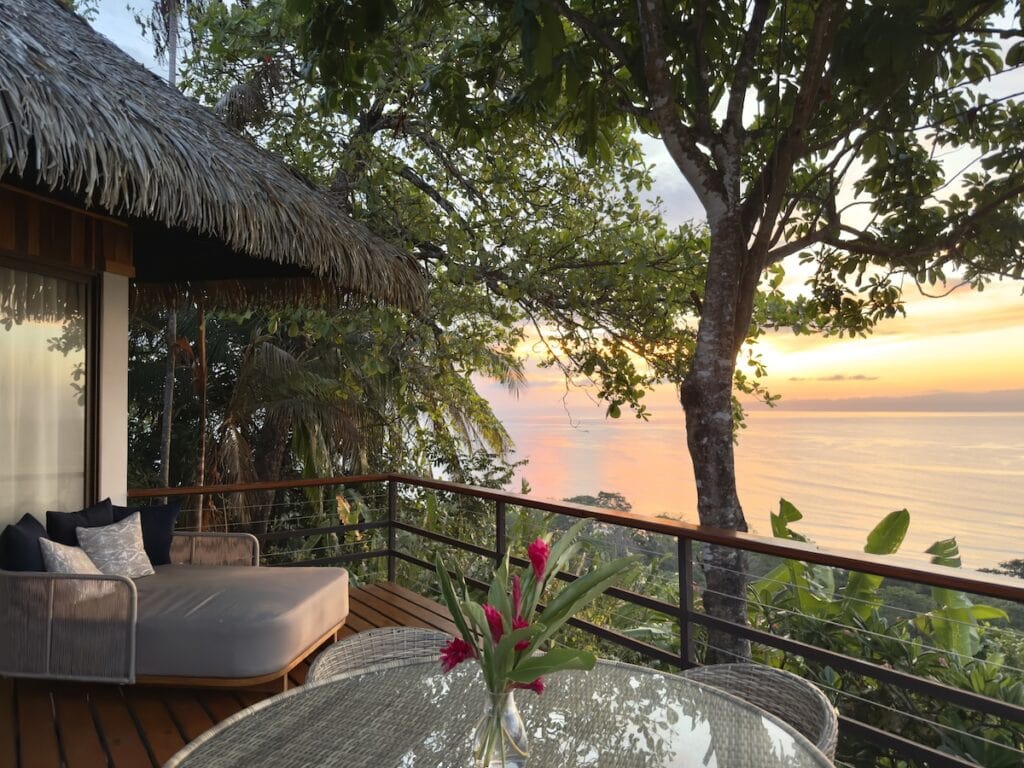
As I begin writing this, I am sipping coffee at sunrise on the deck of a bungalow at Lapa Rios Lodge on Costa Rica’s remote Osa Peninsula (photo from this exact moment below). The lush jungle surrounding me, the ocean stretching out before me, and the cacophony of sounds—crashing waves, screeching scarlet macaws, and the distant rumble of howler monkeys—are exactly as I remembered from a visit eight years earlier. Actually, they’re somehow even better, which feels nearly impossible given how much I had built this place up in my mind.
In more than 35 years of travelling, there are only a handful of places I’ve thought about long after returning home. Destinations so extraordinary that, years later, I’m still looking for any excuse to return. Lapa Rios, for me, is one of those rare places. In fact, I’d go so far as to say it ranks among my five favourite lodge experiences anywhere in the world.
The reason is simple: I’m completely and totally mad for wildlife encounters. And while I’ve been fortunate enough to stay at some exceptional eco-lodges and wilderness lodges across the Americas—from a cabin on stilts in the Peruvian Amazon to a cozy log cabin in Canada’s grizzly bear country—nowhere have I experienced such an abundance of wildlife, or seen it at such close range, as I have at Lapa Rios.
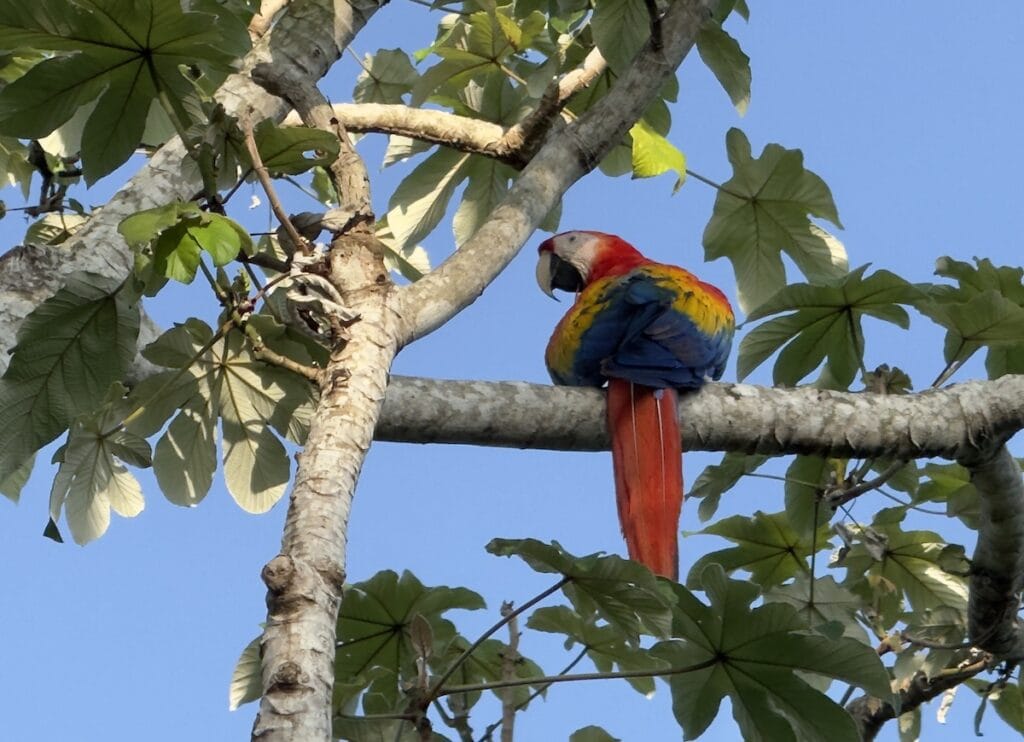
Take this scarlet macaw, for example, perched in a tree just outside my bungalow one morning. I didn’t need a fancy camera—just my iPhone while balancing a cup of coffee in my other hand—because it was that close.
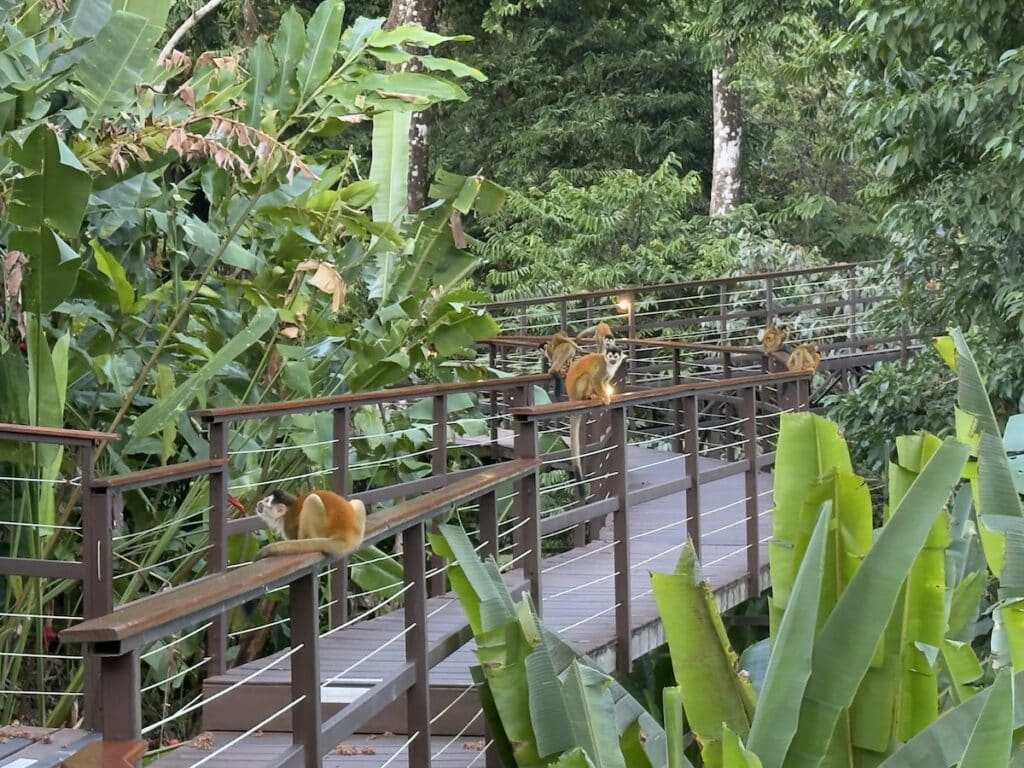
As luck would have it, the perfect excuse to return finally presented itself. My daughter and I were already travelling in neighbouring Panama, making Costa Rica an easy addition to our itinerary. After two short morning flights and a 45 minute scenic drive, we found ourselves enjoying lunch on the deck at Lapa Rios, watching squirrel monkeys leap through the trees just metres away.
Note: I paid entirely out of pocket for this stay at Lapa Rios. Unless otherwise noted, I pay for my own travels so I can provide honest, independent reviews based on my experience as a paying guest. I also don’t earn a commission if you book directly with Lapa Rios.
Watch: A Glimpse of Lapa Rios Lodge
Before I dive into the details, I want to share with you this short video from our stay. While two minutes could never fully capture the magic of Lapa Rios, I hope it gives you a sense of what it’s like to wake up in one of the most extraordinary corners of Costa Rica. (I also want to point out that all the animals in this video were captured either from our bungalow deck or within 10m of the front door!)
About Lapa Rios and the Osa Peninsula
The name Lapa Rios means River of Scarlet Macaws, a tribute to the magnificent birds that soar above the rainforest-covered hills of Costa Rica’s Osa Peninsula, often in pairs or family trios. The lodge was founded in 1991 by former Peace Corps volunteers John and Karen Lewis, who purchased 1,100 acres of primary and secondary rainforest—much of which had previously been cleared for livestock—with a vision of restoring and protecting one of the most biologically diverse places on Earth.
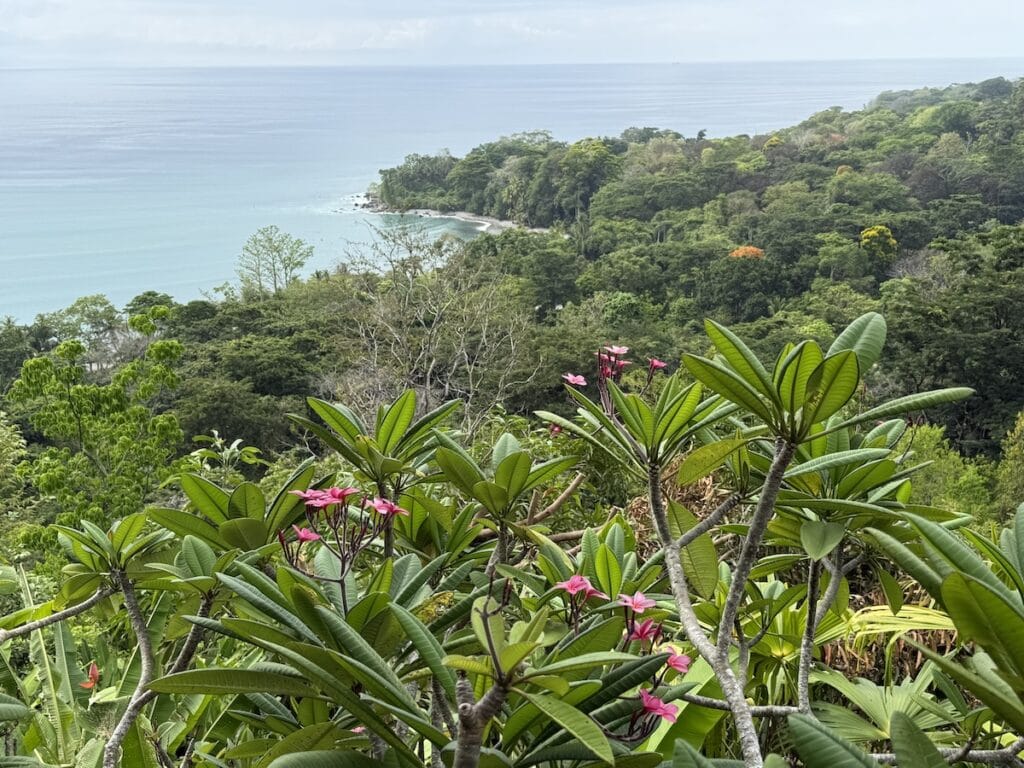
While the lodge property is impressive in its own right, it also forms part of a much larger conservation landscape anchored by the 42,000-hectare Corcovado National Park. Together, these protected forests provide habitat for hundreds of bird species—including scarlet macaws and several species of toucans (until Lapa Rios, I’d only ever seen a toucan through binoculars!)—as well as all four species of Costa Rican monkeys, tapirs, sloths, anteaters, pumas, and yes, even the elusive jaguar. (Before you get too excited, though, jaguars are almost always spotted on camera traps rather than in person!)
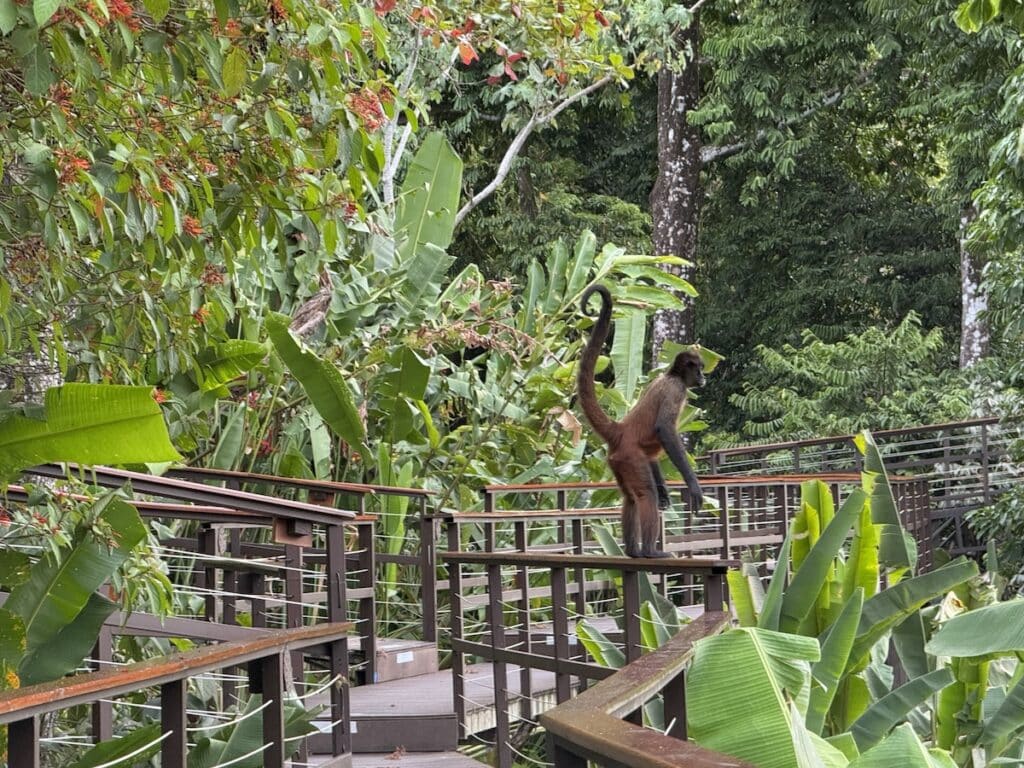
Simply put, there are very few places in the Americas where you can experience so much wildlife with so little effort. (The photo below is of the spider monkey that slept in the mango tree beside my bungalow each night.)
These days, Lapa Rios is part of Böëna Lodges, a privately owned collection of five exceptional nature lodges in Costa Rica. Rather than reinventing what the original owners created, Böëna has carried forward the conservation-first philosophy that has defined Lapa Rios for more than three decades. Just as importantly, the lodge remains deeply rooted in the local community, with the vast majority of its staff—including management—being Costa Rican, many of them from nearby Puerto Jiménez and communities throughout the Osa Peninsula.
If you’re already convinced this is the place for you, you can check current rates and availability on the official Lapa Rios website.
Why Lapa Rios Lodge Is So Special
As I mentioned earlier, I’ve been fortunate enough to visit quite a few eco-lodges and wilderness lodges throughout the Americas. Many have been wonderful. But there are a handful of reasons why Lapa Rios eco lodge stands out above the rest—and why, nearly a decade later, I found myself trying to find any excuse to return.
The Proximity to Wildlife
Perhaps the biggest reason is that at Lapa Rios, the wildlife isn’t something you have to go looking for. Find somewhere quiet to sit on the lodge property, and more often than not, something interesting will reveal itself. While the included guided hikes are absolutely outstanding, some of my favourite sightings happened while enjoying a coffee on my bungalow deck, relaxing by the pool, eating breakfast in the open-air restaurant, or simply walking along the elevated pathways connecting the guest rooms. It’s not unusual to see scarlet macaws just metres away, monkeys moving through the canopy overhead, families of white-nosed coatis wandering through the grounds, or a sloth curled into a ball on a nearby branch.
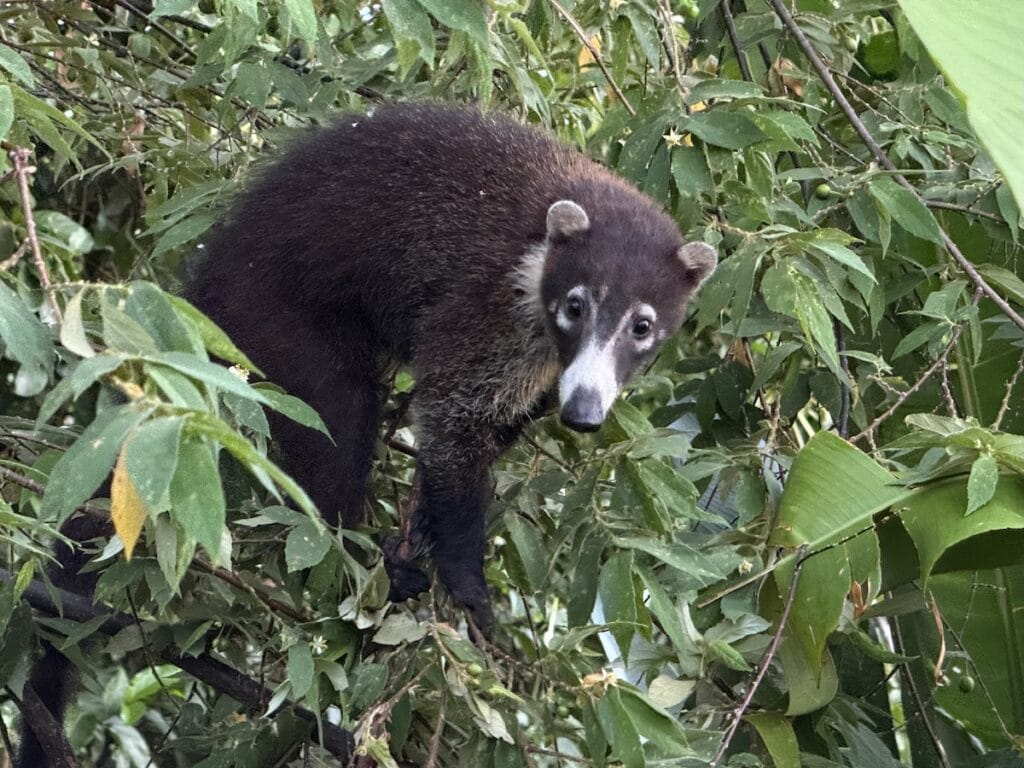
Let me show you what I mean. On my very first morning, I opened the door to collect the coffee and hot chocolate that had quietly been delivered to my bungalow at 6 a.m. Waiting for me in the tree just outside was this adorable white-nosed coati…along with about a dozen of its family members. Ten minutes later, along came a troop of squirrel monkeys. For me, there simply is no better way to start the day.
Comfort Without Losing the Rainforest
Just as impressive as the wildlife is the lodge itself. Yes, Lapa Rios Resort is luxurious, but what impressed me most was how beautifully it balances comfort with nature.
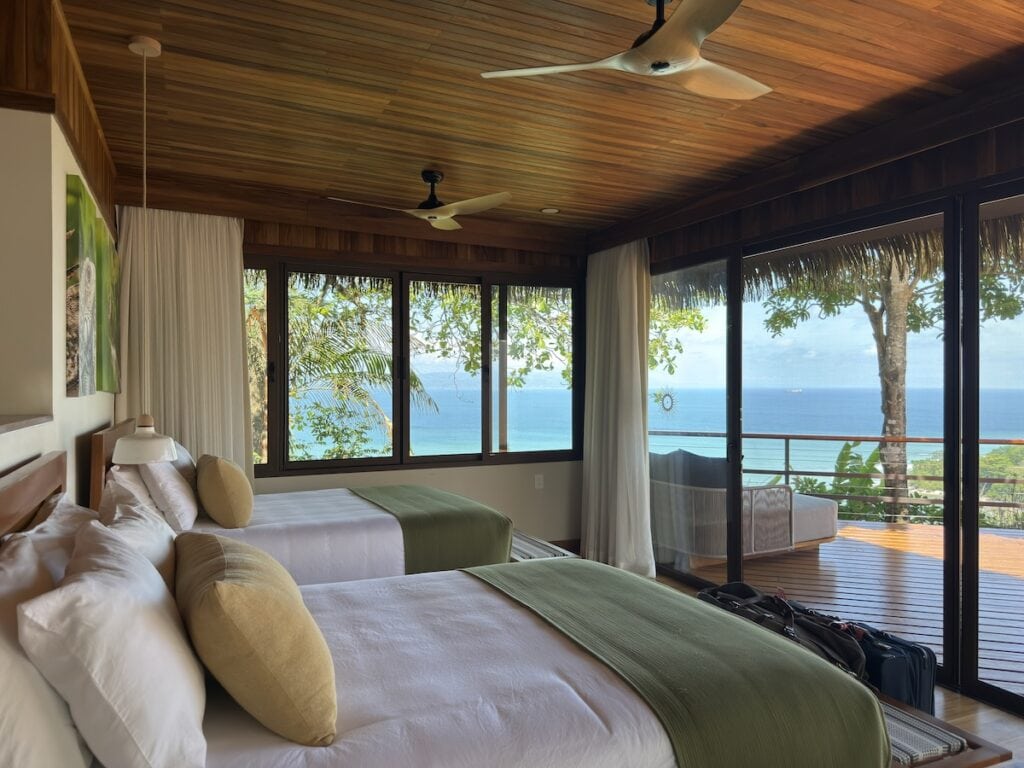
The spacious bungalows and villas let you decide just how immersed in the rainforest you want to be. Open the glass doors and windows to enjoy the breeze and sounds while the screens keep the bugs out, or close everything up into a fully enclosed room. As someone who has spent plenty of nights in rustic jungle lodges—sharing cabins with oversized insects and occasionally sweeping out columns of army ants—I can assure you this is the ideal combination. You get all the sights and sounds of sleeping in the rainforest, without giving up any of your own luxurious creature comforts.
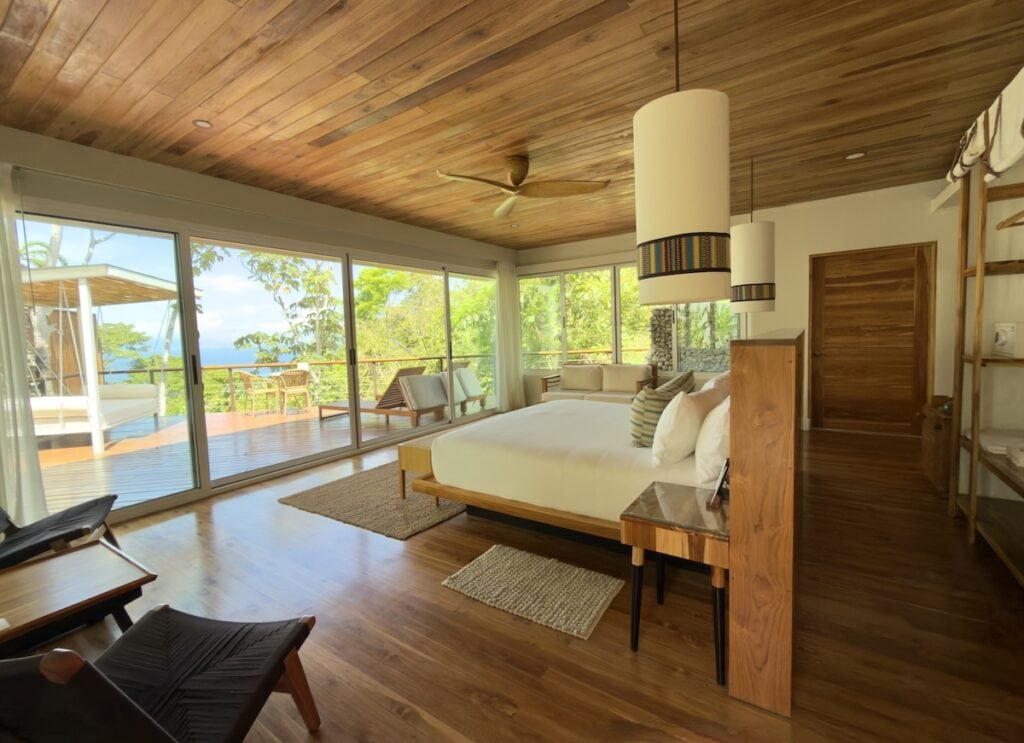
Inside the villas, you’ll find the kind of thoughtful touches you’d expect from a luxury lodge: incredibly comfortable beds, locally inspired bath amenities, a complimentary minibar stocked with non-alcoholic drinks, and an in-room coffee maker. The bathrooms are equally impressive, with oversized rain showers and, in many bungalows, an outdoor shower where you can bathe surrounded by the rainforest. Every bungalow has ceiling fans, and most also have air conditioning if you’d like to cool things down.
Dining in the Rainforest
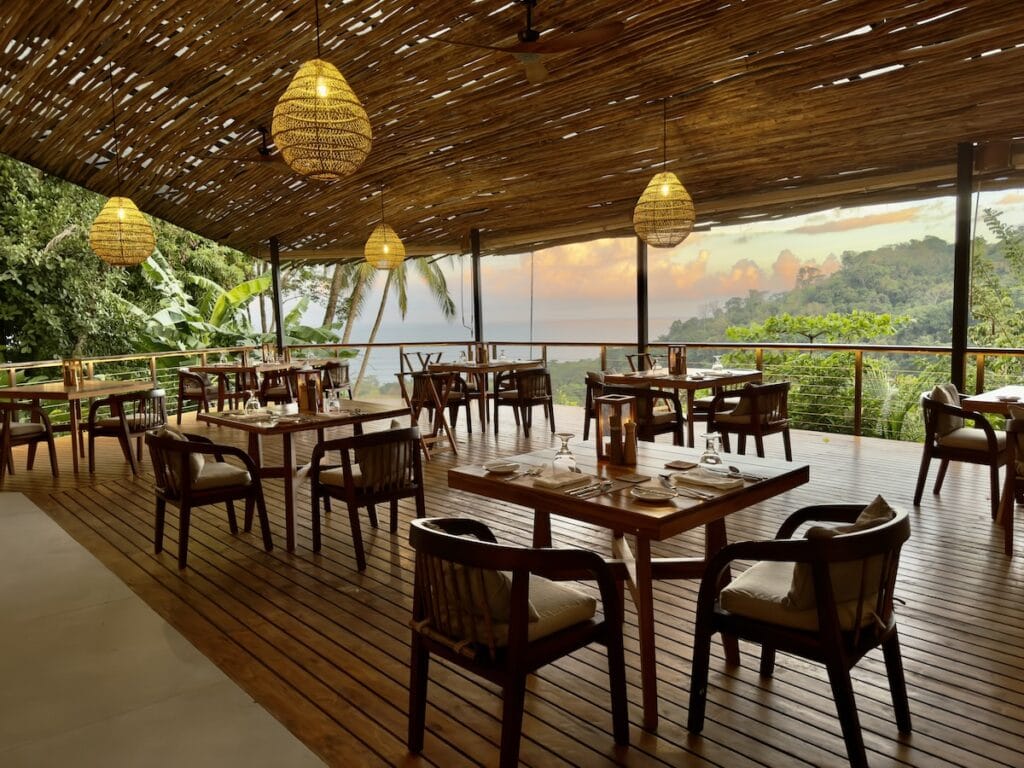
Meals are served in the beautiful open-air dining restaurant, Guapira, with gorgeous ocean and rainforest views. The kitchen showcases local ingredients whenever possible, with many items—including the tortillas and fresh pasta—made in-house. And you’ll taste the difference. I’m still thinking about the amazing chocolate made from cacao grown on staff member Gabriel’s family farm.
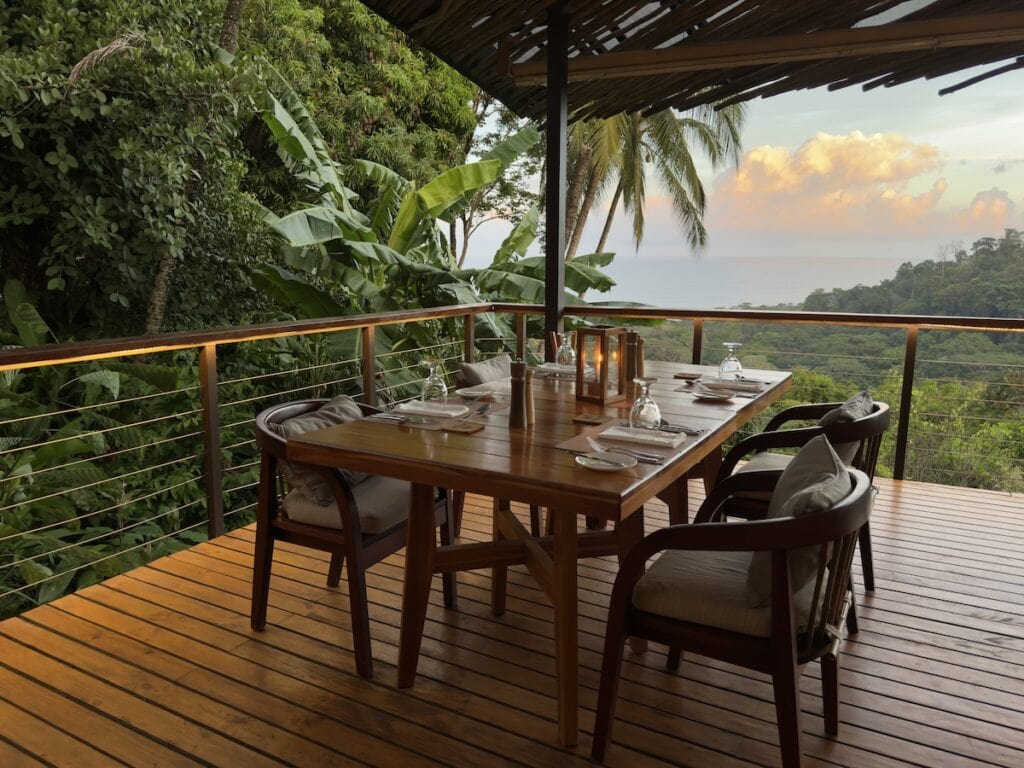
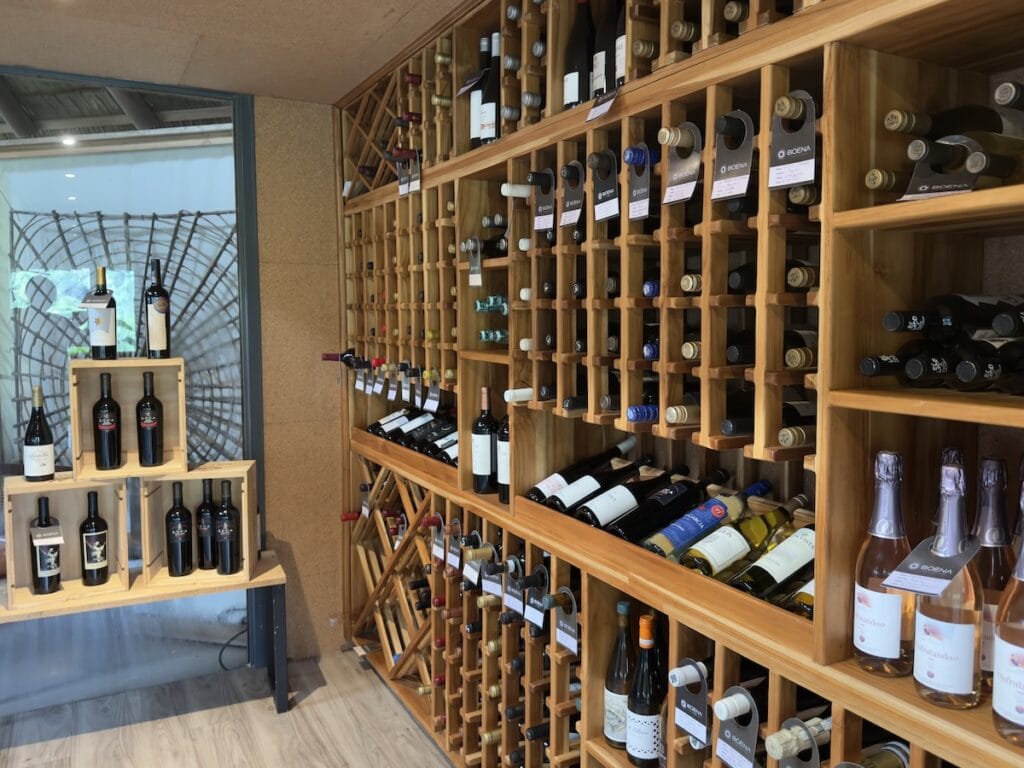
Note: I also appreciated that the Lapa Rios dining menu offered plenty of healthy choices as well as a few comfort classics. As a person who travels frequently, I find that sometimes it’s nice to have the option of some lighter dishes, especially when engaging in healthy activities like hiking.
The People
Of course, a place like Lapa Rios is about much more than the wildlife. It’s also about the people.
With a largely Costa Rican team, many of whom come from nearby communities on the Osa Peninsula, there is an authenticity to the experience that I really love. From the engaging restaurant staff and helpful front desk team to the exceptionally knowledgeable naturalist guides and the magical “room elves”—who somehow always managed to clean our bungalow without us hardly ever seeing them—everyone seemed genuinely proud of both Lapa Rios and the incredible corner of Costa Rica they call home. There was a real sense that they wanted guests to experience the Osa Peninsula through their eyes and leave loving it as much as they do.
Perhaps the biggest testament to the Lapa Rios team is how long so many of them have worked there. Nearly a decade after our first visit, all four of the guides we had met were still working at the lodge. One of them, Edwin Villarreal, had been at Lapa Rios for 31 years and told me he hopes to eventually retire there after spending virtually his entire career at the lodge.
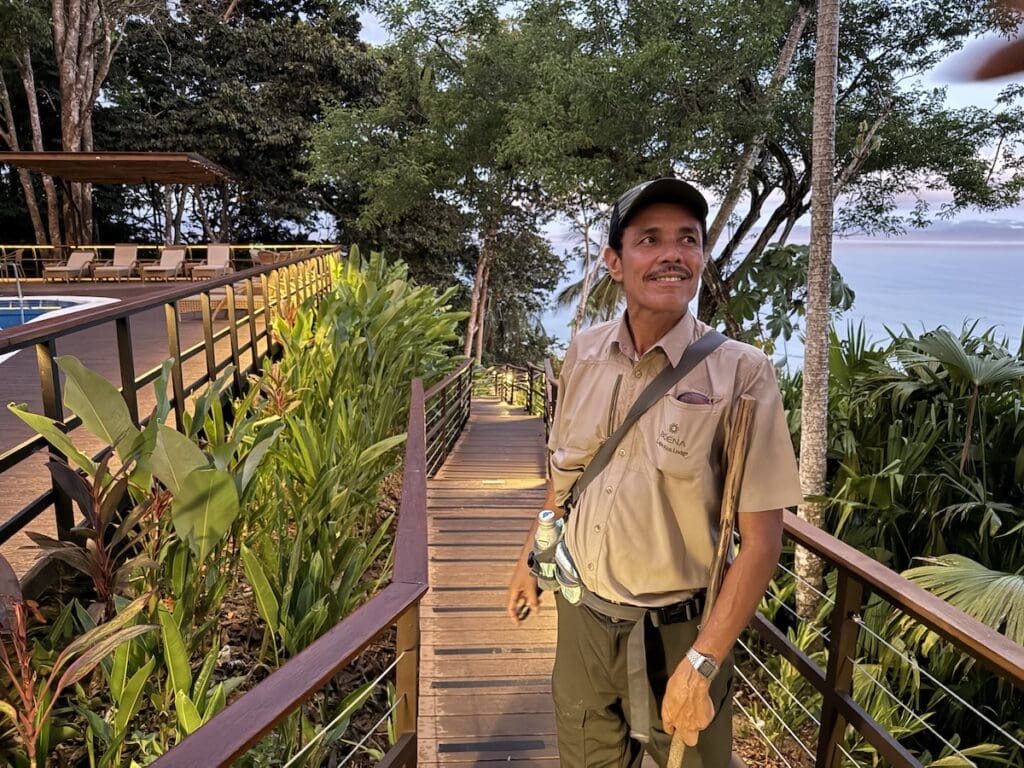
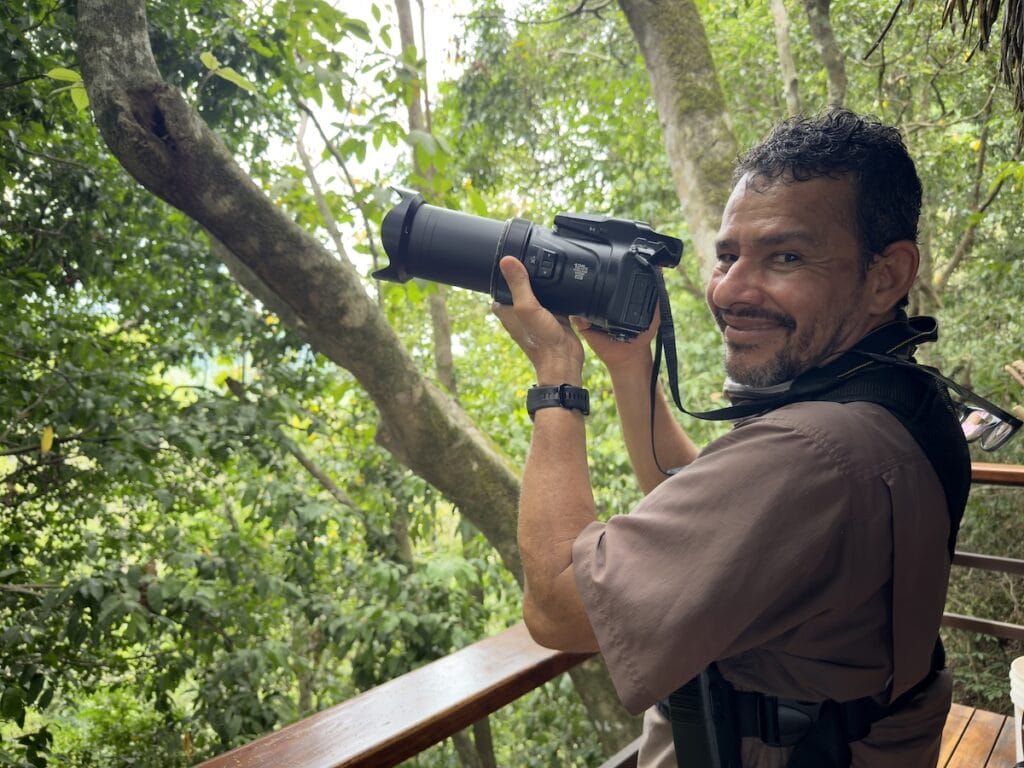
Another was Frank Chaves whom I also met on our first trip. I started following Frank’s Instagram account (@frankchavescr) during the pandemic, when my only option was to travel virtually. His stunning wildlife photographs and videos from Lapa Rios and the Osa Peninsula became a big part of the reason I found myself wanting (needing) to return. Every time he shared another scarlet macaw, tapir, monkey, or other unforgettable wildlife encounter, I was reminded of just how special this place really is.
A Genuine Commitment to Conservation
Long before sustainable travel became something every hotel brand promoted (and, sadly, sometimes greenwashed), Lapa Rios was setting an exceptionally high standard for low-impact tourism.
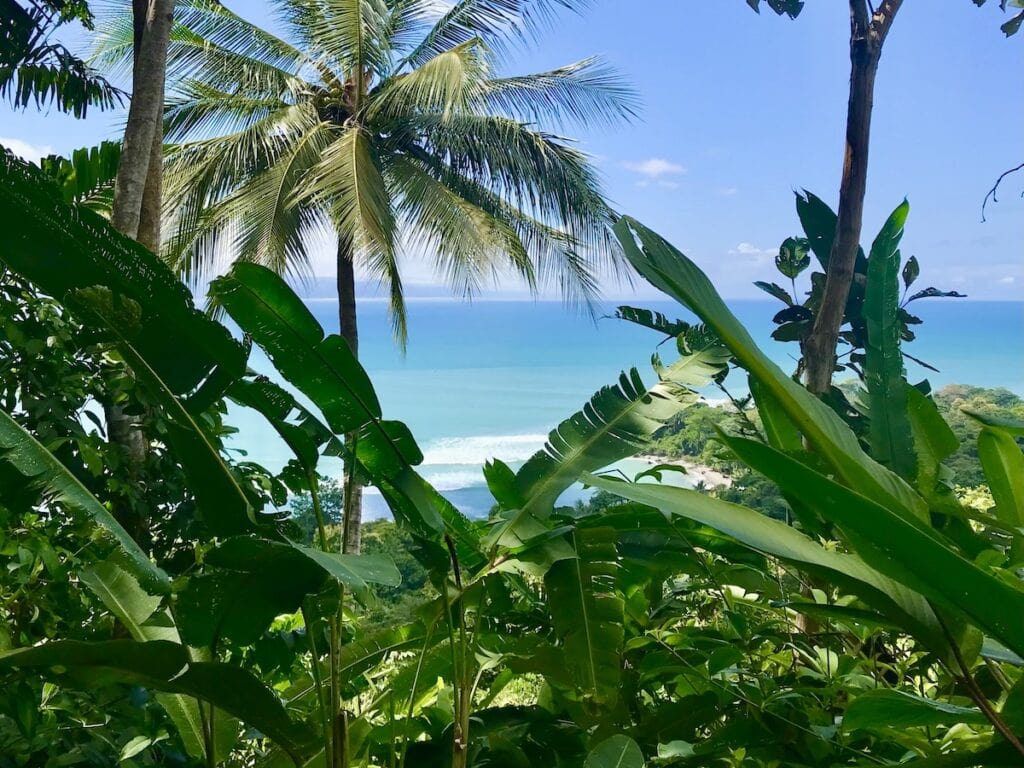
It was one of the main reasons I chose to visit this remote lodge in the first place. I was inspired by the reminder that tourism really could be done differently in this remarkable corner of the world. More recently, I was pleased to see that, despite new ownership, that commitment still feels just as strong. The current General Manager, Wilman Fernández (formerly of Böëna’s Pacuare Lodge), mentioned it almost as soon as we left the airport.
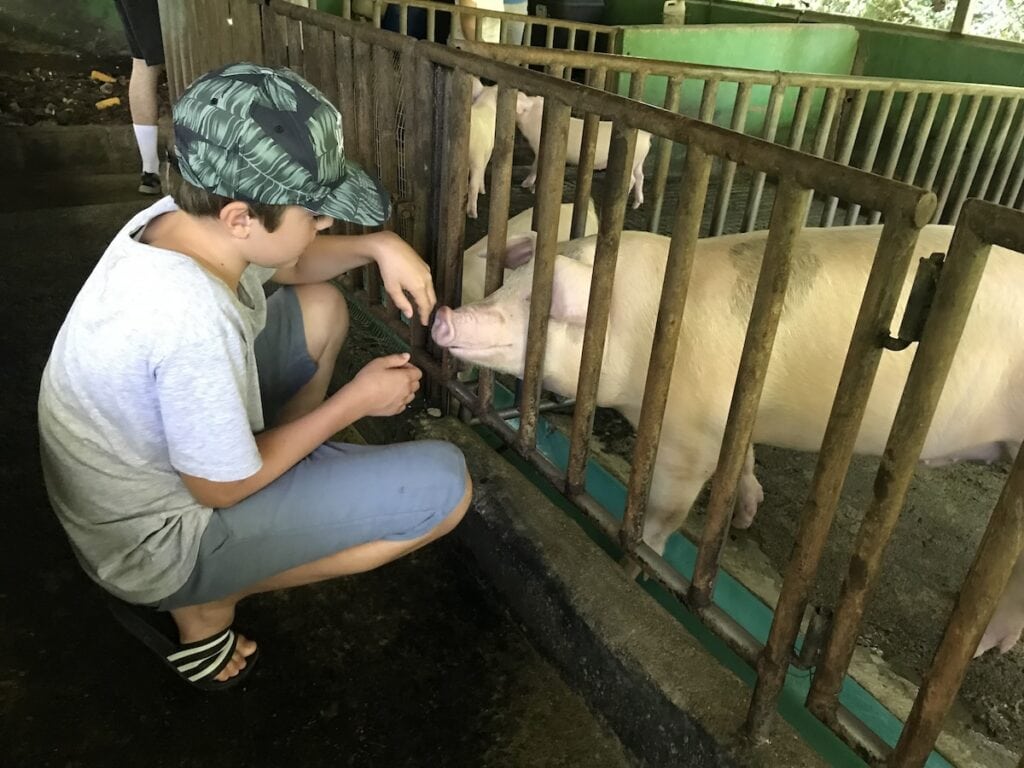
Today, the lodge continues to embrace the four pillars of sustainable tourism—conservation, community, culture, and commerce—through local hiring, Costa Rican leadership, support for nearby communities, locally sourced ingredients, refillable water bottles, renewable energy generated by solar panels and small hydro turbines, participation in a reef restoration project, tree-planting and sustainability-focused guest experiences. They even offer a sustainability tour, giving guests the opportunity to see many of these initiatives firsthand.
Note: During our recent stay, one employee shared a personal story about how the company had gone above and beyond in its support of his family during a difficult time. It was simply a reminder that, at least from what I experienced, this is a company that genuinely seems to care about its people and the community around it. They don’t just talk the talk—they walk the walk.
About a Stay at Lapa Rios
Lapa Rios is best experienced as an all-inclusive stay (called the Full Experience Package). Normally, the mere hint of an all-inclusive package has me running screaming in the opposite direction, but this is a five-star, One MICHELIN Key lodge where nothing feels generic or mass-market. In other words, this is about as far from the typical all-inclusive experience as you can get.
What’s Included in a Lapa Rios Stay
With the Full Experience Package chosen by most guests, a stay includes:
- Luxury bungalow or villa accommodations
- Three à la carte meals daily (breakfast, lunch, and dinner)
- Fresh coffee, tea, or hot chocolate delivered to your bungalow each morning
- Unlimited non-alcoholic beverages (including the in-room minibar)
- 2 daily guided rainforest experiences led by expert naturalist guides
- Wildlife viewing from the lodge, your bungalow, and the surrounding trails
- Use of a beautiful pool overlooking the rainforest and Pacific Ocean
- Complimentary Wi-Fi throughout the property
- Airport transfers to and from Puerto Jiménez Airport
- Evening turndown service
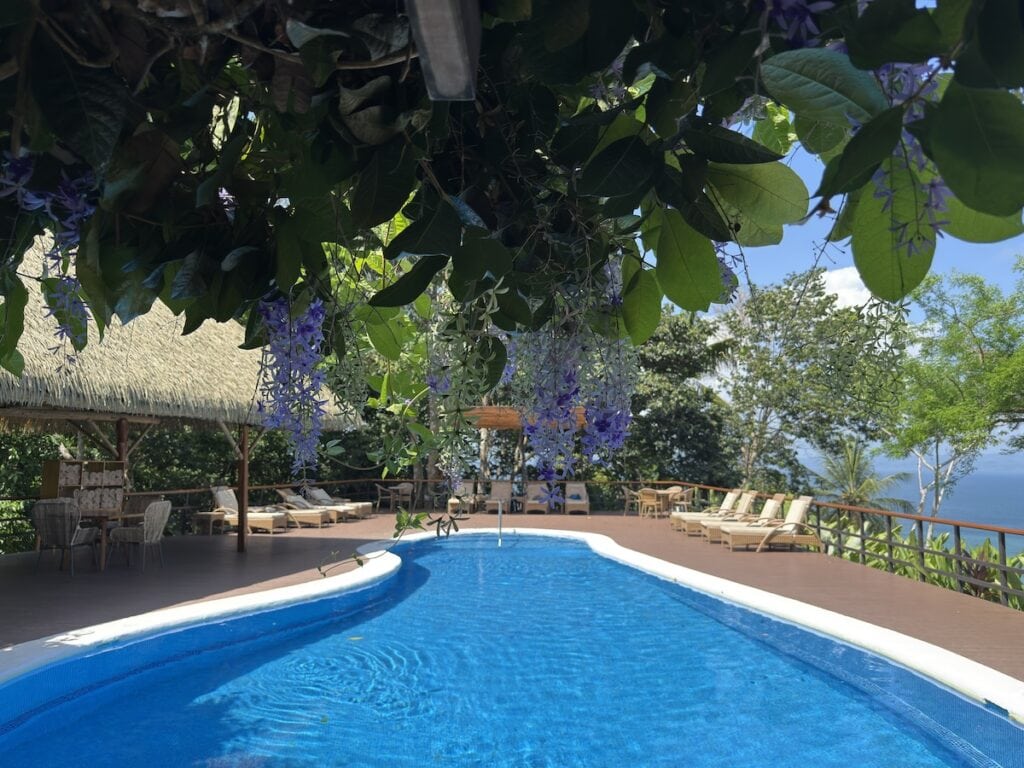
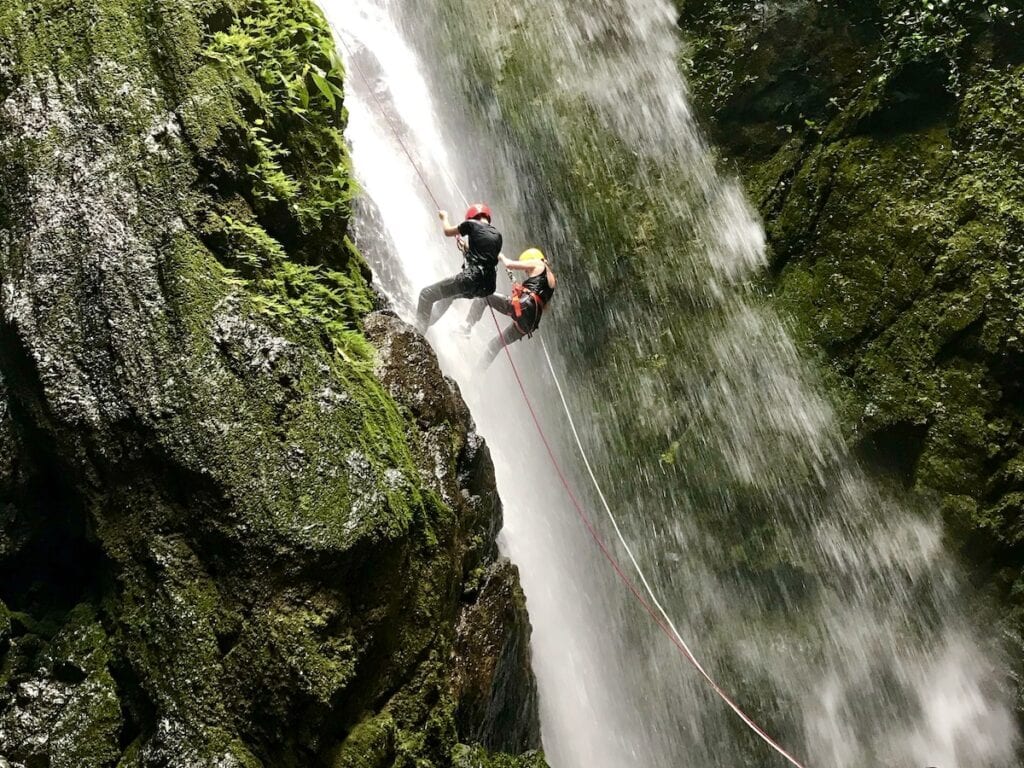
Truth be told, I could happily spend four or five days without ever leaving the lodge or its surrounding rainforest. But if you’d like to explore more of the Osa Peninsula, Lapa Rios can also arrange a wonderful selection of optional paid experiences, including:
- Surf lessons on the beach below the lodge
- Waterfall rappelling
- Guided horseback riding
- Kayaking through the Golfo Dulce mangroves
- Dolphin and whale watching (seasonal)
- Sport fishing
- Boat excursions to Corcovado National Park
- Visits to local communities and cultural experiences
Planning a stay? For current rates, availability, and more information on the Full Experience Package, visit the official Lapa Rios website.
Getting to Lapa Rios
Although Lapa Rios feels remote, getting there is actually quite easy.
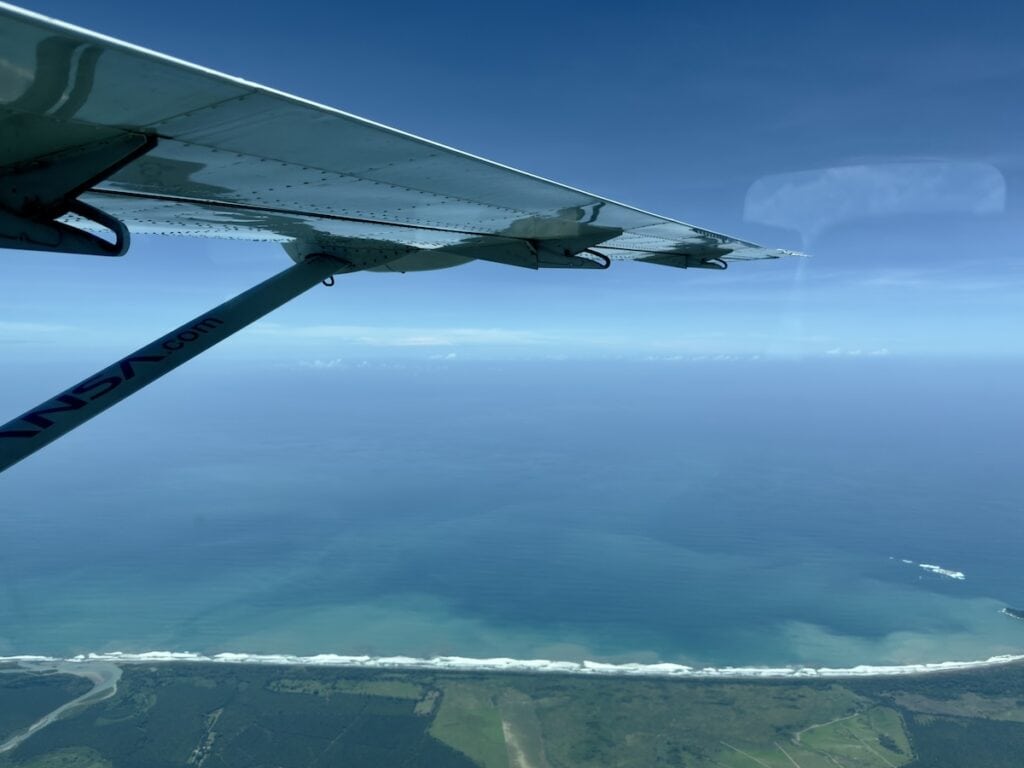
Most guests fly into San José, Costa Rica’s capital, before taking a 50-minute domestic flight on Sansa Airlines to Puerto Jiménez. From there, it’s a 45-minute transfer to the lodge (included in most accommodations packages). This is by far the easiest and quickest way to arrive.
Driving from San José is also an option if you’re planning a Costa Rica road trip. The journey takes approximately 6–7 hours on well-maintained roads and gives you the flexibility to explore other parts of the country before or after your stay. If you’d rather not drive yourself, Lapa Rios can arrange a private transfer from San José for an additional fee. This can be a more economical option for families or groups.
For guests combining multiple Böëna Wilderness Lodges, the company also offers private charter flights between select properties, making it possible to pair Lapa Rios with places like Pacuare Lodge or Monteverde Lodge & Gardens without returning to San José.
In our case, we added Lapa Rios onto the end of a trip to Panama. After a short international flight from Panama City to San José, we connected to Puerto Jiménez the same day.
Note: On our return, we spent one night in San José near the airport since our flight back to Canada left very early the following morning. We stayed at the Marriott Hotel Hacienda Belén, which, honestly, I can’t recommend. It is a big, bland, cookie-cutter conference hotel that could have been almost anywhere in the world. The only thing that redeemed it for me was a beautiful flock of parakeets that descended on the palm tree outside our room at sunset.
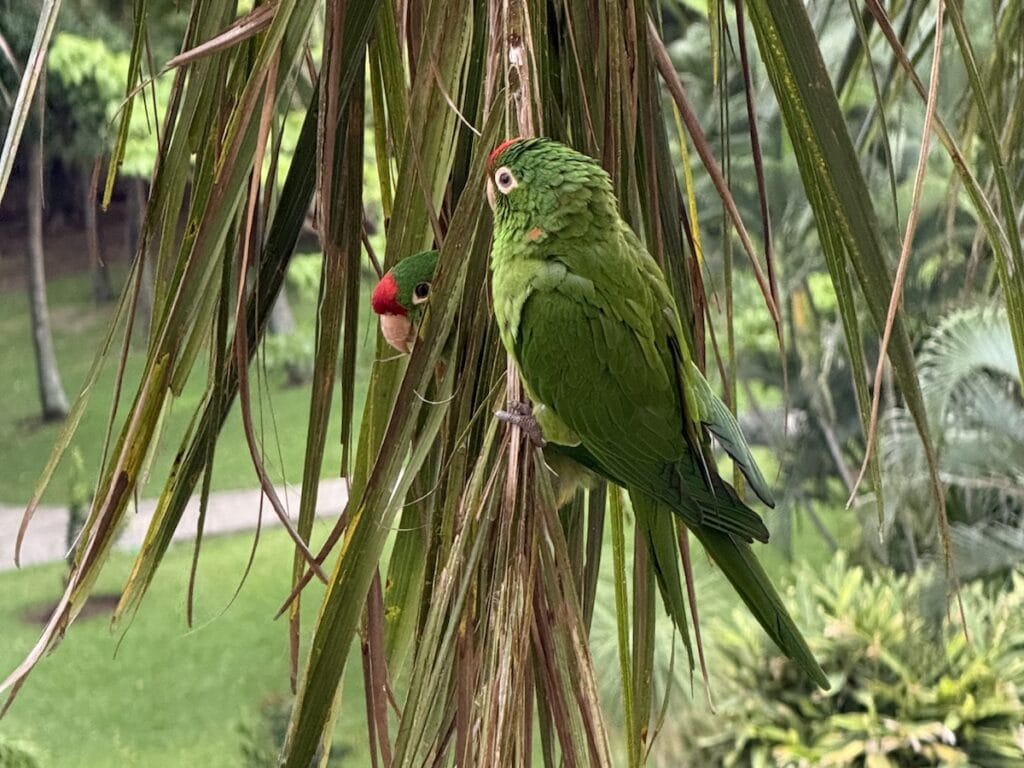
If I were doing it again, I’d either stay somewhere with a bit more character—even if it meant being a little farther from the airport (like Finca Rosa Blanca Coffee Farm, Casa 41 or Hotel Grano de Oro)—or I’d save some money and book a cheaper, bland airport hotel like the Homewood Suites by Hilton. 😂
Browse hotels near San José Airport on Booking.com or compare options on Expedia.
Before You Book
There are a few things to know before you decide when to visit and which villa or bungalow to book. I hope to clarify a few things here.
Bed & Breakfast or Full Experience
Lapa Rios offers two ways to experience the lodge.
The Full Experience is what I would recommend for most visitors, particularly if it’s your first time on the Osa Peninsula. It includes your accommodations, shared round-trip transfers from Puerto Jiménez, all meals, and up to two guided nature experiences per night of your stay. Considering the quality of the guides, I think this is where much of the magic of Lapa Rios lies.
The Bed & Breakfast rate is a more flexible option. It includes your accommodations, an à la carte breakfast each morning, and access to the self-guided trail, but you’ll pay separately for transfers, lunch, dinner, and any guided activities you choose to book. The only travellers I’d recommend the Bed & Breakfast rate to are those who are already exploring the Osa Peninsula on a self-guided itinerary and simply want to include a night or two at Lapa Rios along the way.
Choosing the Right Room
Each of Lapa Rios’ room categories offers a slightly different experience, so choosing the right one comes down to your budget, group size, and priorities.
For couples or families of three or fewer, I would choose one of the Deluxe Bungalows every time. They offer wonderful privacy, spectacular rainforest and ocean views, and are still just a short walk from the main lodge facilities.
For families or groups of up to five, the Lapa Villas and Premier Villas are beautiful options, offering plenty of space. The Lapa Villas also feature private plunge pools, though the trade-off is that both villa types are a little farther from the main lodge.
One other option worth considering is the Brisa Suite. It’s a one-of-a-kind suite that also sleeps up to five and has its own private plunge pool. Personally, if I were travelling with my family, this would be my first choice. It’s closer to the main lodge than the Lapa and Premier villas while still feeling wonderfully private.
Also worth considering are the two Matapalo Suites near the entrance. Sleeping up to four, they’re ideal for larger families or groups wanting to stay close together. They’re also the most accessible accommodations at Lapa Rios, connected to the main lodge by a continuous flat ramp and featuring grab bars in the bathroom. The only trade-off is that they’re closer to the driveway, so you may occasionally hear arriving or departing vehicles.
Finally, there are the two Forest View Bungalows. While they wouldn’t be my first choice, that’s simply because they don’t offer the ocean views of the other accommodations or air conditioning. That said, they’re still lovely rainforest retreats. If the choice were between a Forest View Bungalow or not experiencing Lapa Rios at all, I’d book the Forest View without hesitation.
Lapa Rios Property Map
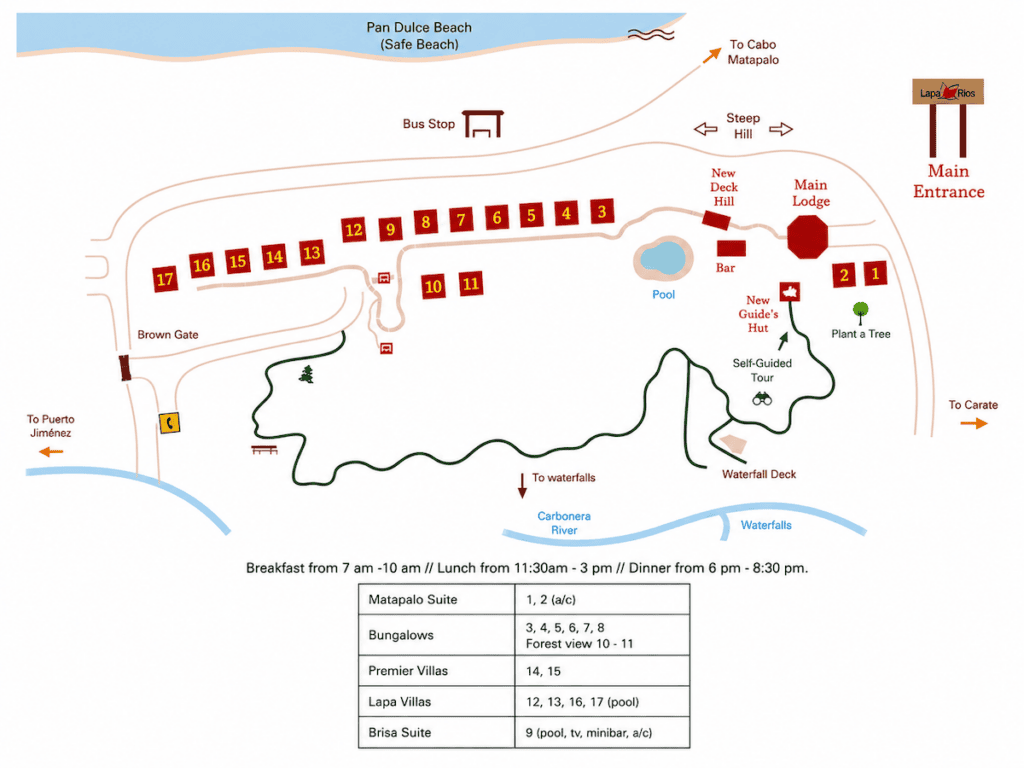
I thought I’d share this property map of Lapa Rios to help you visualize where each bungalow and villa is located in relation to the main lodge.
One thing to note is that, although there is a road (and bus stop) between Villas 3–17 and the beach, all of the accommodations are perched along a ridge above it. During our stay, we never saw or heard the road from our bungalow.
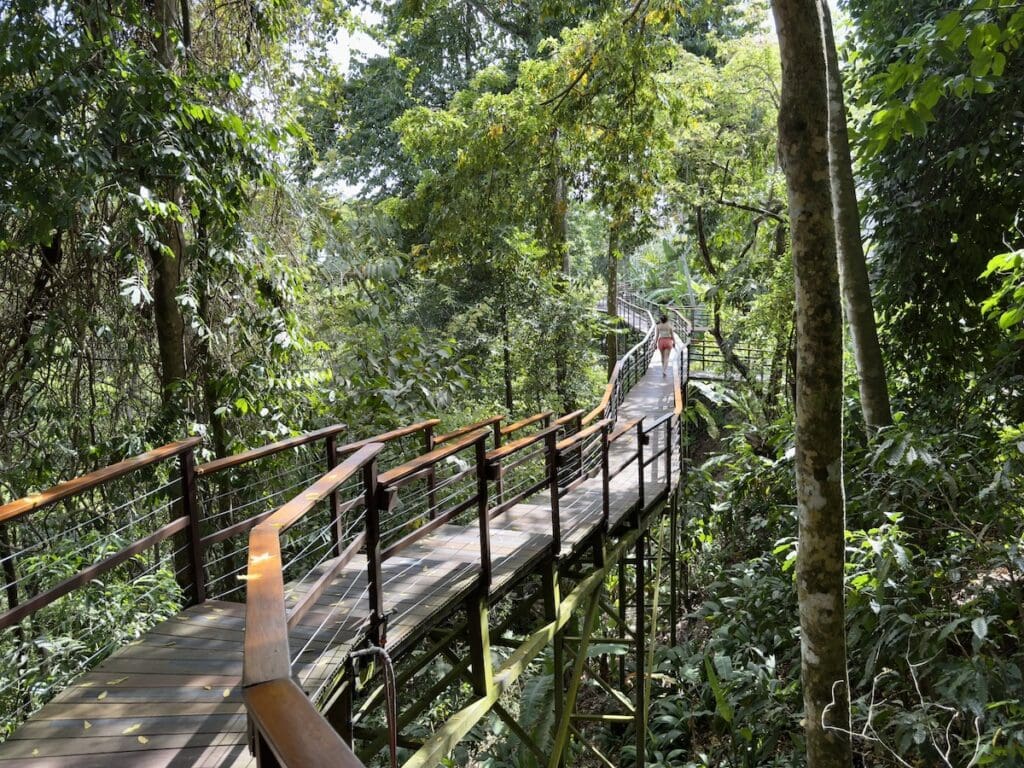
I also wanted to mention that, while Villas 12–17 are a little farther from the main lodge, restaurant, and pool, getting there is part of the experience. The walk follows a beautiful elevated boardwalk through the rainforest canopy,
Best Time to Visit Lapa Rios
One of the things I love about Lapa Rios is that there really isn’t a bad time to visit. The rainforest is spectacular year-round—it simply depends on what kind of experience you’re looking for.
January to April | Best Weather – Sunny days, excellent hiking, and high-season prices.
This is the dry season and the most popular time to visit. Expect the least amount of rain, excellent hiking conditions, and abundant wildlife. It’s also one of the busiest and most expensive times of year.
May to July | Best for Wildlife Viewing – Lush rainforest, abundant wildlife, and great value.
Both of my visits to Lapa Rios have been during this early green season window, and I think it offers the perfect balance. The rainforest is beautifully lush, wildlife is incredibly active (food is plentiful), and while afternoon showers sometimes occur, they rarely last long enough to disrupt your plans. Rates are also lower than during the dry season.
August to November | Best Value – Lowest rates, lush rainforest, whales, and sea turtles.
Deep green season offers the year’s lowest rates, but also the most rain—particularly in September and October. If you’re flexible with the weather, you’ll be rewarded with fewer visitors and a spectacularly green rainforest. It’s also a wonderful time for whale watching and sea turtle nesting, although timing varies from year to year, so I’d recommend checking with the lodge to see what you might be able to experience during your visit.
December | Shoulder Season
Improving weather, lush rainforest, and highest prices.
Early December can be a wonderful time to visit as the rains begin to ease while the rainforest remains beautifully green. Just keep in mind that rates climb quickly over the Christmas holidays, with the period through the first week of January typically being the most expensive time of year to visit.
Insider Tips for Your Stay at Lapa Rios
Most of what you need to know is covered above, but there are also a handful of practical tips that I think are worth sharing. Hopefully they’ll make your stay just that little bit easier—and perhaps even a little more enjoyable.
Footwear
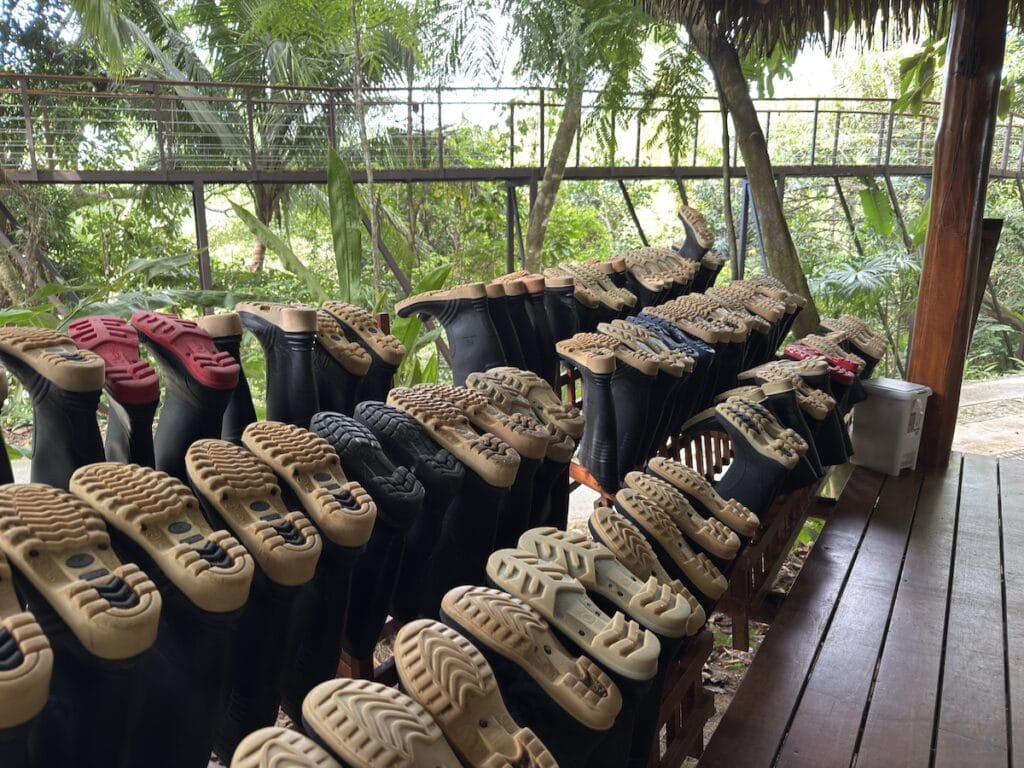
The lodge provides rubber boots and socks for guests, which is a wonderful touch. Personally, though, I preferred my own lightweight waterproof hiking boots that came just above the ankle. I found them cooler and more comfortable, and I appreciated the extra ankle coverage—not just for the support, but because the jungle is very much alive beneath your feet too (think streams of leaf-cutter ants). The added protection simply made me feel a little more comfortable.
Insect Repellent
The lodge offers its own natural insect repellent, but to be honest, I didn’t find it worked particularly well. Perhaps the insects of the Osa Peninsula have adapted! I had much better luck with Natrapel (DEET-free). (I did bring a long sleeve hiking shirt and long hiking pants, but despite their light weight, I found them too hot in the rainforest.)
Binoculars
I brought my own binoculars but wouldn’t bother next time. Excellent binoculars are available to borrow from the lodge.
Do the Bird Tour Early
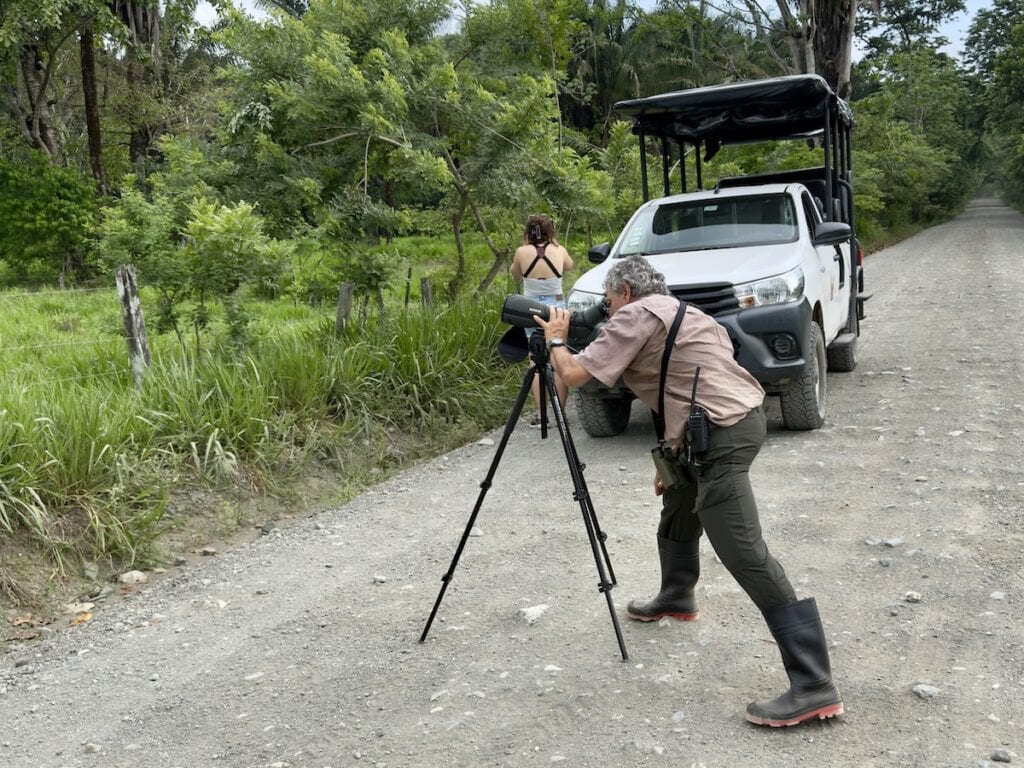
Your stay includes as many guided nature tours as you can reasonably fit into each day, but if I could recommend just one strategy, it would be to do the bird tour first. I wouldn’t describe myself as a birder in any way, but after that tour I suddenly knew exactly what I was looking up to find—simply by hearing the calls. Thank you, Daniel!
Choose Your Bungalow Carefully
I know it’s a splurge, but if your budget allows, I would absolutely recommend booking a Deluxe Bungalow (or higher) rather than a Forest View Bungalow. The panoramic rainforest and ocean views are spectacular, and I don’t think you’ll ever regret spending the extra. (The air conditioning is a pretty wonderful bonus too.)
Drink the Water
The tap water at Lapa Rios is completely safe to drink. If you’ve travelled much in Latin America, you’ll appreciate what a luxury that is! Insider tip: fill your water bottle at the station beside the pool, as it almost always has a delicious fruit-infused water available.
Book a Beach Picnic
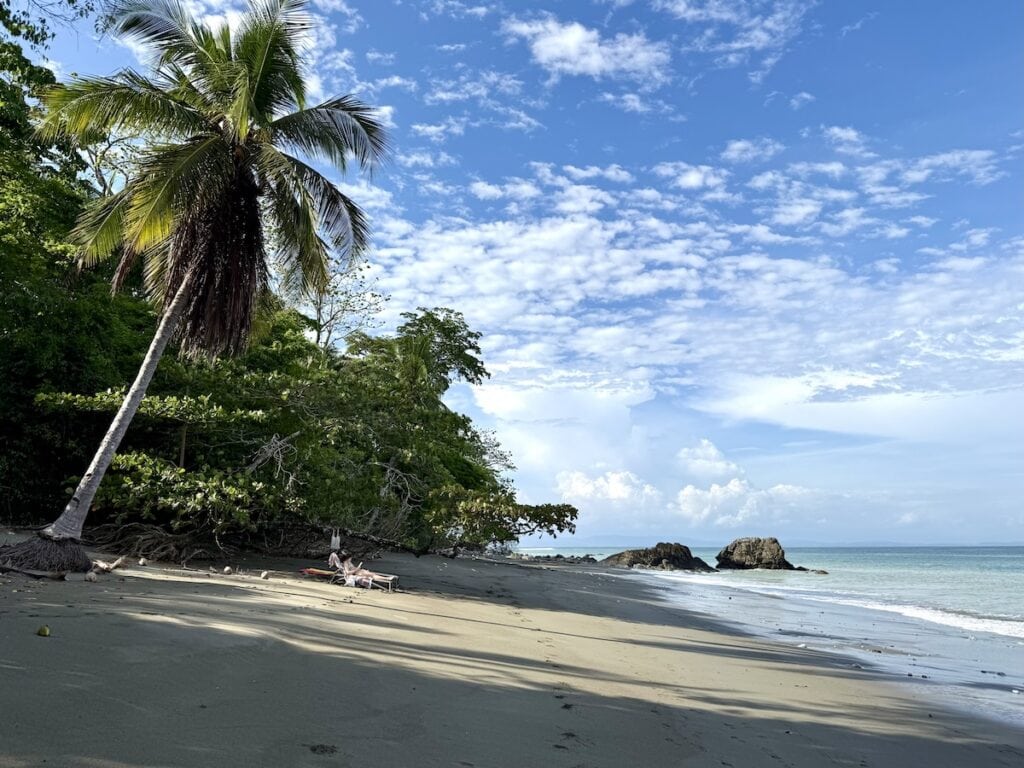
If you have the time, I highly recommend booking the included beach picnic. Because so much of your day is spent exploring on guided hikes and tours, it’s a lovely way to slow down for a couple of hours while still feeling completely spoiled.
Tipping
Tipping at Lapa Rios can be a little confusing, so here’s how I understand it. At checkout, you have the option of leaving a gratuity for your stay as a whole, which is shared among most staff. If you’d like to tip individual team members, envelopes are also available. This is especially helpful for the Naturalist Guides, who are not included in the general tip pool. Restaurant servers are also excluded, as Costa Rican law already includes a mandatory 10% service charge. If you’d like to leave something extra for your server, you can do so when signing off on your receipt at the end of each meal.
Morning Coffee
One of my favourite little touches is the option to have coffee, tea, or hot chocolate quietly delivered outside your bungalow at 6:00 a.m. Personally, I found the Costa Rican coffee a little milder than I prefer, but that was easily remedied by adding an espresso shot from the in-room coffee maker. 😊
Be Mindful of Electricity
It’s easy to forget, but Lapa Rios is completely off-grid and generates its own electricity using solar and hydro power. Electricity is a precious resource, so please remember to switch off your lights, air conditioning, and other electronics every time you leave your bungalow. It’s also worth making sure all your screens and doors are closed before heading to dinner—unless, of course, you’d like to invite every insect in the rainforest over for the evening.
If Lapa Rios sounds like your kind of place, you can check current rates, availability, and what’s included on the official Lapa Rios website.
Still in the planning stages of your Costa Rica trip? Tap the 🩷 on the right to save this guide to your Grow account so it’s easy to come back to when you’re ready to book.
What if Lapa Rios Isn’t in the Budget?
I know Lapa Rios is a luxury lodge and, for many travellers, simply isn’t a realistic fit financially. But please don’t let that stop you from visiting the Osa Peninsula.
In fact, the reason we first visited as a family was at my husband’s insistence. He had travelled to Osa in his twenties as a backpacker, staying in a very rustic tent camp, and was determined to bring us back. Honestly, if there’s one thing I hope you take away from this guide, it’s that this extraordinary corner of Costa Rica deserves a place on your itinerary.
There are plenty of ways to experience the Osa on a budget. You could stay at one of the area’s more affordable lodges or in a vacation rental, then rent a car or hire a local naturalist guide (I just might have a guide recommendation for you ☺️). You’ll still be able to explore the incredible rainforest, spot amazing wildlife, and experience one of the most biologically diverse places on Earth.
Looking for more accommodations options? You can browse hotels, lodges, and vacation rentals across the Osa Peninsula on Booking.com or Expedia.
And if you’d like a little taste of Lapa Rios without spending the night, the lodge welcomes outside guests for lunch or dinner with advance reservations. (In fact, the best-dressed people we saw during our stay were the ones who had come just for a special meal!)
Whether you stay at Lapa Rios or somewhere else entirely, I hope you make it to the Osa Peninsula. It remains one of my favourite places in the world, and I have a feeling it might become one of yours too.
And, as always, if you have any questions while planning your trip, feel free to reach out. I may have a few suggestions.
Final Thoughts
Okay, so you’ve probably figured it out by now… I really love Lapa Rios.
Before I finish, I’d like to extend a heartfelt thank you to General Manager Wilman Fernández and the entire team at Lapa Rios—especially Frank, Edwin, Daniel, Jeffrey, and Gabriel—for making this trip every bit as exceptional as we had hoped.
I hope this guide has answered most of your questions and helped you decide whether it’s the right fit for your own Costa Rica adventure. If there’s anything I didn’t cover, or if you’d like help planning your trip, please don’t hesitate to reach out via direct message on Instagram, Facebook or by email.
Want to see more unique adventures? I would love for you to follow along with The Better Beyond on Instagram!
More Travel Guides
- Best Things to do in Casco Viejo, Panama City
- Isla Palenque – Luxury Eco Lodge, Panama
- 6 Beautiful Hotels in Casco Viejo, Panama City
- 7 Reasons to Visit Costa Rica in Rainy Season
- Guide to Barranco – Lima’s Coolest Neighbourhood
- The Best Boutique Hotels in Lima, Peru
- How to Swim With Whale Sharks in La Paz, Mexico
- Luxury Lodge-to-Lodge Hike to Machu Picchu