Best Things to Do in Oaxaca City, Mexico
Affiliate Disclosure: This post on Things to do in Oaxaca City contains affiliate links. If you click on a link and make a purchase, I may receive a small commission at no cost to you.

HI, I’M TARA!
I love sharing hidden gems far from the crowds, unique boutique hotels, and unforgettable wildlife adventures – helping you have extraordinary travel experiences.
Introduction
If you’ve read any of my other travel guides, you’ll know that I love creating really in-depth, practical resources for the places I visit (yes, based on actual firsthand experiences!). My goal is always the same: to help make your trip as seamless as possible so you can have the absolute best time.
This particular getaway was a bit of a combo trip. I started in Oaxaca City with two girlfriends, and then my husband joined me so we could stay on a little longer as a couple. (My husband, who loves great food and happens to collect Oaxaca’s most famous spirit, mezcal, was having no part of me experiencing Oaxaca without him!)
One of the unexpected perks of travelling with two different groups was having multiple people researching restaurants, tracking down local recommendations, and mining their travel contacts for the very best things to see, eat, and experience.
And honestly? I think we got it really right. From incredible food and mezcal tastings to meeting talented artisans in their workshops, Oaxaca turned out to be everything we’d hoped for—and then some.
So, whether you’re planning a long weekend or have a little more time to explore, I can’t wait to share with you the best things to see in Oaxaca City, along with plenty of practical tips, restaurant recommendations, and a few worthwhile day trips beyond the city.
Let’s talk Oaxaca!
Why Oaxaca City?
We chose Oaxaca de Juárez—more commonly known in English as Oaxaca City—for our annual girlfriend getaway because of its incredible food scene and rich arts and crafts traditions. Oaxaca has become one of Mexico’s most celebrated culinary destinations, drawing food lovers from around the world. We all love great food, and with both of my friends working in the design world, we were especially interested in exploring the region’s artisan communities.
With Oaxaca being home to 16 Indigenous groups, most prominently the Zapotec and Mixtec, it’s a wonderful destination for both. Centuries of culinary and artistic traditions are reflected in everything from its famous moles and mezcal, to its beautiful textiles, pottery, and other folk arts.
For a relatively short trip, with our group travelling from two different cities, Oaxaca was also surprisingly easy to get to (direct flights from Los Angeles, Dallas, Houston, and Mexico City). Since I was flying in from Vancouver with one girlfriend, we used the trip as a perfect excuse to also spend a few nights in Mexico City along the way—a city we both adore!
Affordability was another big plus. The idea that we could stay in a beautiful vacation home (and later, a stunning Oaxacan boutique hotel with my husband), dine at critically acclaimed restaurants, and bring home some incredible handcrafted treasures—all without breaking the bank—was pretty appealing.
Where is Oaxaca City?
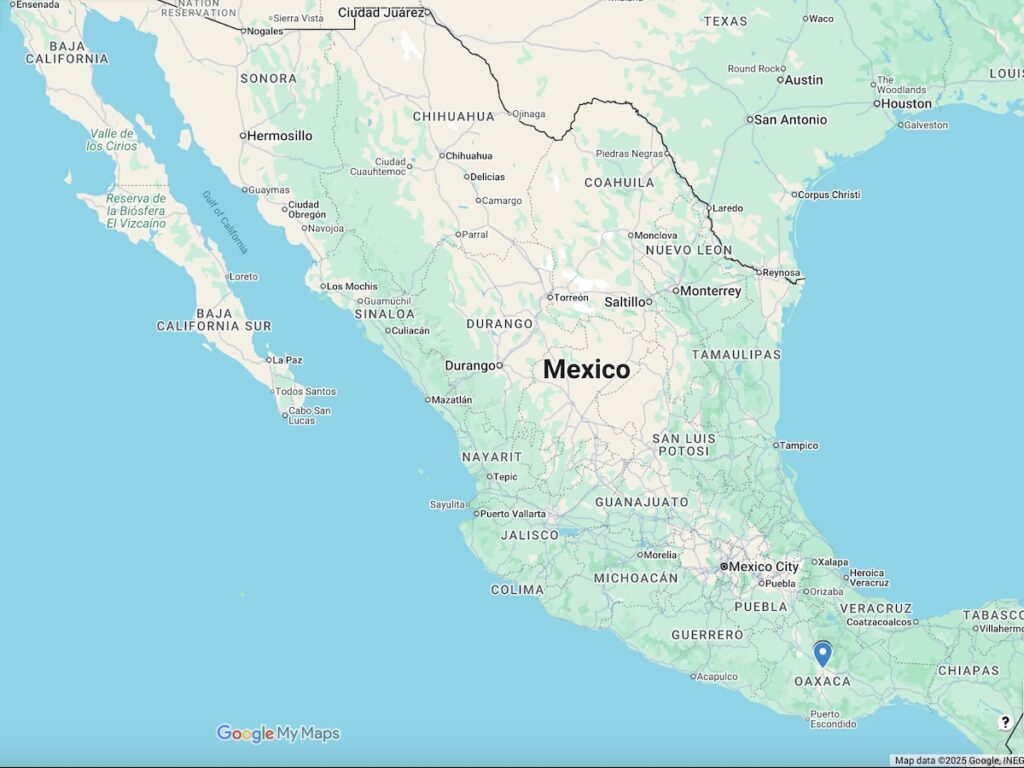
When I mention Oaxaca City, the first question I usually get is, “Wait… where is that again?” Oaxaca City is the capital of the state of Oaxaca in southern Mexico. The city sits inland, but the state itself stretches down to the Pacific coast. Geographically, Oaxaca is tucked between the states of Guerrero to the west and Chiapas to the east.
One of the most convenient things about Oaxaca City is its proximity to several beach towns—laid-back Puerto Escondido, bohemian Zipolite, and resort-friendly Huatulco. With a newly completed highway to the coast, the drive now takes roughly 2.5–3 hours. Alternatively, you can take a very short flight (about 35–45 minutes), making it easy to pair two completely different experiences in one trip—a culturally rich city stay followed by a relaxing beach break on the Pacific coast.
Let me show you exactly where it is on the following Google map. Feel free to click here or on the image for the interactive version.
Things to do in Oaxaca City
There is so much to see, eat, and experience in Oaxaca City that narrowing it all down can be a little overwhelming. Here are the experiences we enjoyed most, along with a few recommendations I picked up along the way.
1. Explore Oaxaca’s UNESCO Old Town
One of the best things to do in Oaxaca City is simply to wander its beautiful historic centre, a UNESCO World Heritage Site known for its baroque churches, shaded plazas, and distinctive green cantera stone buildings. You’ll find everything from 16th-century monasteries to beautifully restored colonial mansions, with Indigenous and Spanish influences woven throughout.
The good news is that the historic centre is wonderfully walkable, with many of the main sights just a few blocks apart. Here are a few highlights not to miss:
- Zócalo (Plaza de la Constitución): The city’s main square and lively social heart. Surrounded by cafés, restaurants, and historic buildings, it’s a wonderful place to sit and watch daily life unfold. Just beside it is the Oaxaca Cathedral, which is also worth a peek inside.
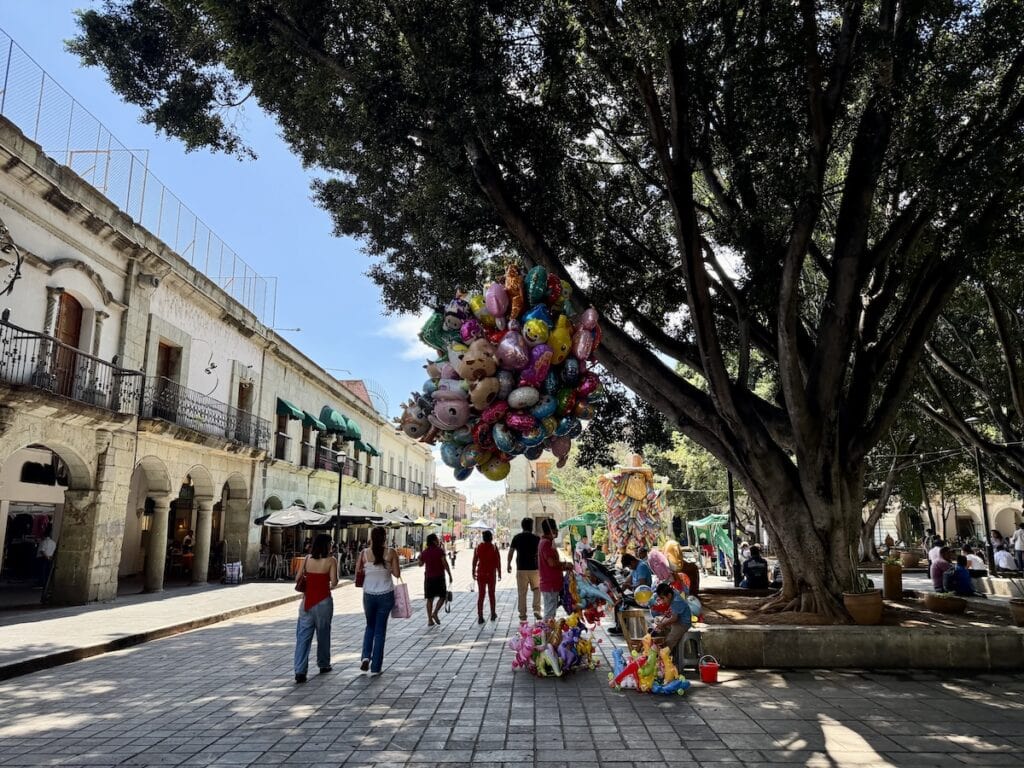
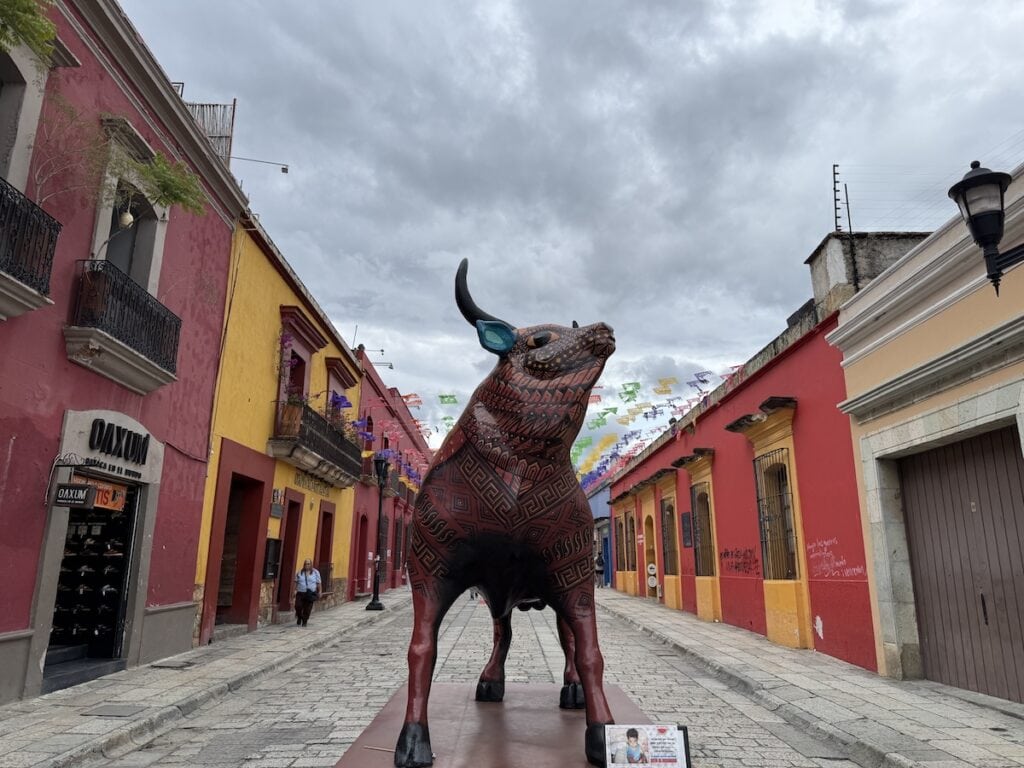
- Andador Turístico (Calle Macedonio Alcalá): Oaxaca’s main pedestrian walking street, connecting the Zócalo area with Santo Domingo. Lined with galleries, boutiques, restaurants, and historic buildings, it’s one of the loveliest stretches of the old town to explore.
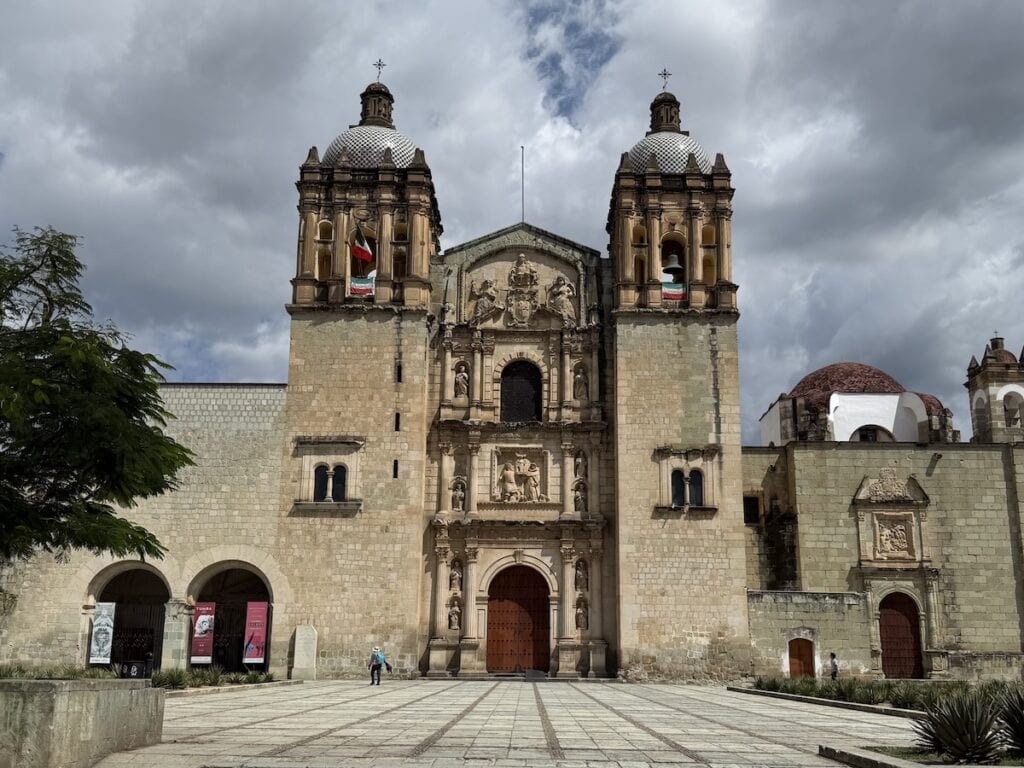
- Templo de Santo Domingo de Guzmán: Oaxaca’s most spectacular church and one of its most iconic landmarks. Its incredibly ornate, gold-covered baroque interior is worth seeing, as is the beautiful plaza out front.
- Oaxaca Ethnobotanical Garden: Beside Santo Domingo Church, this beautiful garden showcases native cacti, agaves, and other plants. Free, 20-minute tours are offered in Spanish only, with a 40-person limit, so arrive early. Check the official website for schedules, although recent Google reviews may be more helpful. If you can’t get in, enjoy views of the gardens from the neighbouring Museum of the Cultures of Oaxaca.
You can easily explore on your own, but there are also some excellent guided walking tours that add context to the city’s architecture, Indigenous heritage, and fascinating history. Either way, it’s an easy and inexpensive way to get oriented and get a feel for Oaxaca City.
Recommended Oaxaca City Walking Tours:
- First Day in Oaxaca Walking Tour (2hrs): A great introduction to the city’s main sights, history, and local culture. Ideal for getting your bearings on your first day.
- Culture, Color & Tractions Private Walking Tour (2hrs) : Experience Oaxaca with a private local guide and uncover its rich culture, history, and traditions through a personalized journey at your own pace.
2. The Oaxaca Food Experience
The state of Oaxaca is famous for its seven classic moles, including the rich, complex black mole that can take up to two days to prepare. Many restaurants offer the opportunity to sample several at once, as we were able to do at a local food market.
You’ll also find plenty of other must-try specialties, like tetelas (corn-masa triangles filled with cheese or beans) and tlayudas (sometimes called Oaxacan pizza), sold everywhere from markets to street-side food carts.
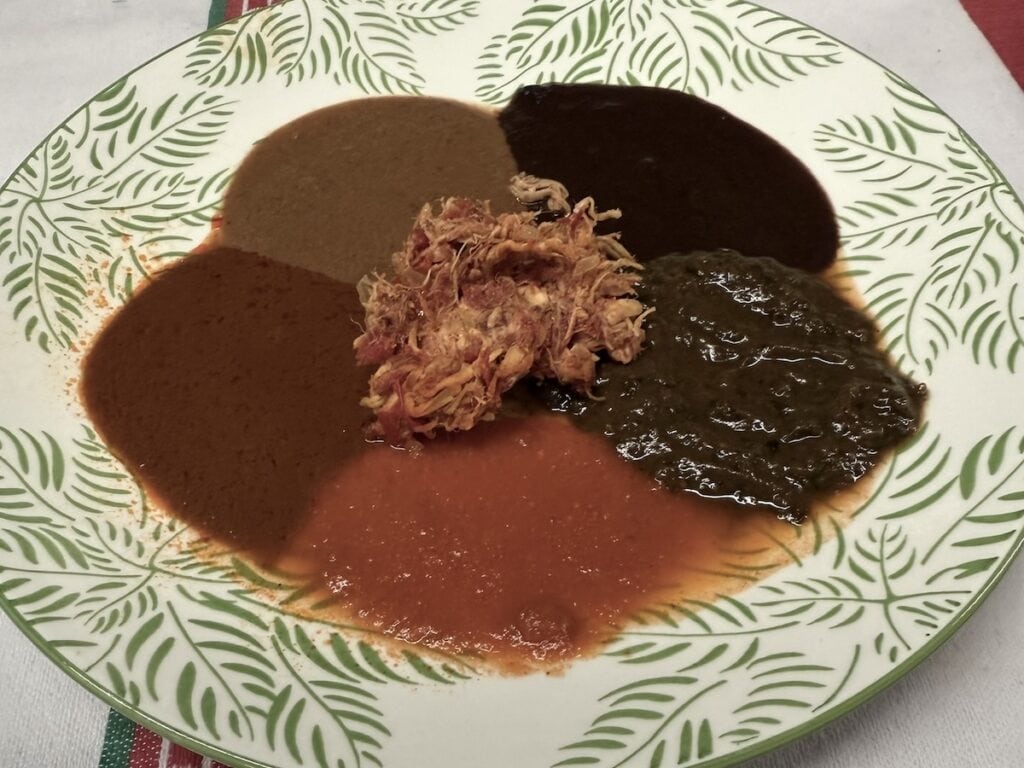
Oaxaca’s bustling fresh food markets are where locals shop for everything from everyday staples to regional specialties. Two of the best to explore in the historic centre are Mercado Benito Juárez and neighbouring Mercado 20 de Noviembre, the latter particularly famous for its traditional food stalls and smoky grilled-meat corridor (Pasillo del Humo).
You’ll find everything from heirloom corn and fresh masa to stacks of local chiles, herbs, and squash blossoms. Vendors sell soft, stringy quesillo, mole pastes (thankfully, you don’t always have to make it from scratch!), and bundles of dried spices unique to the region.
And for the adventurous: chapulines (grasshoppers), chicatanas (large flying ants), and maguey worms—plump grubs harvested from agave plants.
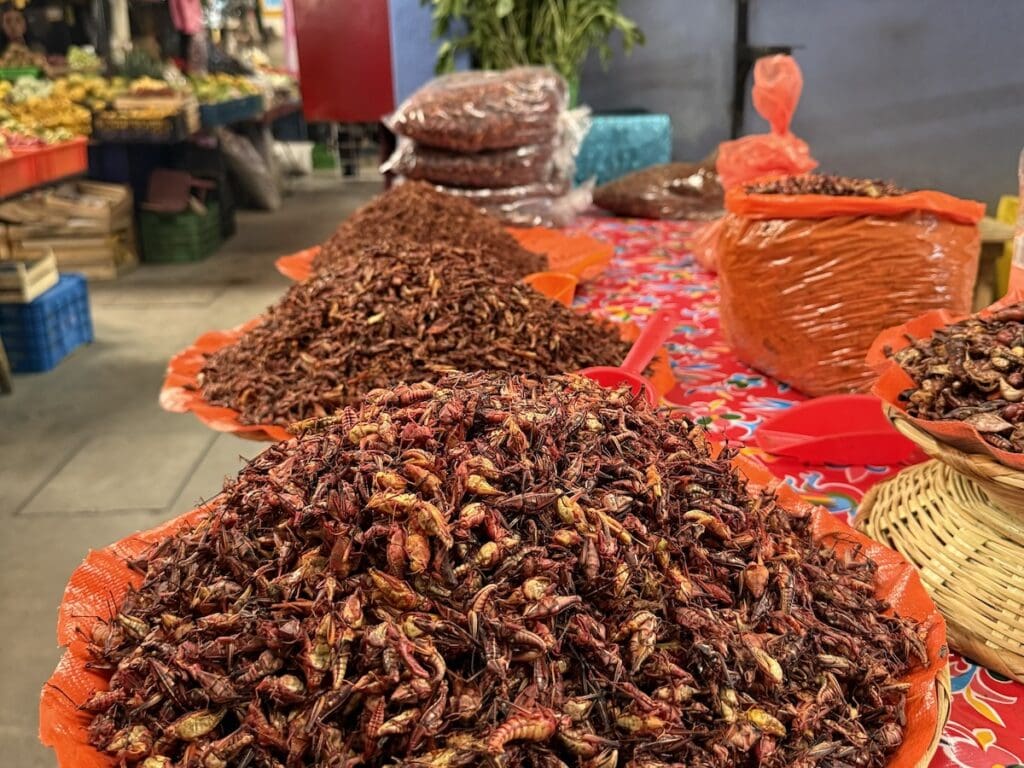
To be honest, Oaxaca’s food scene can be a lot to take in on your first visit. If possible, I recommend taking a food tour or cooking class on your first day. It’s a great way to get acquainted with the local specialties so you actually know what you’re ordering when you hit some of Oaxaca’s amazing restaurants.
Oaxaca Food Tours and Cooking Classes
Through my friend’s neighbour (thank you, Oscar!), we learned about an incredible pre-Hispanic cooking class with local chef Virginia (Vicky) Hernández. With the help of her English translator, we shopped the market with Vicky before heading up into the hills to spend the afternoon in her outdoor kitchen, making tamales, tlayudas, and more completely from scratch.
To book or learn more, see Cocina Prehispánica en Fogón.
Good to Know: Vicky also offers a Cooking Class with Cause, which helps provide food packages for elderly people and those with disabilities in her community. We didn’t know about this option when we visited, but I love the initiative and would encourage you to check it out!
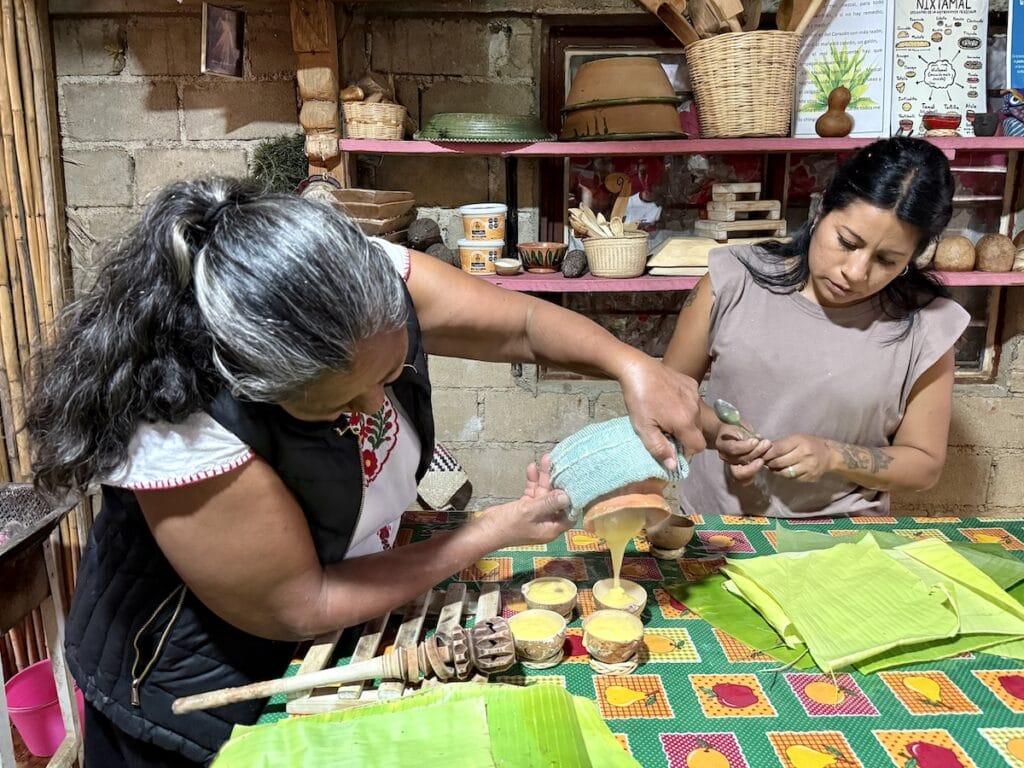
Of course there are dozens of other options for food tours in Oaxaca City. Here are a several more from Viator.com that get excellent reviews.
Oh my gosh…and I almost forgot chocolate! Oaxaca has a long history of cacao dating back to pre-Hispanic times. Chocolate remains an important part of the region’s culinary traditions, from its famous moles to rich, cinnamon-spiced drinking chocolate.
If you’re a chocolate lover, here are two fun experiences worth checking out:
3. Oaxaca’s World-Class Restaurant Scene
Food tours and markets are a wonderful introduction to Oaxaca’s culinary traditions, but the city’s restaurant scene takes things to a whole other level.
If you’re a foodie, you’d almost have to have been living under a rock not to have heard about Oaxaca’s dining scene. It is genuinely next-level, and unless you have weeks in Oaxaca City, chances are you’ll have to narrow things down and make some hard choices from a long list of superb options.
The city has two Michelin-starred restaurants: Levadura de Olla, where chef Thalía Barrios García celebrates heirloom ingredients from her home community, and Los Danzantes, loved for its refined regional flavours and gorgeous courtyard setting. Los Danzantes has also earned a Michelin Green Star for its commitment to sustainable gastronomy.
A few more standouts include Origen, where Top Chef México winner Rodolfo Castellanos delivers a contemporary spin on Oaxacan classics, and Casa Oaxaca, Alejandro Ruiz’s long-time favourite known for beautifully executed traditional dishes.
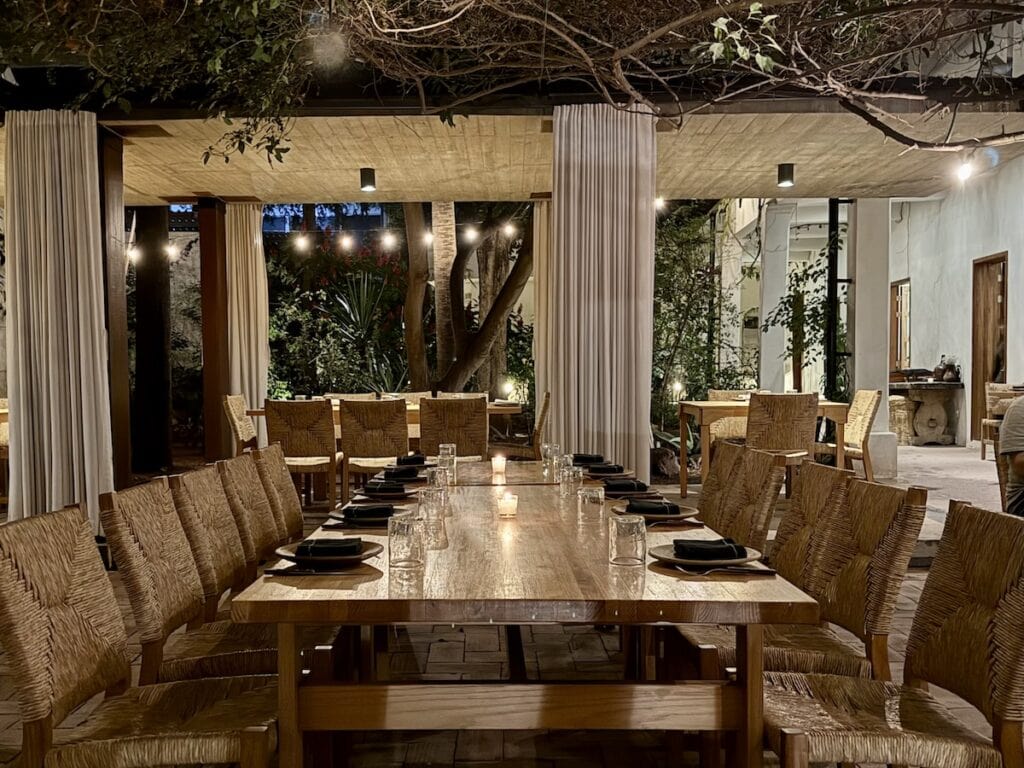
Then there’s Criollo, the modern, wood-fired tasting-menu collaboration between Luis Arellano and Enrique Olvera (of Mexico City’s famous Pujol). And don’t miss Labo Fermento, where chef Joseph Gilbert leans into fermentation-driven flavours and creative, produce-forward dishes. It also holds a Michelin Bib Gourmand for its excellent value.
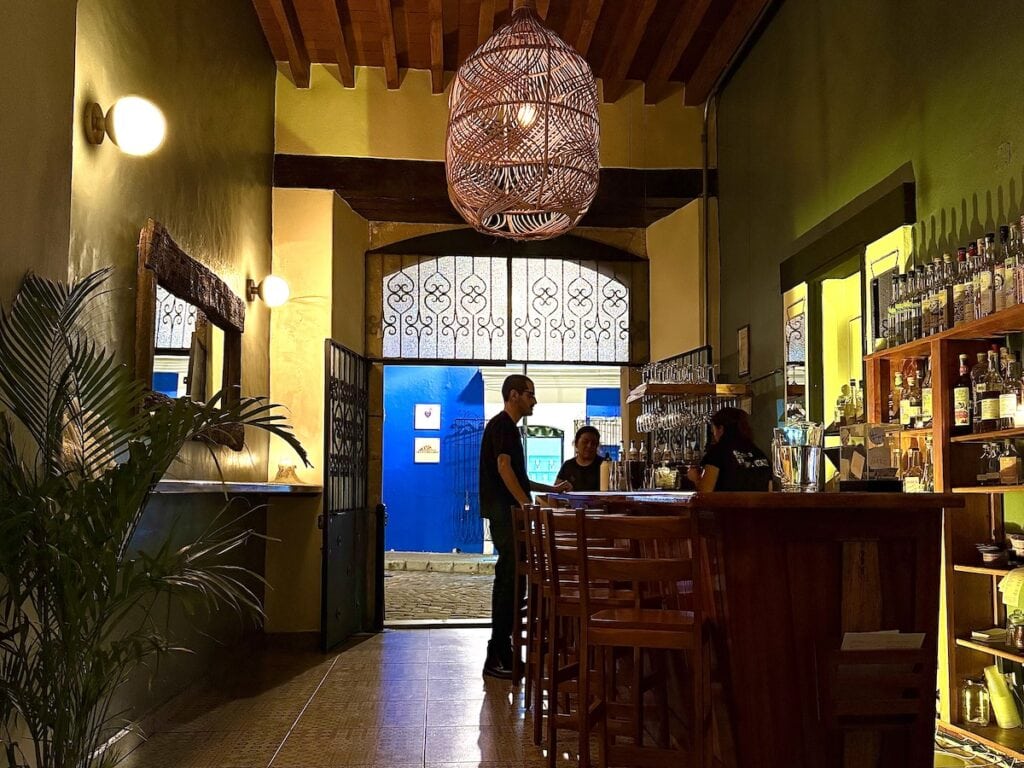
And Oaxaca’s restaurant scene just keeps evolving! Among the exciting newer additions are Papalotl, from chef Gabriel Balderas, which is earning rave reviews for its creative use of lesser-known regional ingredients, commitment to local producers and zero-waste philosophy, and Cesca Bistro, where chef Saúl Carranza brings a French-bistro sensibility to Oaxacan ingredients in a beautifully designed space.
Another name worth knowing is Aguamarga, from chef Olga Cabrera, which joined the Michelin Guide’s recommended restaurants in 2026. Its creative approach to cacao, including a tasting experience exploring the many flavours of chocolate, sounds particularly intriguing.
For something completely different, there’s Crudo, where chef Ricardo Arellano combines Japanese omakase-style dining with Oaxacan ingredients and flavours. It’s an intimate, creative dining experience that has also earned a place in the Michelin Guide.
TIP: If you have your heart set on a particular restaurant or a prime dinner time, I highly recommend booking a few weeks in advance. Some of Oaxaca’s most sought-after restaurants have limited seating and require a credit card to secure your reservation, a deposit, or even full prepayment.
4. The Oaxaca Mezcal Experience
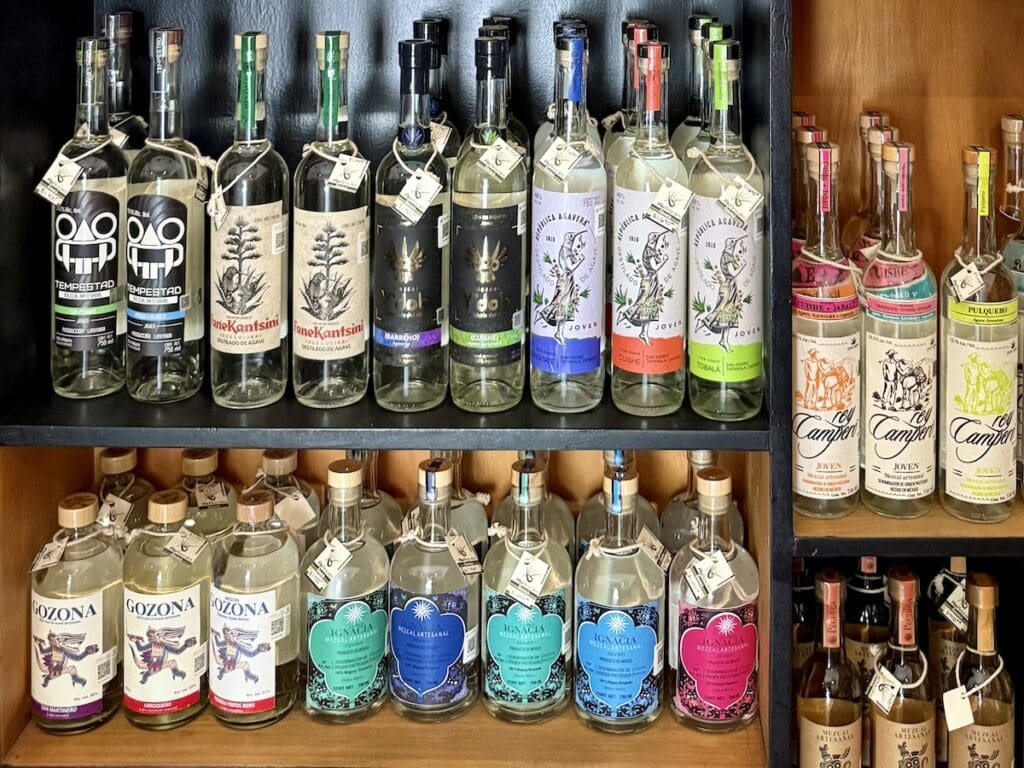
You can’t walk a block in Oaxaca City without stumbling across a mezcalería—a bar or tasting room dedicated to mezcal.
Mezcal is a traditional Mexican spirit made from agave, typically by roasting the hearts of the plants before fermenting and distilling them. This often gives it its signature smoky, complex flavour.
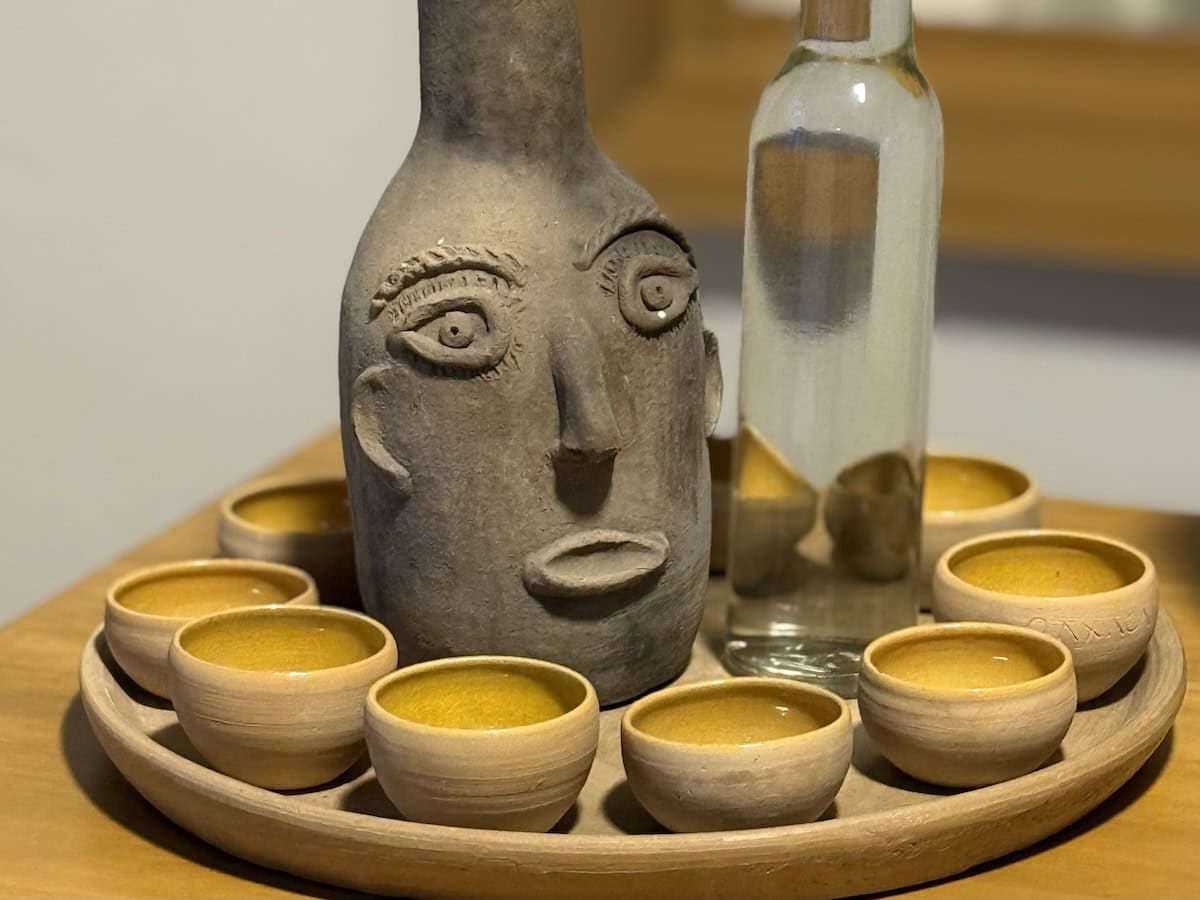
It’s distinctly different from tequila, which is technically a type of mezcal but must be made from blue agave and is often produced using more industrial methods that yield a smoother, milder taste. Mezcal, by contrast, is still largely crafted in small batches using artisanal techniques passed down through generations.
Roughly 85% of Mexico’s mezcal is produced in Oaxaca, making Oaxaca City one of the best places in the world to taste it. Here you’ll find tiny batches and rare agave varieties that never make it beyond Mexico’s borders. Even some top restaurants—like the Michelin-starred Los Danzantes—produce their own mezcal. Sampling a few (or bringing home a bottle or two) is truly a quintessential Oaxaca experience.
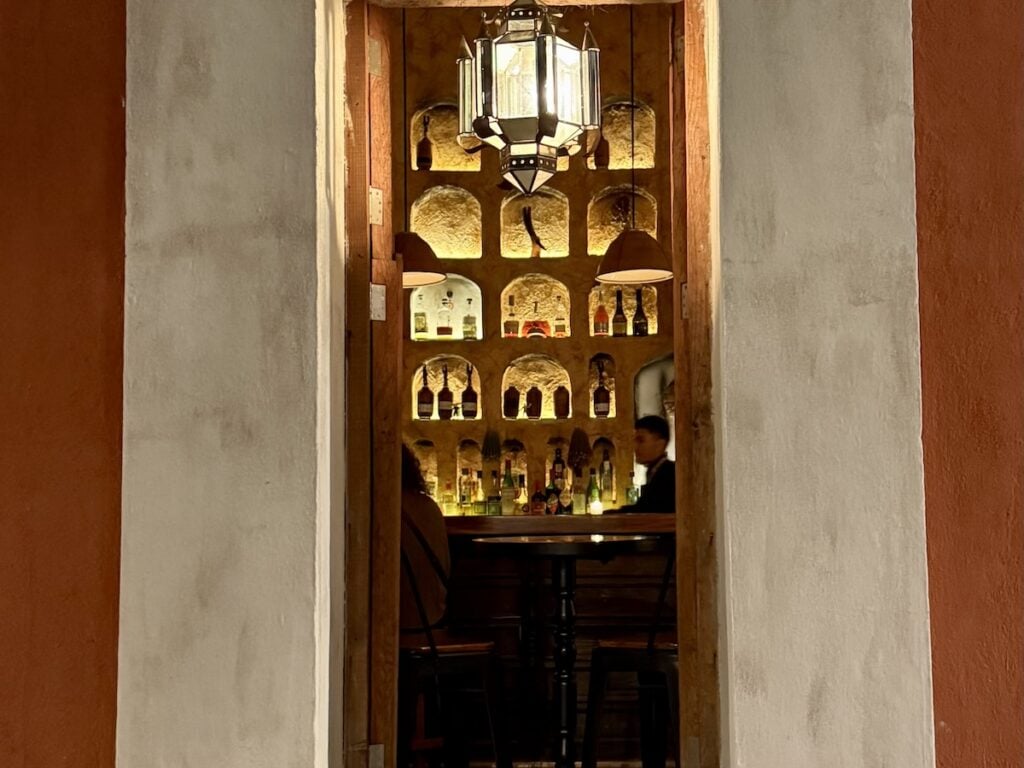
For those who really want to learn, start with La Mezcaloteca and In Situ—two highly regarded, education-focused tasting rooms in the city. Both specialize in small producers, guided tastings, and helping you understand the nuances of different agave species, regions, and production methods.
If you’re more in the mood for mezcal cocktails, Mezcalogía and Sabina Sabe are excellent choices, offering creative drinks in lively, welcoming spaces.
There are also plenty of mezcal-focused tours that take you beyond the city to see how it’s made. One of the most popular and highly rated is The Mezcal Journey (6 hours), which includes visits outside of the city to Mitla and Matatlán, a walk through expansive agave fields, a tour of an artisanal distillery, and unlimited tastings followed by a traditional Oaxacan meal.
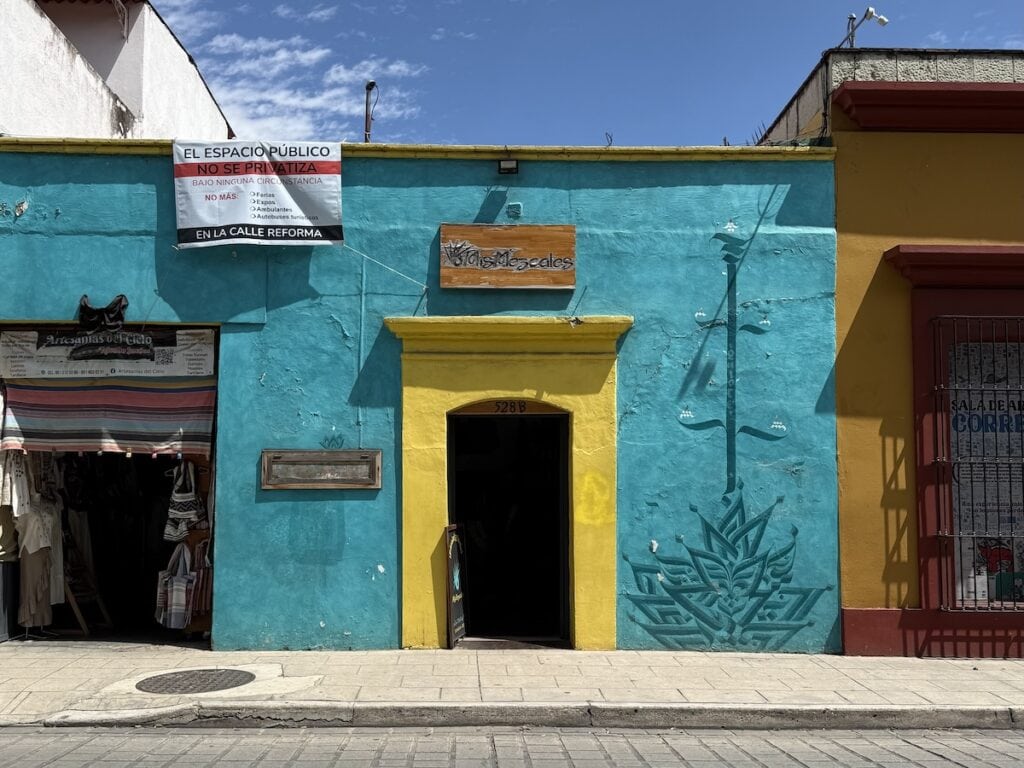
TIP: If you already know and love mezcal, head to Mis Mezcales, an excellent shop in Oaxaca City (with a second location in Mexico City). According to my mezcal-collecting husband, the staff are incredibly knowledgeable, the selection is outstanding, and they’ll let you sample almost anything before you buy.
5. The Oaxacan Folk Arts
Oaxaca is known as one of Mexico’s great folk-art capitals, and you’ll feel that creative energy everywhere—from market stalls and tiny workshops to full family-run studios.
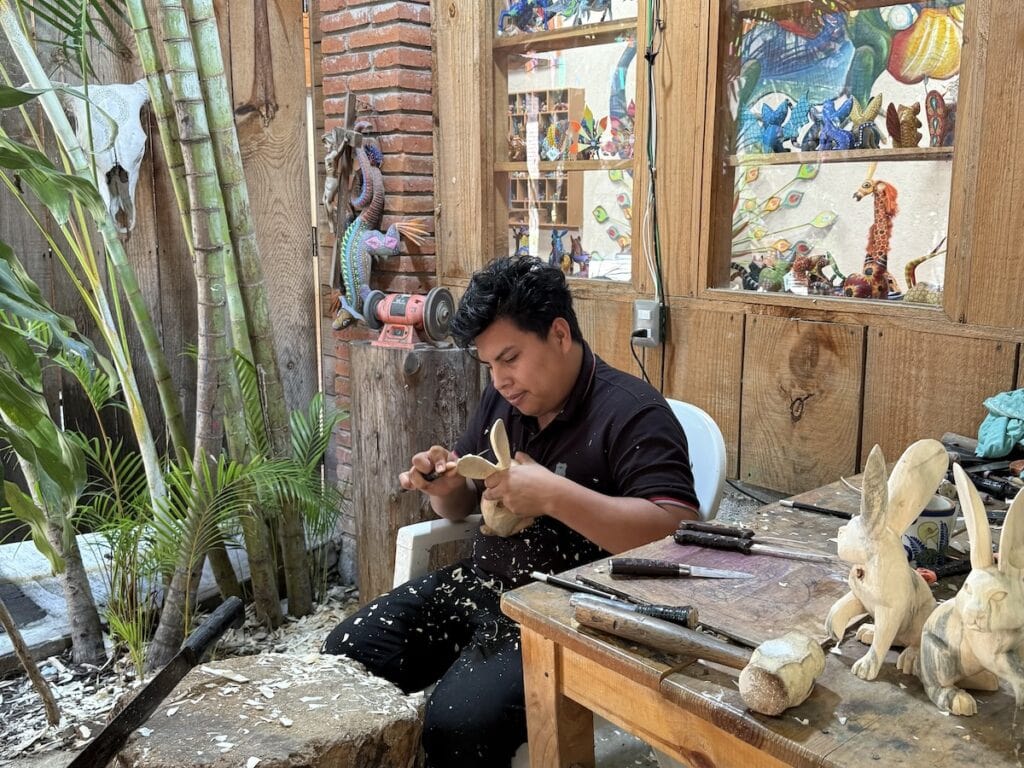
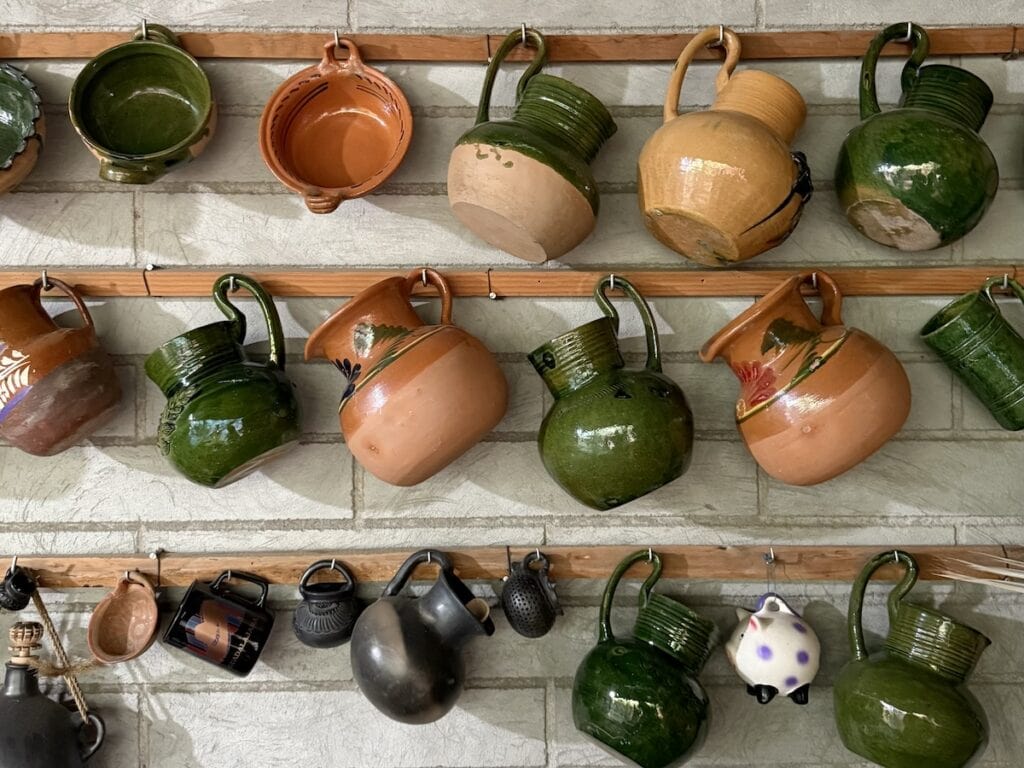
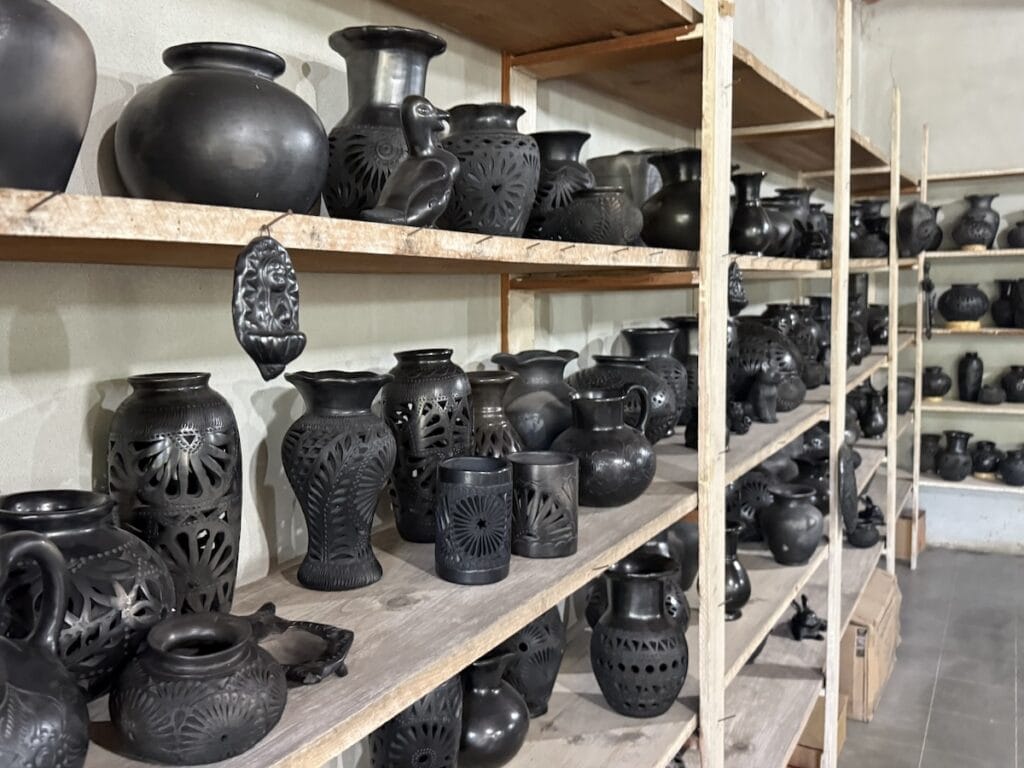
Local artisans are known for alebrijes (brightly painted wooden animal figures), black clay pottery (barro negro), hand-embroidered textiles, naturally dyed wool rugs, red clay ceramics, and the region’s signature green-glazed pottery, a technique that dates back to pre-Hispanic times and remains a staple in Oaxacan kitchens.
If you want to see a little bit of everything without leaving the city, head to Mercado de Artesanías, just a few blocks from the Zócalo. This colourful artisan market is packed with embroidered textiles, woven rugs, pottery, wooden alebrijes, jewellery and more. It’s a wonderful introduction to Oaxaca’s craft traditions.
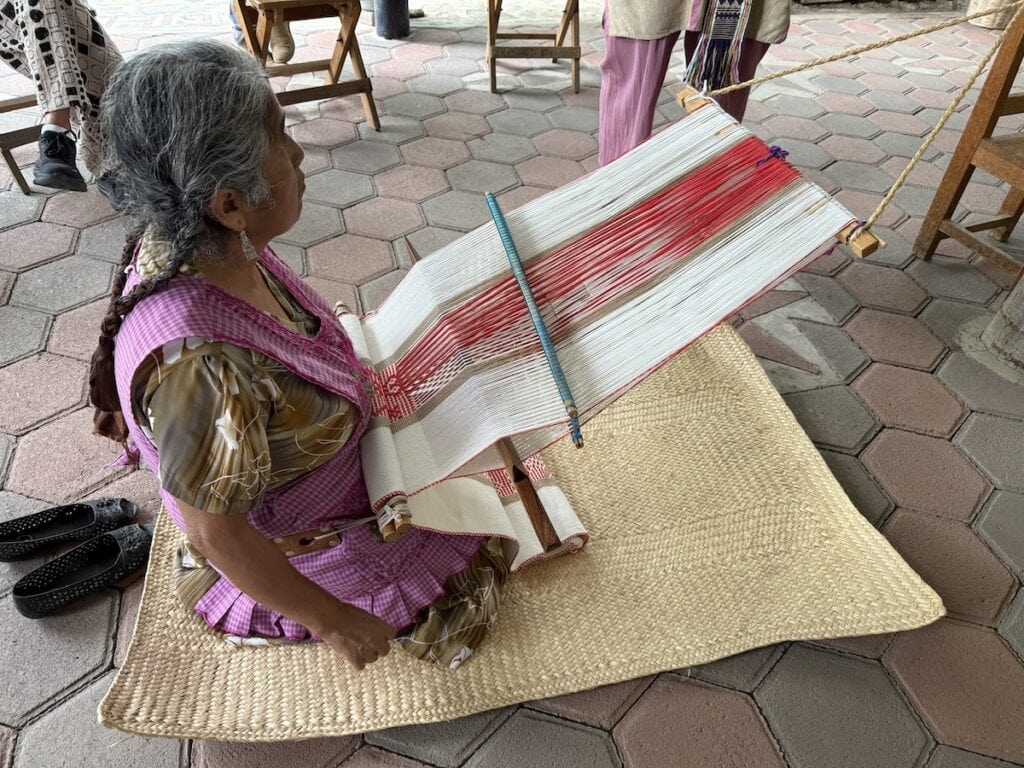
One of the most fascinating things about Oaxaca’s folk-art traditions is that different villages specialize in different crafts, with skills and techniques often passed down through generations. For example, San Martín Tilcajete and San Antonio Arrazola are famous for their colourful wooden alebrijes, while San Bartolo Coyotepec is celebrated for its striking black pottery.
Teotitlán del Valle is renowned for its traditional weaving and natural dyes, while Santa María Atzompa is known for its distinctive green-glazed pottery, including beautiful emerald-toned bowls, pitchers, and other ceramics.
Many of these artisan villages are just outside Oaxaca City, making them easy to visit on a day trip. You’ll also often find the best prices buying directly from the artisans, rather than through shops and markets in Oaxaca City.
My Tip: Explore Oaxaca’s Artisan Villages with a Local Expert
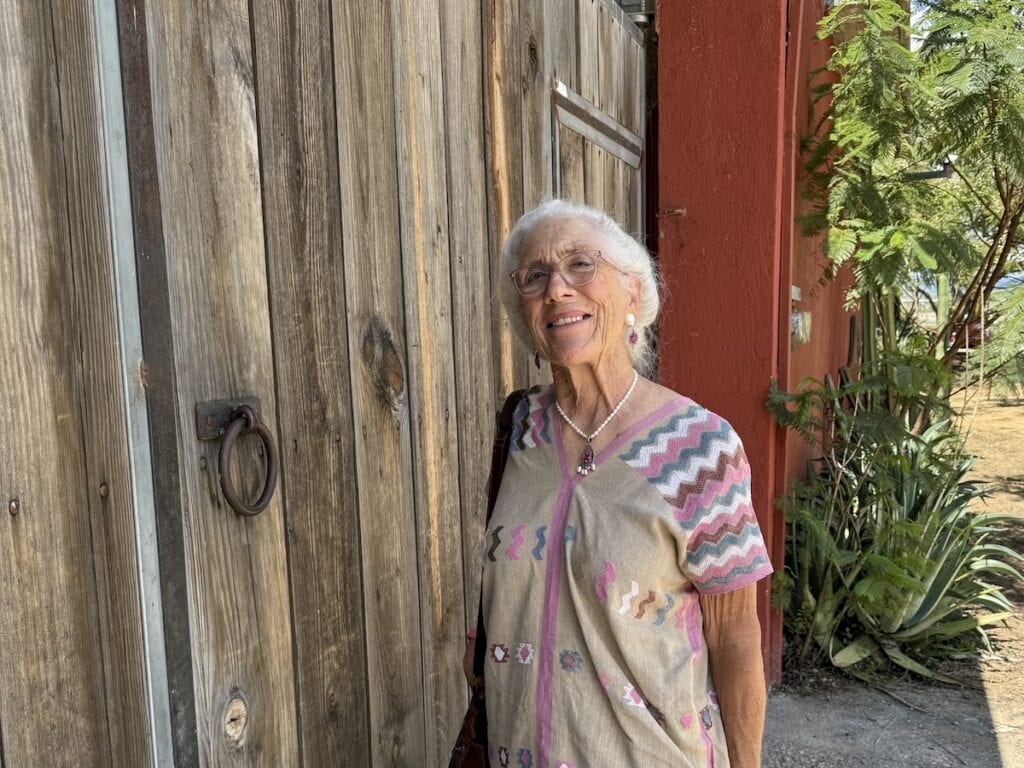
For our trip, I did a pretty deep dive into finding the best guide to Oaxaca’s artisan villages. One name kept coming up: Linda Hanna. An artist herself and a longtime Oaxaca resident, Linda is incredibly well-connected and has an almost encyclopedic knowledge of the region’s folk-art traditions.
Linda offers private, English-speaking day tours, taking you to meet some of the region’s most talented artisans—many of whom are personal friends. It’s like having the world’s best museum guide… except you’re stepping right into the studios themselves.
Tours typically last about eight hours, with a break for lunch. Rates range from $35–$45 USD per hour for the whole group (2026 pricing – does not included cost of lunch or gratuities), depending on the vehicle required. You can reach Linda directly via WhatsApp (+52 951 547 6681) or by email.
An extra little tip: One thing we were slightly anxious about was how to handle visiting an artisan’s workshop if we didn’t end up buying anything. Linda suggested that, in those cases, we could simply offer a small cash tip to thank the artisan for their time and any demonstrations they had shared with us.
If Linda is not available (or if she doesn’t have another recommendation for you), there are of course many other options. Here are a few that a highly rated on Viator.com.
- Women of Oaxaca Artisan Tour (9hrs)
6. Shopping in Oaxaca City
If you’re short on time—the stores in Oaxaca are also absolutely full of beautiful pieces from across the state. Yes, you’ll pay a bit more, but you’ll also save a significant amount of time and still come home with something special. (Further on in this post, I’ll include a map of Oaxaca with all of my favourite shops marked, but here are some highlights:
For gorgeous ceramics, Cooperativa 1050º is a standout—beautifully crafted pieces made in partnership with traditional communities. (I carted an uncomfortably heavy lot back home from this store…but they also ship.)
If you love handmade glassware or want something unique for the table, Xaquixe offers some of the best artisanal glass in the region. And for a curated blend of contemporary design and traditional craft, Voces de Copal is a lovely spot to browse everything from hand-carved alebrijes to textiles and home décor.
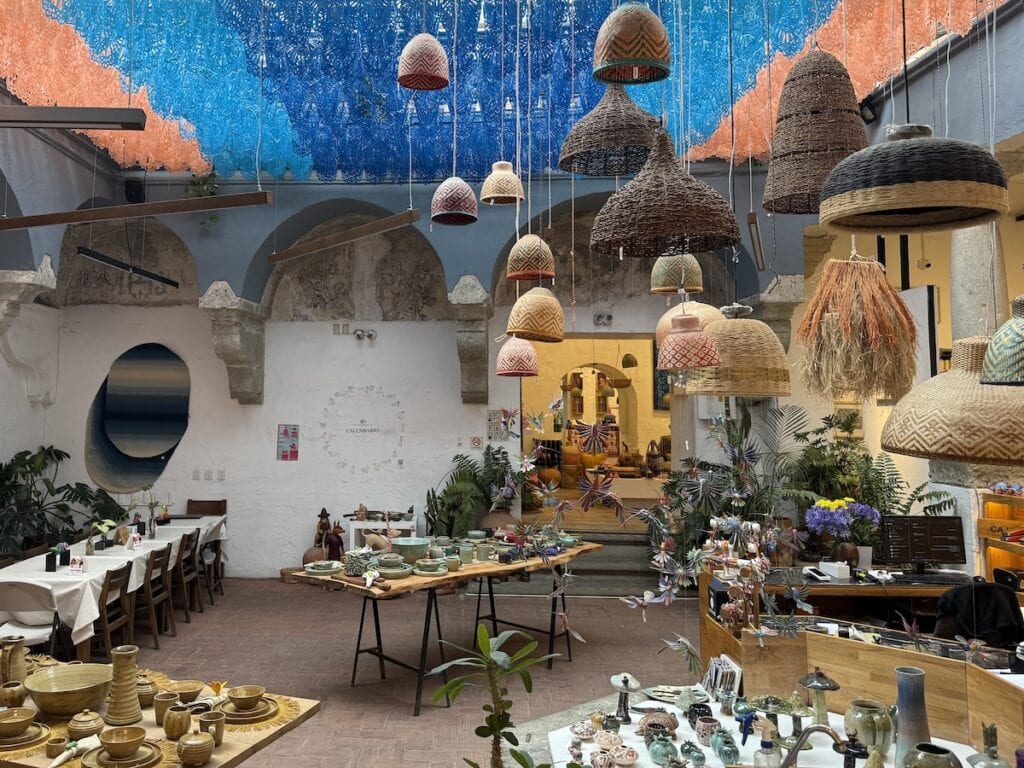
You’ll also find some excellent concept stores around the Centro. Huizache is one of the best-known artisan cooperatives in the city, with work sourced directly from more than 60 maker-families across Oaxaca (prices are fair, and the quality is consistently great).
For textiles, Mano de Dios offers beautifully made garments and accessories with a more contemporary aesthetic. And if you’re searching for something truly one-of-a-kind, David Salas Studio showcases exquisite handwoven rebozos and textile art, each piece reflecting modern design grounded in Indigenous techniques.
One important note: whenever possible, please buy from cooperative (cooperativo) shops. When you shop at these stores, a much greater share of the income goes directly to the artisans themselves. There are other government-run stores (such as the attractive looking Aripo store) where much less money goes to the artists.
7. Visit Oaxaca’s Museums
Oaxaca has some excellent museums, particularly if you’re interested in the region’s rich Indigenous history, art, and traditional crafts. You don’t need to visit them all, but a few worth considering include:
- Museo de las Culturas de Oaxaca: Housed in the former monastery adjoining Santo Domingo, this is one of the city’s most important museums. Its collections span centuries of Oaxacan history, including extraordinary treasures discovered at the ancient Zapotec city of Monte Albán. If you only have time for one museum, this would be my pick.
- Museo Textil de Oaxaca: A lovely museum dedicated to Oaxaca’s remarkable textile traditions, with exhibits featuring intricate weaving, embroidery, and natural dyeing techniques. Especially worthwhile if you’re interested in the region’s artisan communities.
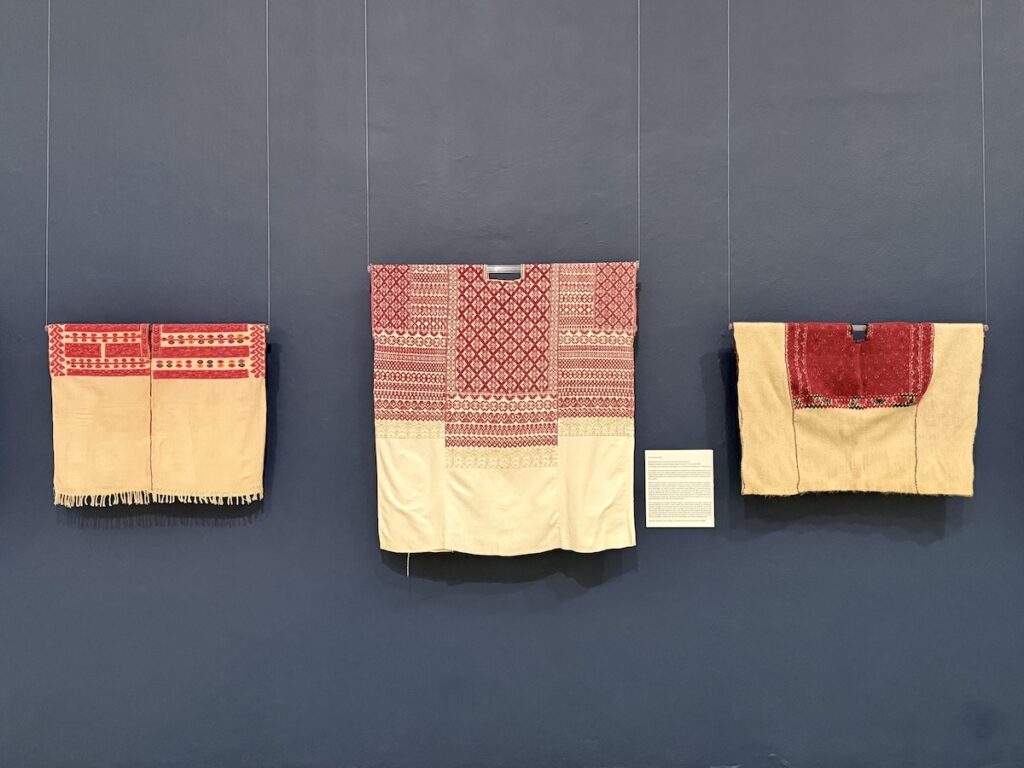
- Museo de los Pintores Oaxaqueños (MUPO): Located near the Zócalo, this museum showcases works by Oaxacan artists, with rotating exhibitions in a beautiful historic building.
8. Explore the Ancient Ruins of Monte Albán
Just 30–45 minutes southwest of Oaxaca City, Monte Albán is one of Mexico’s most important archaeological sites and a must-see for anyone interested in the region’s ancient history.
Founded by the Zapotec people around 500 BC, this ancient city sits on a flattened mountaintop overlooking the Oaxaca Valley. Today, you can explore its enormous plazas, pyramids, temples, and ancient ball courts, all with spectacular mountain views.
Monte Albán shares a UNESCO World Heritage Site designation with Oaxaca’s historic centre and is well worth a half-day visit.
TIP: Go early! There’s very little shade, and it can get extremely hot by midday. You can explore independently, but a guided tour adds valuable historical context.
9. Take a Day Trip to Hierve el Agua, Mitle and El Tule
Three of Oaxaca’s most fascinating sights lie east of the city and can be combined into one full-day excursion.
Hierve el Agua: About 1.5–2 hours from Oaxaca City, these spectacular mineral formations look like waterfalls frozen against the mountainside. There are also natural pools with incredible valley views, where swimming may be permitted.
Mitla: An ancient Zapotec religious centre, famous for its intricate geometric mosaics made from thousands of individually cut stones fitted together without mortar.
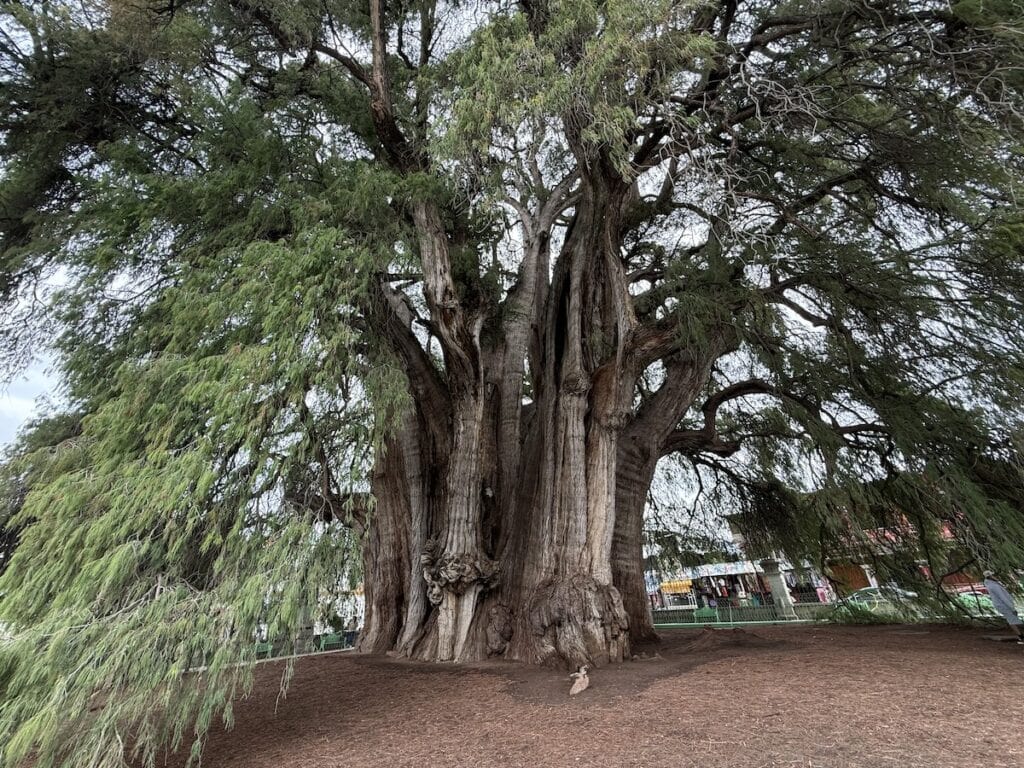
El Tule: Home to the famous Árbol del Tule, a roughly 2,000-year-old Montezuma cypress with one of the widest tree trunks in the world. Honestly, you can’t appreciate its enormous size until you’re standing in front of it!
Tip: We were running short on time, so rather than booking a full-day tour, we negotiated a fare with a yellow taxi driver to take us to El Tule. It was an easy way to squeeze in one more experience without committing to a whole day of sightseeing.
If you have more time, look for an organized tour combining all three stops. Just be prepared for a long day with quite a bit of driving.
My Oaxaca City Map
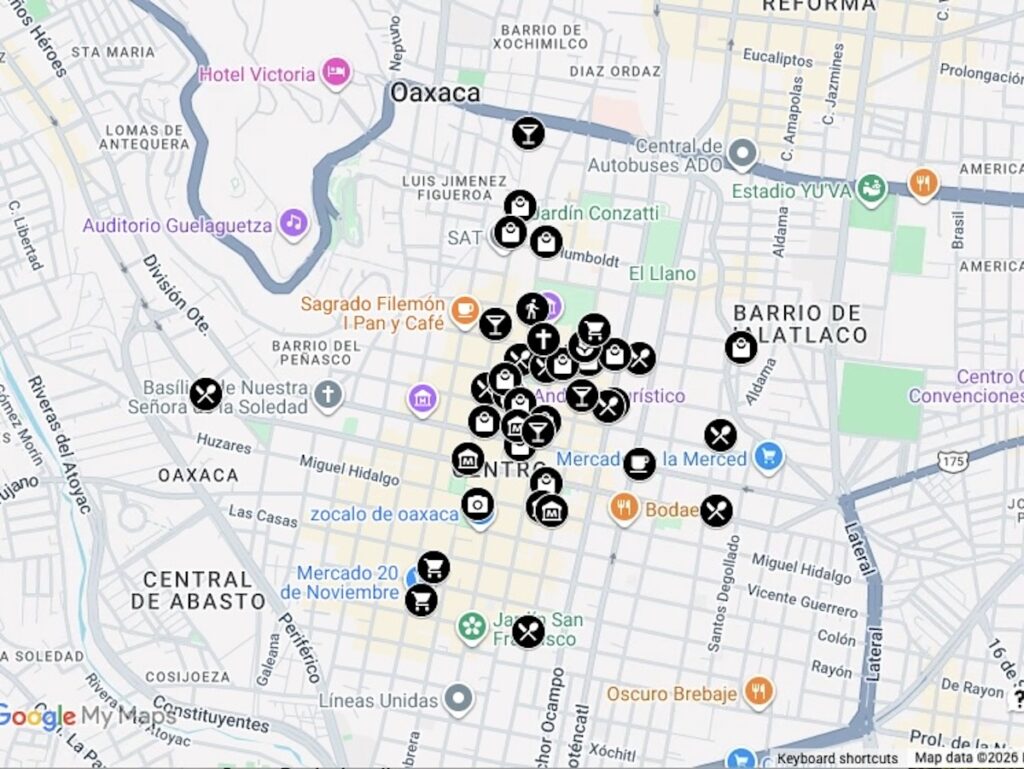
To help you plan your visit, I’ve put together an interactive map of Oaxaca City featuring all my favourite spots, including restaurants, markets, shops, attractions and more. The map below is just a preview. Click here or directly on the map to open the interactive version, where you can zoom in, explore each location and save it for your trip.
Where to Stay in Oaxaca City
Oaxaca has some wonderful boutique hotels, many housed in beautifully restored historic buildings. You’ll also find lovely private homes and apartments to rent, which can be an especially good option if you’re travelling with friends or family.
Best Neighbourhoods to Stay in Oaxaca City
For a first visit, I’d recommend staying in or close to the historic centre (Centro Histórico). Oaxaca is a wonderfully walkable city, and being central means you can explore most of the main sights, restaurants, markets and shops on foot.
Here are the major neighbourhoods in a nutshell:
- Centro Histórico / Santo Domingo: My first choice for sightseeing, restaurants, shopping and atmosphere. The streets around Santo Domingo are particularly appealing, with lovely boutiques, galleries and restaurants.
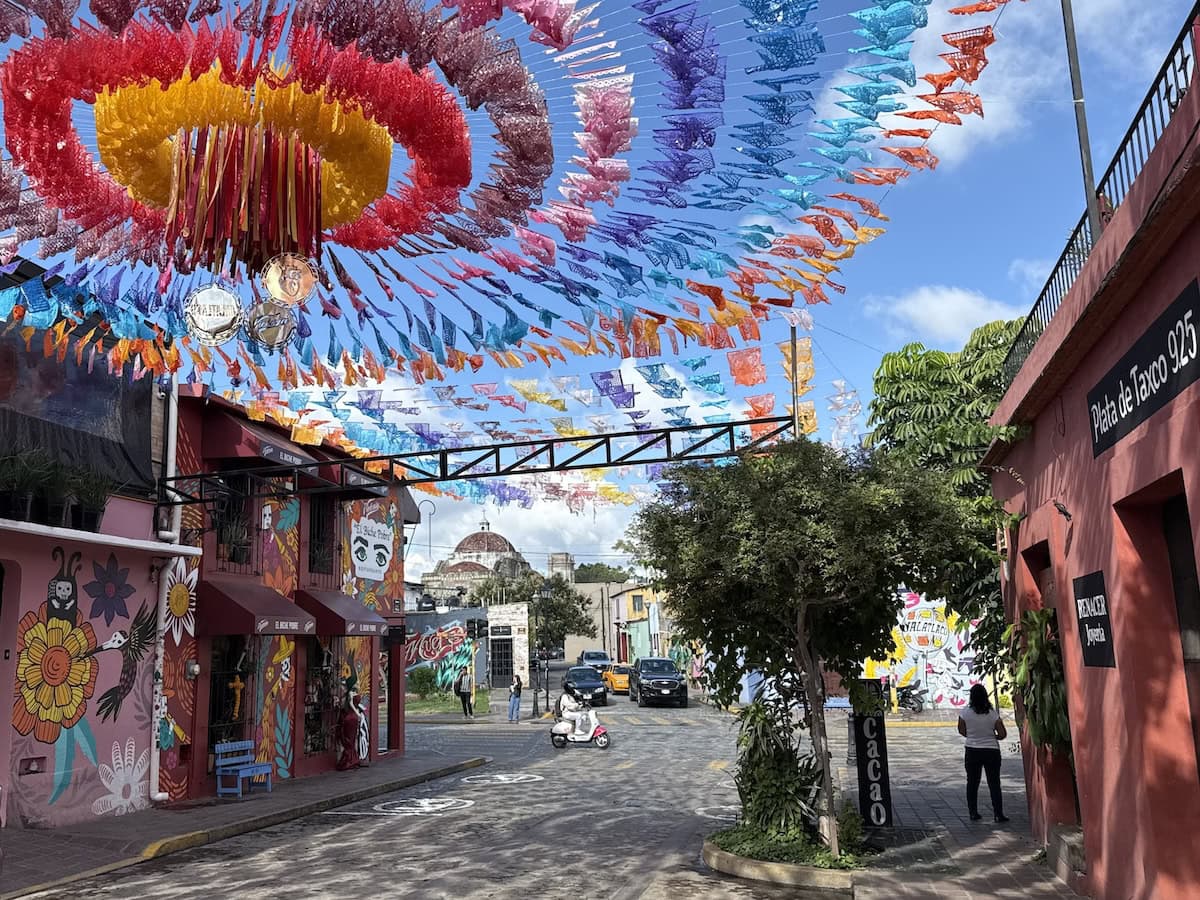
- Jalatlaco: A colourful, artsy neighbourhood just east of the historic centre, known for its cobblestone streets, murals, independent cafés and boutique accommodations.
- Xochimilco: One of Oaxaca’s oldest neighbourhoods, with a quieter, more residential feel, traditional artisan workshops and the historic aqueduct. Still within walking distance of the centre.
- Reforma: A more modern, residential neighbourhood with good restaurants and cafés. Better suited to longer stays or visitors who don’t mind being a little farther from the main attractions.
A WORD ABOUT NOISE: Oaxaca’s historic centre can be surprisingly noisy! Between church bells, celebrations, traffic and the frequent boom of traditional fireworks (which can sound remarkably like gunshots!), you may want to request a room facing an interior courtyard rather than the street, or bring some earplugs!
My Top Oaxaca Boutique Hotel Recommendations
Oaxaca has some wonderful boutique hotels, many tucked into beautifully restored historic buildings. If you’re wondering where to stay, these are three properties I’d recommend at different price points, all within walking distance of the historic centre.
Pug Seal Zapoteco Oaxaca – 5-Star Luxury
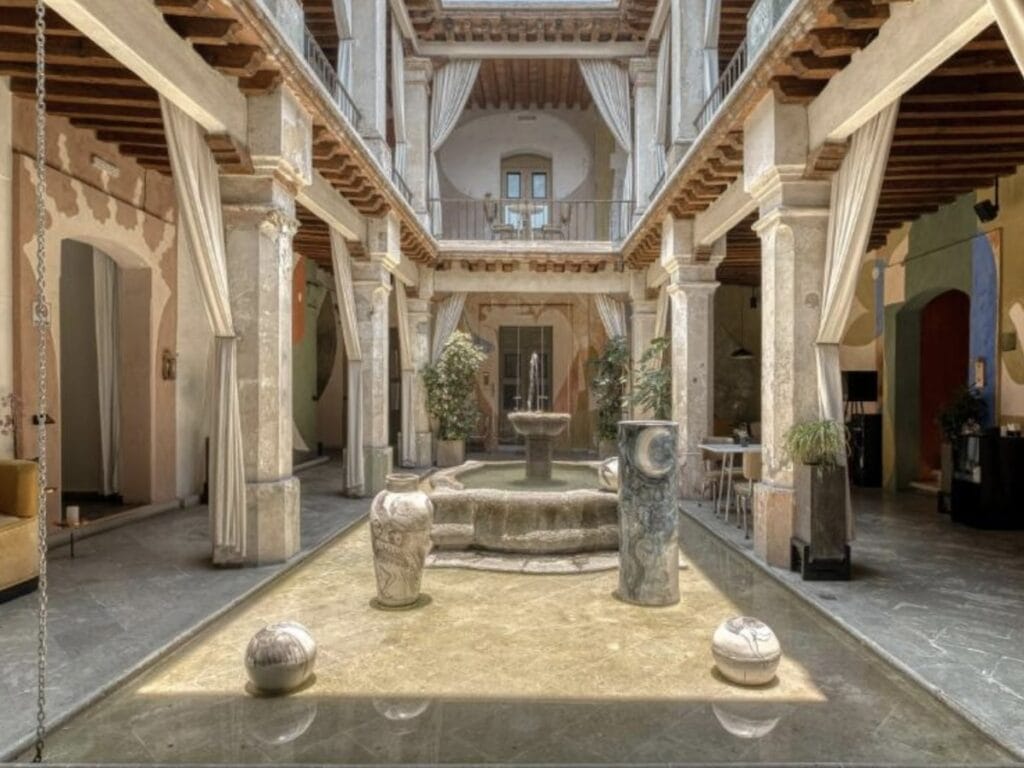
For a luxurious boutique stay, Pug Seal Zapoteco Oaxaca is a standout. This intimate 20-room hotel occupies a beautifully restored 19th-century mansion in the heart of Oaxaca’s historic centre. The interiors are filled with contemporary Mexican art, including works inspired by the region’s Zapotec heritage.
Part of a small Mexican boutique hotel collection with two other properties in Mexico City’s upscale Polanco neighbourhood, Pug Seal Oaxaca has earned One MICHELIN Key for its exceptional hospitality. Expect beautifully appointed rooms, personalized service and an excellent à la carte breakfast. Its central location is another big plus, with many of Oaxaca’s best restaurants, galleries and attractions just a short walk away.
Insider Tip: As I mentioned above, Oaxaca can be a bit noisy. Behind the Pug Seal is a lively venue that stays open into the wee hours. If possible request a room on the front side of the hotel.
Check rates for Pug Seal Oaxaca on Booking.com or Expedia.
Casa Antonieta – 4-Star Boutique Hotel
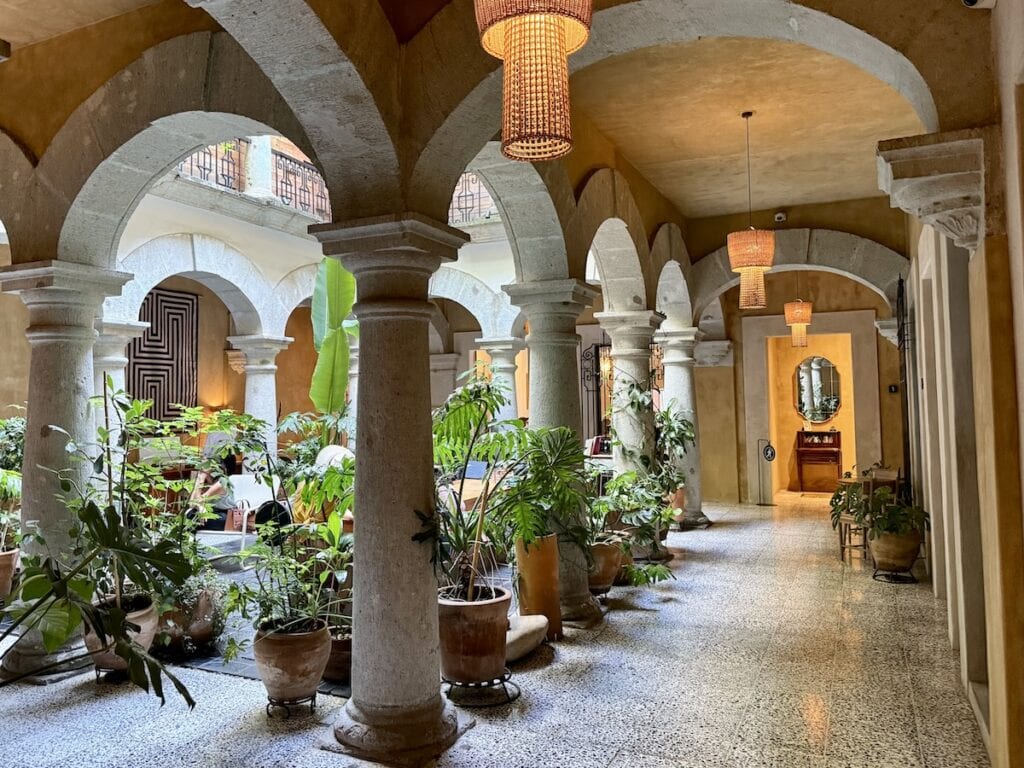
Casa Antonieta is a gorgeous 17-room boutique hotel set in a restored historic family home, just a few blocks from Oaxaca’s Zócalo. Its design combines original stone archways and a peaceful central courtyard with contemporary furnishings, natural textures and beautiful local textiles.
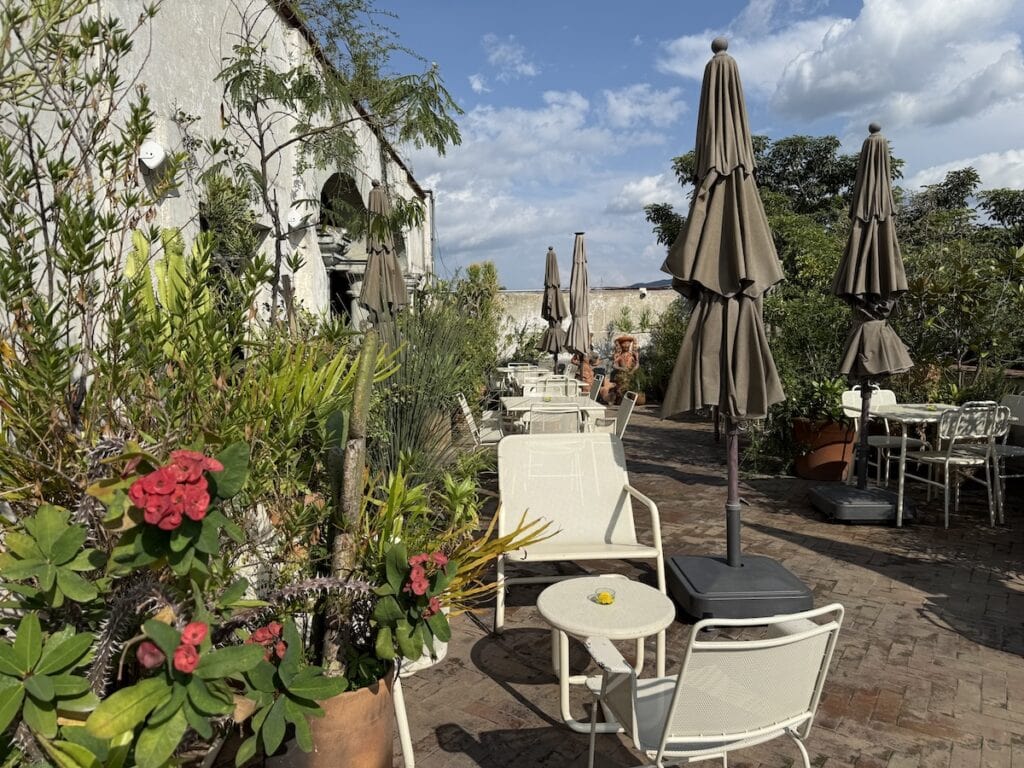
One of the highlights is the hotel’s lovely rooftop terrace, home to Amá, a wine bar and restaurant that’s also popular with locals. Downstairs, Muss Café is a great spot for morning coffee. With its thoughtful design, warm hospitality and excellent location, Casa Antonieta is a wonderful choice for travellers looking for a stylish, intimate hotel without going all-out on luxury.
Check rates for Casa Antonieta on Booking.com or Expedia.
Hotel con Corazón – 3-Star, Great Value & a Great Cause
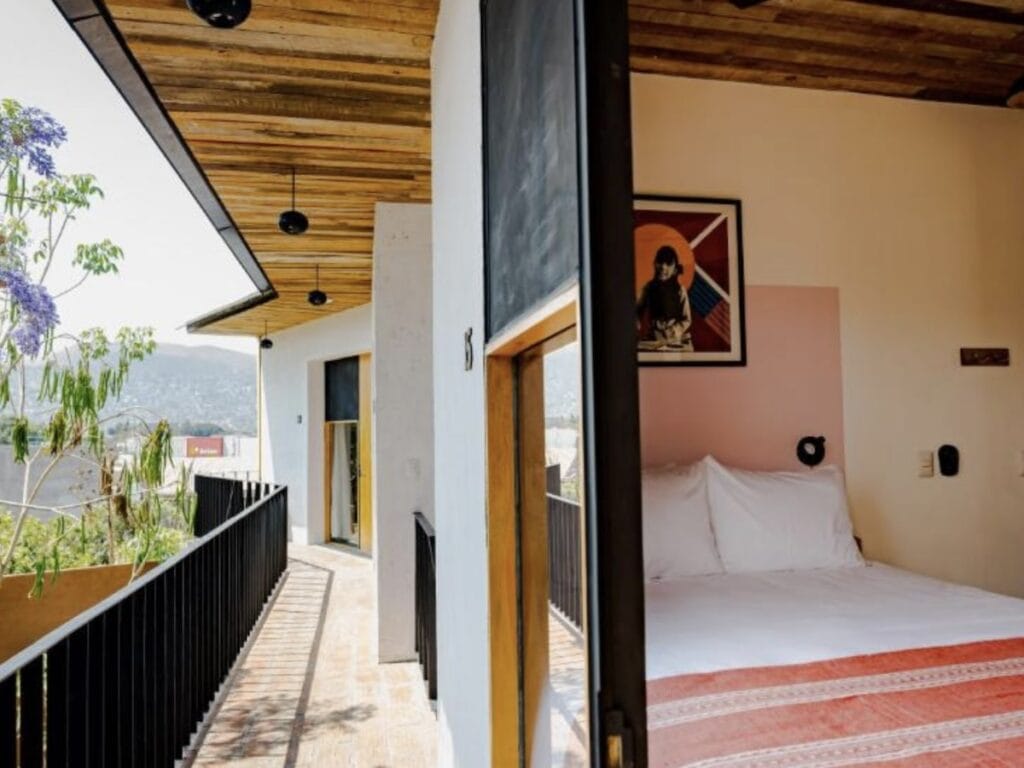
Hotel con Corazón is a particularly special find for travellers who want their accommodation spending to make a positive difference. This charming 17-room hotel is a social enterprise that reinvests approximately 75% of its profits into local education programs, helping young people in Oaxaca stay in school.
The hotel offers simple but comfortable rooms, leafy courtyards, sunny terraces and a delicious complimentary Oaxacan breakfast. It’s located on the edge of the historic centre, about a 15-minute walk from the Zócalo. The hotel also offers cooking classes and locally guided tours. It’s a lovely example of how tourism can directly benefit the community, without sacrificing comfort or hospitality.
Check rates for Hotel con Corazón on Booking.com or Expedia.
Vacation Rentals in Oaxaca City
If you’re travelling with a group or planning a longer stay in Oaxaca, a vacation rental is another option worth considering.
For part of my trip, when I was travelling with girlfriends, we rented a private house so we could each have our own bedroom. (Later, when my husband joined me, we moved to the lovely Casa Antonieta, featured above.)
We found our house on Airbnb, in the quieter Reforma neighbourhood, just a 10–15 minute walk from the historic centre. It was exactly what I’d hoped for: somewhere that would inspire a collective “Ahhhh!” when we opened the door, rather than an “Oh… hmmm.” The beautiful local craftsmanship and thoughtful design were a big part of its appeal.
See the lovely Oaxaca house we rented on Airbnb.
You can also find hundred of beautiful vacation rentals in Oaxaca City on Vrbo.
TIP: Before booking, please check the exact location (how long of a walk to town), recent guest reviews, security arrangements and comments about noise. Even the most beautiful house loses its appeal if you’re kept awake all night!
Getting Around Oaxaca City
One of the nicest things about Oaxaca City is how walkable it is. If you’re staying in the historic centre, you can explore most of the main sights, restaurants, galleries, and shops on foot. You really don’t need a rental car.
For longer distances (or for returning home a night), taxis are plentiful, and there’s also DiDi, a ride-hailing app similar to Uber. We tried both, and I have to say, the quality of the vehicles was quite different!
DiDi was definitely cheaper, but some of the cars we encountered were in pretty rough shape. Think missing seatbelts, no air conditioning, and even a seat that wasn’t properly bolted down. (My husband was literally holding on!)

We eventually started choosing the nicer yellow taxis on the street or asking our hotel or restaurant to arrange one. These typically cost us around 70% more than DiDi, and hotel-arranged cars could be almost double the price. But for that, we often got luxuries like working seatbelts, air conditioning, and, on one occasion, an English-speaking driver. Worth it? That depends on your priorities!
TIP: Most street taxis don’t use meters, so always agree on the fare before getting in. And don’t assume a yellow taxi will be in better condition. Check the seatbelts and vehicle before accepting the ride.
New App for Yellow Cabs in Oaxaca – TAXSÍ
In 2026, Oaxaca launched its own government-backed taxi app called TaxSí, which allows you to book licensed yellow taxis directly from your phone. The app provides estimated fares, driver and vehicle identification, and real-time trip tracking.
I didn’t personally try TaxSí during my visit, so I can’t speak to the quality of the vehicles or the service. However, it looks like a promising alternative to DiDi, particularly if you’d prefer to use licensed taxis without having to negotiate fares.
Getting To and From Oaxaca Airport
Oaxaca International Airport (OAX) is about 20–30 minutes from the historic centre, depending on traffic.
The easiest option is to use the authorized airport transportation service. You’ll find 2 counters inside the terminal where you can book and pay for your ride before heading outside. There are two main options:
- Private airport taxi: Approximately 490 MXN for Zone 1 (the historic centre) or 790 MXN for Zone 2 (neighbourhoods farther from downtown), per vehicle. The transportation counter will confirm which zone your hotel falls into.
- Shared colectivo shuttle: Approximately 135 MXN per person for Zone 1 or 210 MXN for Zone 2. These shared vans drop passengers at their hotels, so the journey can take longer depending on the number of stops.

Alternatively, you can arrange a private airport transfer through your hotel, often at a higher price. This can be a nice option if you’d prefer someone waiting for you on arrival, particularly after a long flight.
TIP: DiDi drivers generally cannot pick up passengers directly at the airport terminal, so you’d need to walk outside the airport pickup area to arrange a ride. Personally, I’d stick with an authorized taxi or pre-arranged transfer on arrival.
For your return journey, simply ask your hotel to arrange a taxi or private transfer, or book a DiDi if you’re comfortable with that option.
Practical Tips for Visiting Oaxaca City
How Many Days Do You Need in Oaxaca City?
I’d recommend a minimum of three nights in Oaxaca City, which gives you enough time to explore the historic centre, enjoy some incredible restaurants, and get a taste of the local food, art, and mezcal scene.
That said, you could easily spend a week here, particularly if you want to take day trips to the surrounding artisan villages, archaeological sites like Monte Albán and Mitla, or the spectacular Hierve el Agua.
Oaxaca City also pairs beautifully with a beach getaway on the Pacific coast. With the new highway making the coast much more accessible, you could easily combine a few days in the city with time in Puerto Escondido, Zipolite, or Huatulco. Culture, incredible food, and a little beach time? Sounds like a pretty perfect Mexican holiday to me!
Is Oaxaca City Safe?
We felt very comfortable walking around Oaxaca City, during the day, particularly in the busy historic centre. That said, it’s still important to be mindful of your surroundings and what you’re carrying.
Our local guide actually suggested that we remove our jewellery before visiting the markets. It’s also wise to keep your phone secure, avoid displaying valuables, and be a little more cautious after dark.
I recommend withdrawing cash during the day from ATMs inside bank branches rather than standalone machines on the street or at the airport.
It is highly recommended that you stick to busy, well-lit streets at night and take a taxi rather than walking through quiet backstreets or unfamiliar neighbourhoods.
We encountered a few demonstrations during our visit. Protests and road blockades are not uncommon in Oaxaca, so it’s worth staying informed and avoiding large gatherings if you come across them.
TRUE STORY: I actually had this post about 80% finished months ago when some unexpected unrest elsewhere in Mexico made me think twice about publishing it. Oaxaca City wasn’t affected, but the timing just didn’t feel right.
Fast-forward a few months, and I found myself putting some of my European travel posts on hold for similar reasons.
Unfortunately, such is the world we’re living in these days! A little flexibility, good travel insurance, and a willingness to pivot seem to be increasingly important parts of travel planning.
But I certainly wouldn’t let that stop me from exploring. Oaxaca was an incredible experience, and I hope this guide inspires you to discover it for yourself!
Do I Need to Worry About Getting Sick From Food in Oaxaca?
I’ve travelled to Mexico many times, and I’ve learned that when I’m extra careful about what I eat and drink, I rarely get sick. When I let my guard down, however, I sometimes pay the price!
On my second-to-last night in Oaxaca, we made our one regrettable restaurant choice of the trip (at a place whose glowing online reviews I later suspected might be fake). I broke a few of my own food safety rules and ended up with some tummy-trouble that cost me half a day of exploring.
My advice? Drink bottled or properly filtered water, be cautious with ice and raw produce, and choose busy restaurants and food stalls where everything is freshly prepared. A little extra vigilance goes a long way!
Cash, ATMs and Credit Cards
Credit cards are widely accepted at hotels, restaurants and larger shops, but you’ll definitely want some Mexican pesos (MXN) in cash for markets, street vendors, taxis and smaller purchases. Try to keep plenty of smaller bills on hand, particularly 20, 50 and 100 peso notes. Many small vendors won’t have change for larger bills. (Both of our privately arranged guides requested to be paid in cash.)
CURRENCY CONVERSION TIP: When withdrawing cash from an ATM in Mexico, you may be offered the option to convert the amount into your home currency (CAD, USD, etc.). Always decline this conversion! You’re not cancelling the withdrawal, just rejecting the ATM’s exchange rate, which is often much worse than your bank’s.
I discovered this at a Scotiabank ATM in Oaxaca, where accepting the conversion would have cost me an extra $60 CAD on a $500 withdrawal! Your bank will handle the conversion instead, subject to its usual fees.
The same applies to credit card purchases. If asked whether you’d like to pay in pesos or your home currency, always choose Mexican pesos (MXN) and let your card issuer handle the exchange.
Tipping in Oaxaca
Tipping is alive and well in Oaxaca! At restaurants, 10–15% is customary for good service, with 20% for particularly excellent service. Some payment terminals offer suggested tips of 10%, 15% and 20%.
Planning a Trip to Oaxaca?
I hope this guide has helped you plan your own Oaxaca adventure! It’s such a fascinating part of Mexico, and I hope you enjoy exploring it as much as I did.
If there’s anything I didn’t cover, or if you’d like help planning your trip, please don’t hesitate to reach out via direct message on Instagram, Facebook or by email.
Want to see more unique adventures? I would love for you to follow along with The Better Beyond on Instagram!
Further Reading
- Where to Eat in Oaxaca According to Chef Enrique Olvera (Condé Nast)
- Where the Chefs Eat: Tomasina Miers’ Favourite Restaurants in Oaxaca (CN Traveller)
- Michelin Restaurant List for Oaxaca
- The Essential Guide to Buying and Drinking Mezcal (PunchDrink.com)